A well-run renovation follows six stages in a fixed order: write the brief and budget, design the layout, sort the paperwork, order the long-lead items, build in sequence, then snag and hand over. Most problems come from doing these out of order, usually by hiring a builder before the design is settled. Decide first, order second, build third.
Why does the order matter more than the budget?
A budget tells you what you can spend. The order tells you whether you will spend it once or twice. Moving a socket after the plaster is on, or choosing a kitchen after the builder has finished the walls, turns a small decision into a repeat job.
Think of a renovation as a chain. Each stage hands finished decisions to the next. If a stage is rushed, the cost shows up later, on site, at trade day rates.
What are the six stages of a renovation?
1. Brief and budget. Write down why you are renovating, which rooms are in scope, what you must have, and what you will not accept. Split the budget into build and trades, professional fees, and furniture, lighting and decor. Our guide to briefing an interior designer for a full renovation walks through this stage in detail.
2. Design and layout. Settle the plan, the electrical and lighting layout, and the specification before anyone quotes. A builder pricing from drawings gives you a number you can hold them to. A builder pricing from conversation gives you an estimate that will move.
3. Paperwork and permissions. Check whether the work needs planning permission or falls under permitted development, and whether Building Regulations apply. If you are in a leasehold flat, you will usually need the freeholder's consent. Put the contract, the schedule and a trade contact list in writing. See what paperwork you need before a UK renovation.
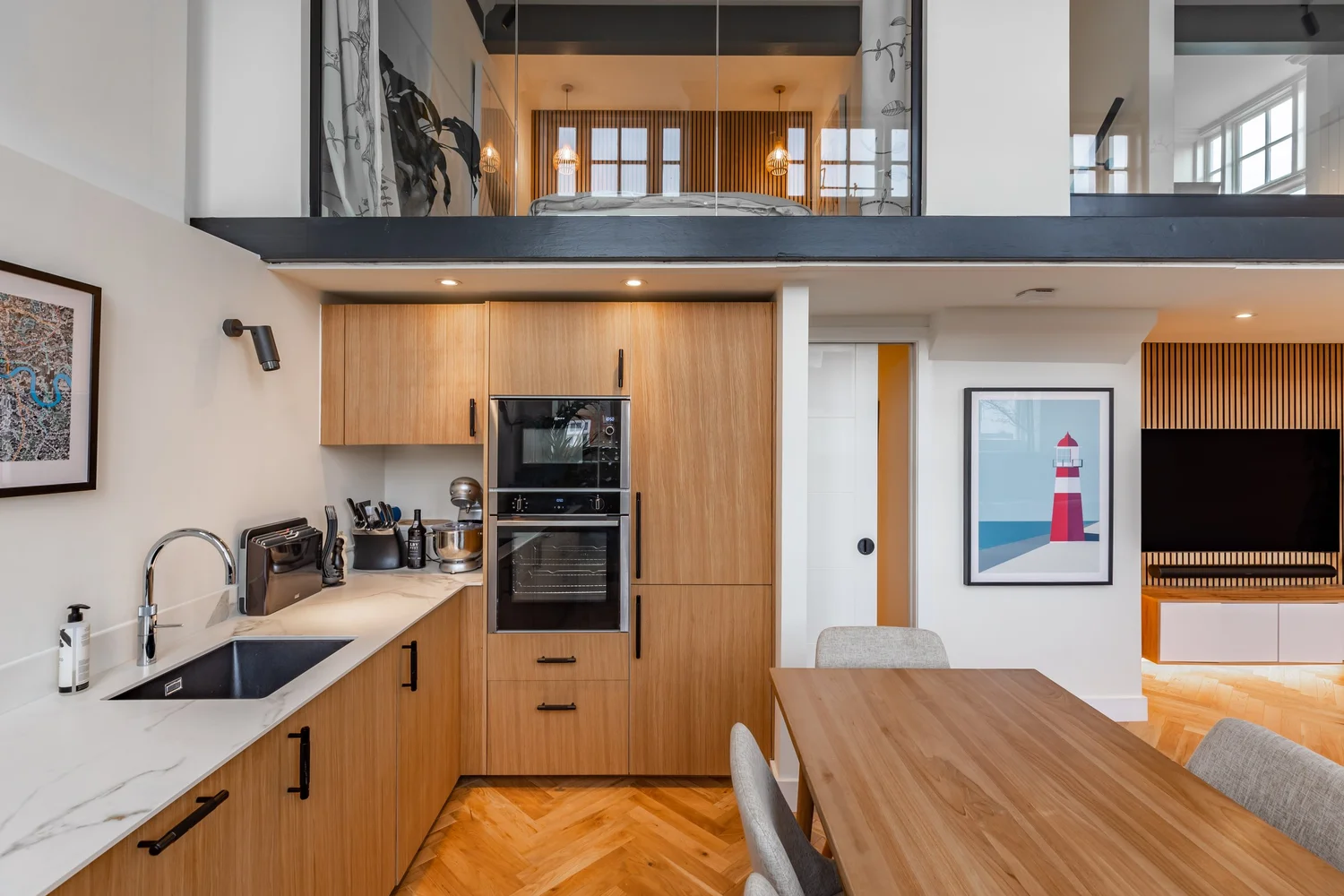
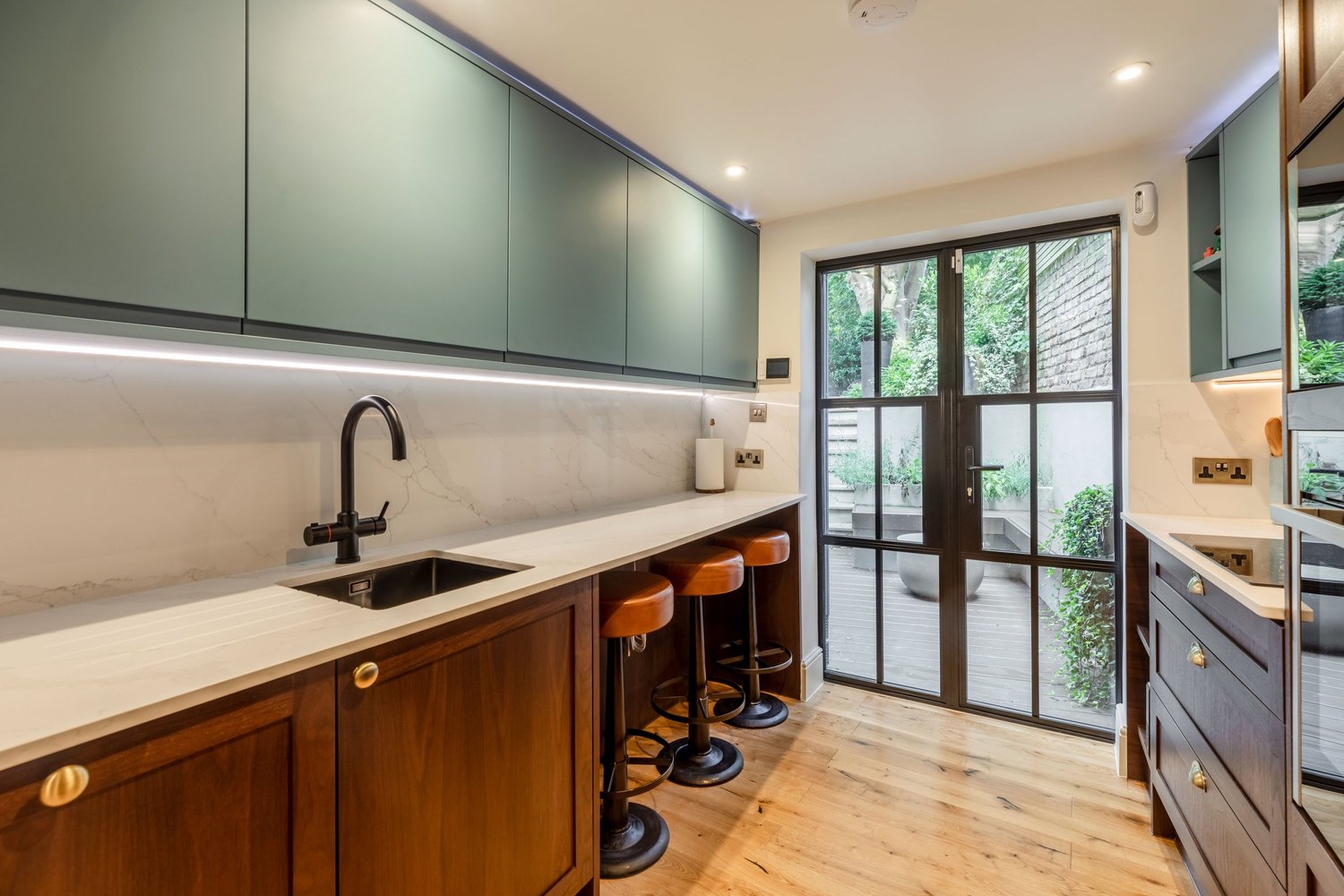
4. Long-lead orders. Kitchens, joinery and sanitaryware commonly take 8 to 20 weeks. Order them before the build starts, counting back from the date the fitter needs them on site.
5. Build in sequence. Strip out, structural work, first fix electrics and plumbing, plastering, second fix, then decoration and flooring. Sign off each phase before the next trade covers it.
6. Snagging and handover. Walk every room with a written list. Hold back final payment until the snag list is closed and certificates, warranties and manuals are in your hands.
What does this look like on a real project?
Take a three bedroom 1930s semi of about 1,100 sq ft in Ealing, renovated top to bottom.
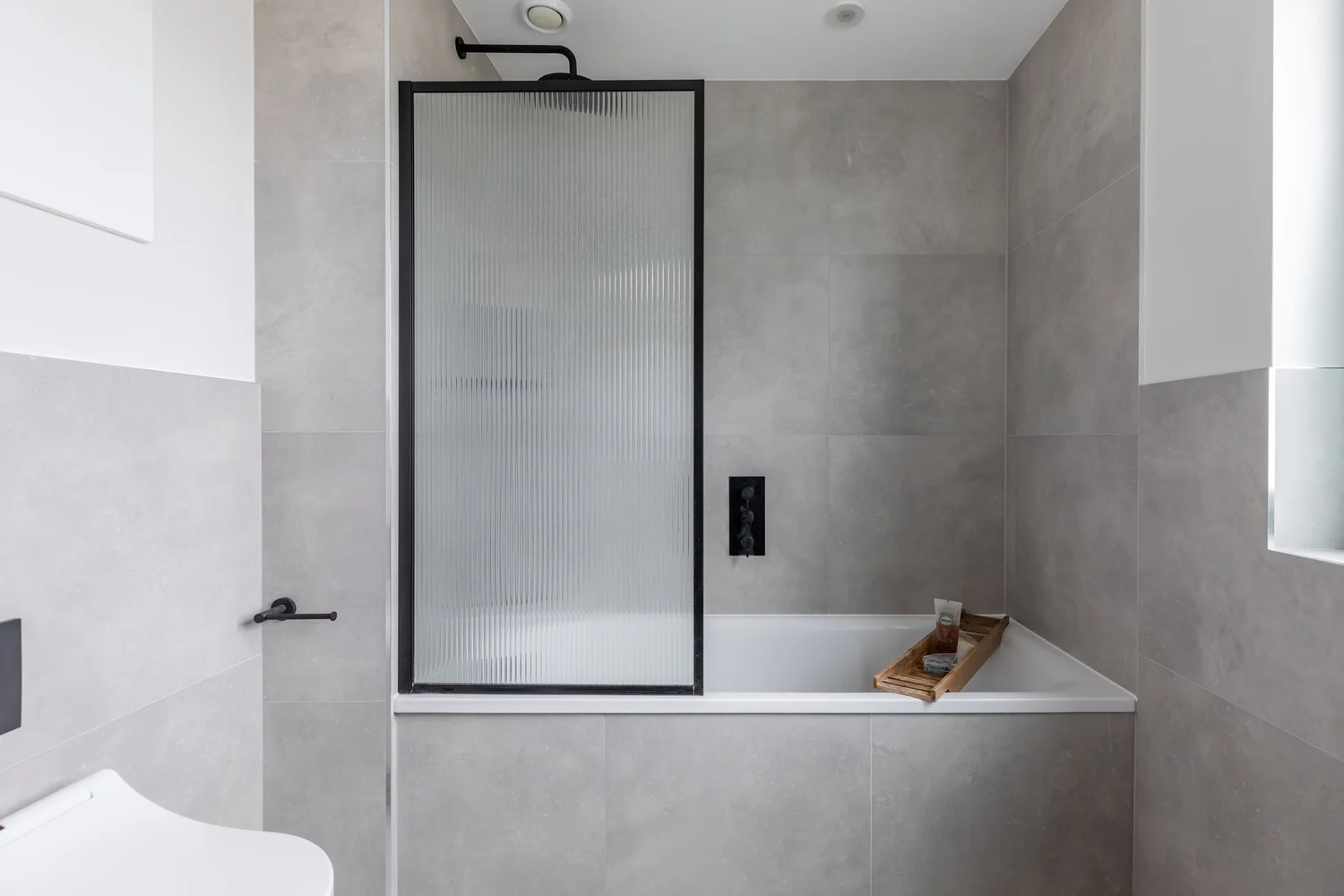
The design was settled first: 48 sockets and 22 lighting points marked on the plan before the builder priced. The kitchen had a 10 week lead time and the bathroom 6 weeks, so both were ordered before work began, with delivery timed to the fitter and not to the builder's start date. From builder start to handover took 12 weeks.
Nothing about that schedule is clever. It is the same six stages, in order, with the long-lead items bought early.
How do you stop a renovation drifting over budget?
Late decisions cause most overspend. Standard advice is to hold 10 to 20 percent as contingency, which is sensible, but it does not stop the overspend, it only pays for it. The better defence is to remove the decisions that arrive mid-build.
Three habits help. Fix the layout and specification before pricing. Order long-lead items early. Sign off each phase in about ten minutes before the next trade covers it. Our article on why renovations go wrong before the builder starts covers each in more detail, and our guide to what an interior designer costs in the UK in 2026 helps you budget the professional fees.
Where does the popular advice about renovating fail?
"Hire the builder first." A builder appointed before the design is fixed prices a vague job, then charges for every clarification. Appoint after the plan and specification are settled.
"Do the kitchen last because it is the most expensive." The kitchen has the longest lead time and drives the electrics, plumbing and floor. Decide it early, even if it is fitted late.
"Keep a big contingency and relax." Contingency covers surprises in old buildings. It is a poor substitute for decisions you could have made in week one.
"Renovate everything at once." Whole house projects are efficient, but only if you can live elsewhere or accept months of disruption. A phased plan, done in the right order, can cost less in stress and rework.
Frequently asked questions
How long does a renovation take?
It depends on size. The Ealing example took 12 weeks on site, but the design, paperwork and ordering before it took longer. Plan for the lead time of your slowest item.
Do I need planning permission?
Often not for internal work, but extensions, loft conversions and changes to listed or conservation area buildings usually do. Check with your local authority before you design around an assumption.
Do I need an interior designer as well as a builder?
A builder builds from a plan. A designer produces the plan. Where nobody owns the layout and specification, those decisions land on site.
What should I order first?
Whatever has the longest lead time, usually the kitchen, joinery and sanitaryware.
When do I pay the final instalment?
When the snag list is closed and you hold the certificates, warranties and manuals.
Ready to plan your renovation?
If you would like the order of work, the paperwork and the decisions laid out for your own home, an hourly design consultation is the quickest way to get them in order, with a designer who looks at your actual plans. See the details on our hourly interior design consultation page. We have completed over 250 London renovations and have won twelve consecutive Houzz awards.