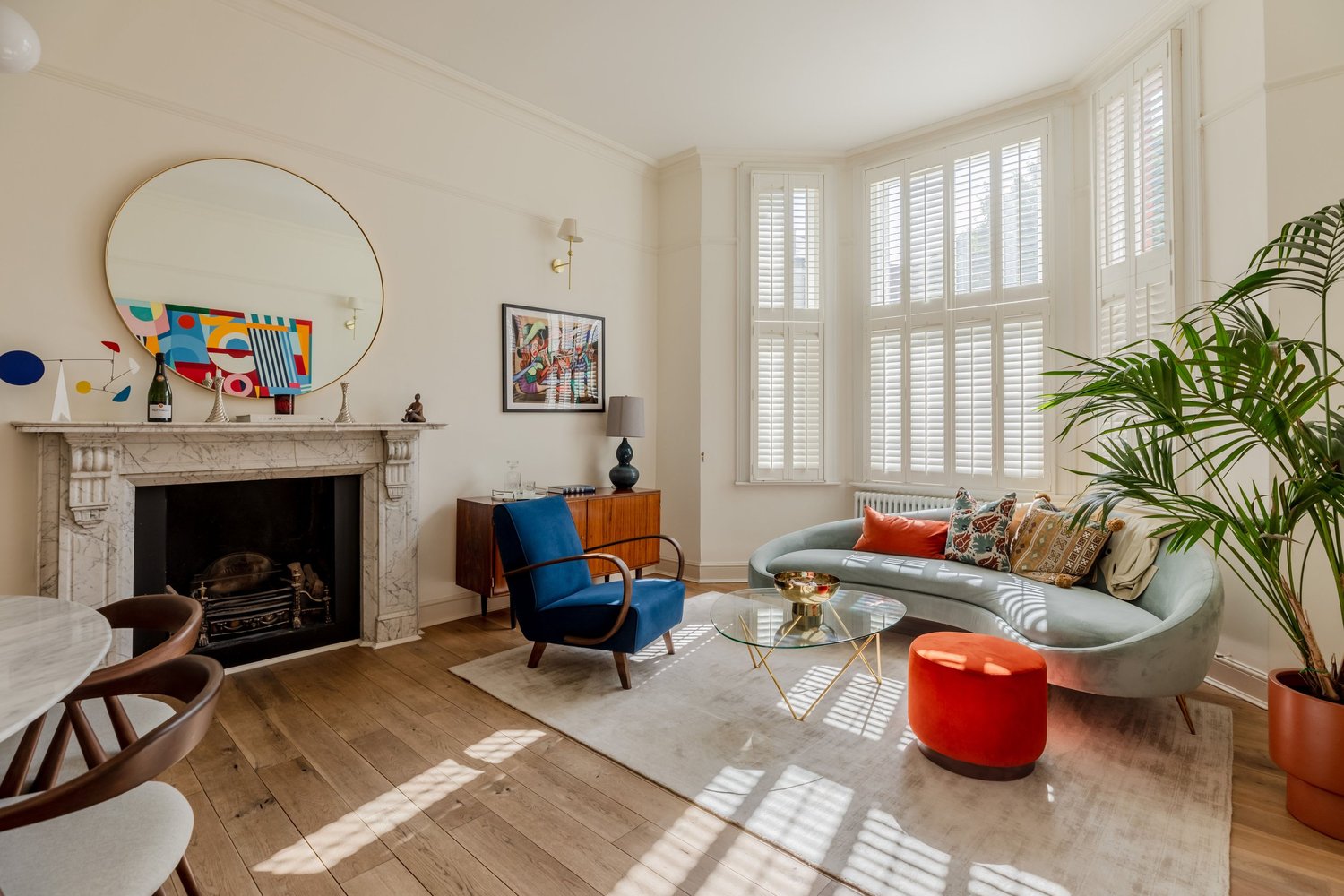
In the UK in 2026, an interior designer typically charges £50 to £150 an hour, a flat fee of roughly £500 to £3,000 for a single room, or 10 to 15 per cent of the project spend on a full renovation. Online services start lower, from about £175 a room. At Studio Akiva, a fixed-fee room makeover starts at £320.
How do interior designers charge?
There are three models, and the one you are quoted decides how predictable your bill is.
Hourly. Junior designers tend to charge £50 to £75 an hour, experienced designers £100 to £150, and well-known London names considerably more. Hourly suits a defined question, such as which colour works in a north-facing room or whether a layout will function. It suits a whole room badly, because every call, revision and site visit adds to the meter.
Percentage of spend. Most commonly 10 to 15 per cent of the furnishing or build budget, although published guides quote anything from 5 to 30 per cent. It makes sense on large projects where the designer manages trades over many months. The catch is that the fee rises with your budget, not with the work involved.
Flat fee per room. A fixed figure agreed before work starts, usually £500 to £3,000 for a single room depending on who is doing it and how much is included. It is the easiest model to budget for, provided you read what is in the scope and what is not.
We price by flat fee, and for advice alone by the hour, because most clients tell us the worst part of hiring a designer is not knowing the final figure.
How much does a designer cost for a single room?
For a single room, expect to see three tiers.
At the lowest end, online design services sell a room scheme for roughly £175 to £700, depending on how many functions the room has. In the middle, independent designers quote £500 to £3,000 for a room, with the price moving on whether they visit in person and whether they source and specify the furniture. At the top, central London studios can charge more than that for one room once site visits and project management are included.
Our own room makeovers sit at the accessible end of that range because the work is delivered online and the scope is fixed:
Basic, from £320. A mood board, a black and white floor plan with furniture distribution, and an interactive shopping list, with two online calls.
Premium, from £639. Adds a colour floor plan, elevations and three accessory hours. A Premium makeover for a room between roughly 215 and 540 square feet is £735.
Deluxe, from £849. Everything in Premium, a fourth accessory hour and a lighting distribution plan.
The right package depends on what is changing in the room, not how large it is. Size sets the price band, not the package. If a room only needs advice rather than a full scheme, an hourly design consultation is £90 an hour.
What would a living room in a 1930s semi cost?
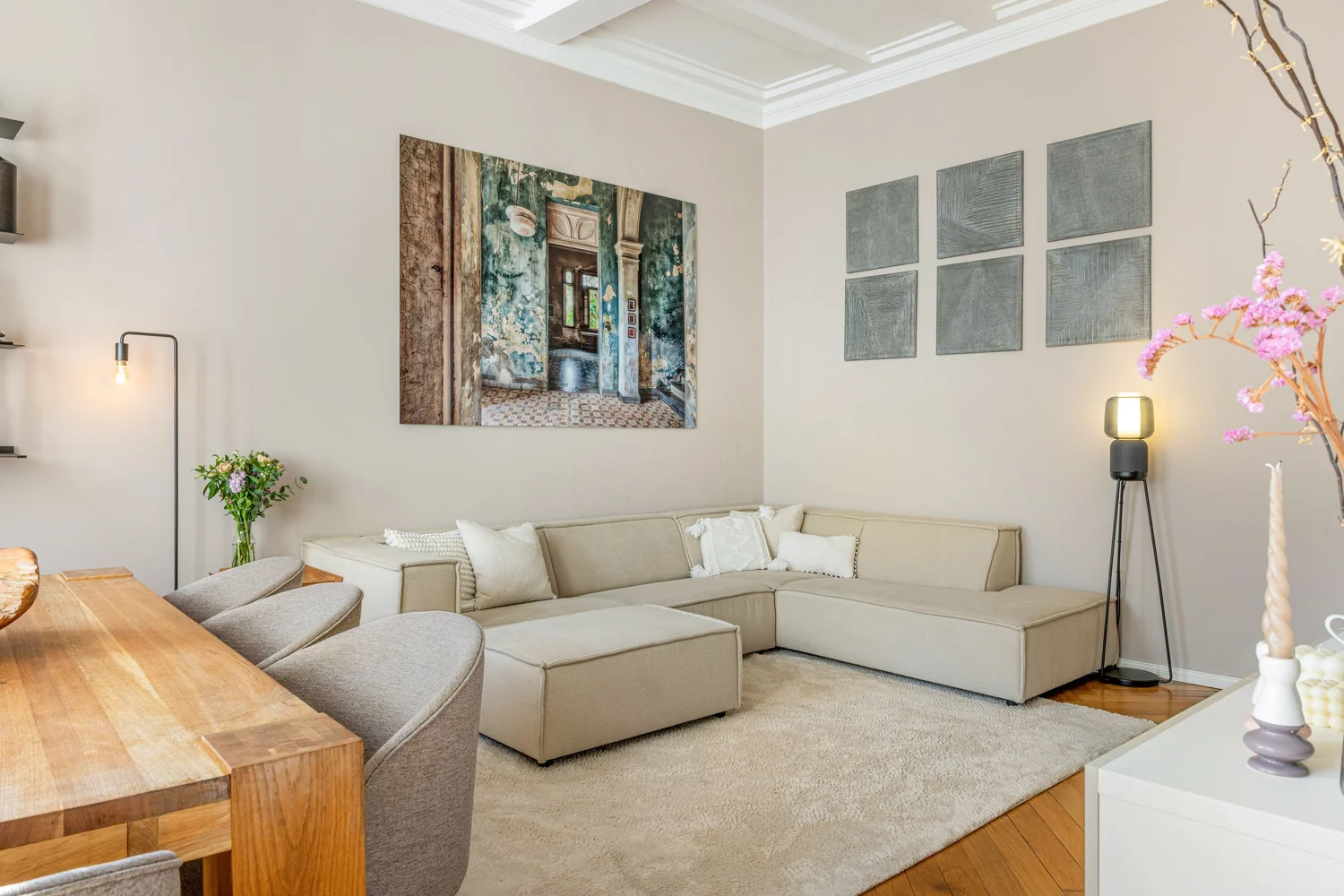
Take a typical 1930s semi living room of 14 by 16 feet, which is 224 square feet, with a bay window and a chimney breast, and a furnishing budget of £8,000.
Percentage model: at 10 to 15 per cent of the furnishing spend, the fee is £800 to £1,200, and it rises if you decide to spend more.
Hourly model: at £100 an hour, a designer who needs 20 hours for the layout, scheme, product search and two rounds of changes would charge £2,000. If it takes 30 hours, the figure is £3,000. This is an illustration, not a quote, but it shows why hourly is hard to budget for a whole room.
Our Premium makeover: £735 for a room in that size band, agreed before we start, including one revision on the floor plan.
The cheapest option on paper is not always the cheapest in practice. Check what is included before comparing the headline figure.
Is online interior design cheaper, and what do you give up?
Online design is cheaper because there is no travel, no site-visit time and no project management on the designer's side. The saving is real, and for many rooms it is the right choice.
What you give up depends on the provider. Some online services use templates and offer little revision. Others, like ours, are led by a named designer and produce a scheme specific to your room. Ask three questions before you buy: who designs the room, how many revisions are included, and whether anyone looks at your actual floor plan.
Online design also cannot take on structural changes. We cover interior design only. Where a project touches structure, we liaise with your structural engineer or introduce a trusted partner.
What does the designer's fee not cover?
Almost every fee quoted in this article is for the design alone. It does not include:
Furniture and accessories. The scheme tells you what to buy. The purchases are on top.
Building work and trades. Decorators, electricians and fitters are paid separately.
Site visits. In most studios, including ours, a visit is a separate fee and is not credited against the design fee.
Extra revisions and sourcing. Additional alternatives or a second round of changes may be charged.
Procurement. If you want the designer to order on your behalf, that is a separate service. In our case it is charged as a service fee, and 100 per cent of any trade discount is passed on to you.
When you compare quotes, put every one of these lines next to each other. A flat fee that excludes site visits and revisions can end up costing more than a higher figure that includes them.
Where does the popular advice about designer fees fail?
Three pieces of advice are repeated often and mislead people.
"Budget 10 to 15 per cent of the project." That is a rule for large renovations managed over many months. For a single room it can produce a figure far above what the design work needs.
"A designer pays for themselves through trade discounts." This used to be common, because designers kept the discount as margin. Today many studios pass trade pricing on in full and charge a service fee, so the discount reduces your furniture cost directly instead of offsetting the design fee. Ask which model you are being offered.
"Interior design adds 10 per cent to your home's value." You will see this claim widely, and we would not rely on it. A well-planned layout and a coherent scheme help a property show well, but the effect on value depends on the market, the property and the buyer.
Frequently asked questions
Is it worth paying for an interior designer for one room?
Yes, if the room is not working and you are about to spend on furniture. The fee is small compared with the cost of buying the wrong sofa or the wrong layout. If you only need a layout checked, a 90-minute session may be enough.
How much does a layout-only session cost?
Our Layout Clinic is a 90-minute online session for £95, introductory rate. You send your floor plan in advance, and we work through layout options live and send a written summary afterwards.
Do designers charge for the first call?
Many do not. Ours is free, but it is an introductory get-to-know-you call, not a design session. Design advice is charged by the hour.
Is a fixed fee better than hourly?
For a whole room, usually, because you know the cost before you begin. For a single question, hourly is cheaper.
Does the fee include the furniture?
No. The fee covers the design. Furniture, accessories and building work are paid for separately.
Ready to put a figure on your room?
Our room makeovers are fixed-fee, delivered online, and priced before we start. See the three packages and choose the one that fits what is changing in your room on our room makeover page. We have over 100 five-star reviews on Houzz and twelve consecutive Houzz awards.