A home feels cohesive when a few decisions repeat in every room: one shared colour family, two or three materials, one consistent metal or wood tone, and a similar level of lighting. Rooms can differ in mood. They should not differ in their ingredients. Choose those repeating elements first, then let each room use them differently.
What actually makes a home feel cohesive?
Cohesion is repetition with variation. If every room is a different style, colour and finish, the eye has nothing to connect, and the house reads as a set of unrelated showrooms. If every room is identical, it reads as flat.
Four things carry most of the effect, and they are worth deciding together before you buy anything.
A colour family. Not one colour, a family: for example warm whites, a stone, a muted green and one dark accent. Each room uses a different share of the same family.
Two or three repeated materials. Oak, linen and brushed brass, say. A material that appears in at least three rooms ties them together more than any paint colour.
One finish language. Pick one metal tone for handles, taps and light fittings, and one wood tone for floors and large furniture. Mixing is fine, but one should clearly lead.
Consistent light. The same bulb colour, usually 2700K warm white, in every room. Mixed bulb colours make matching paint look as if it does not match.
Where do you start in a house with no single style?
Start with what you cannot change, and with the rooms you can see from each other. The floor, the staircase, the window frames and the kitchen units are fixed, so they set the starting palette. Then look at sightlines: the view from the front door down the hall, and the view between the living room and the kitchen. Those are the moments where mismatch is most obvious.
Decide the hallway first. It touches every room, so its colours and finishes set the thread. Then work outwards, room by room, taking one colour or material from the hallway into each space.
How do you link rooms that have very different purposes?
Link them through a repeated detail, not by making them match. A study and a bathroom will never look alike, and should not.
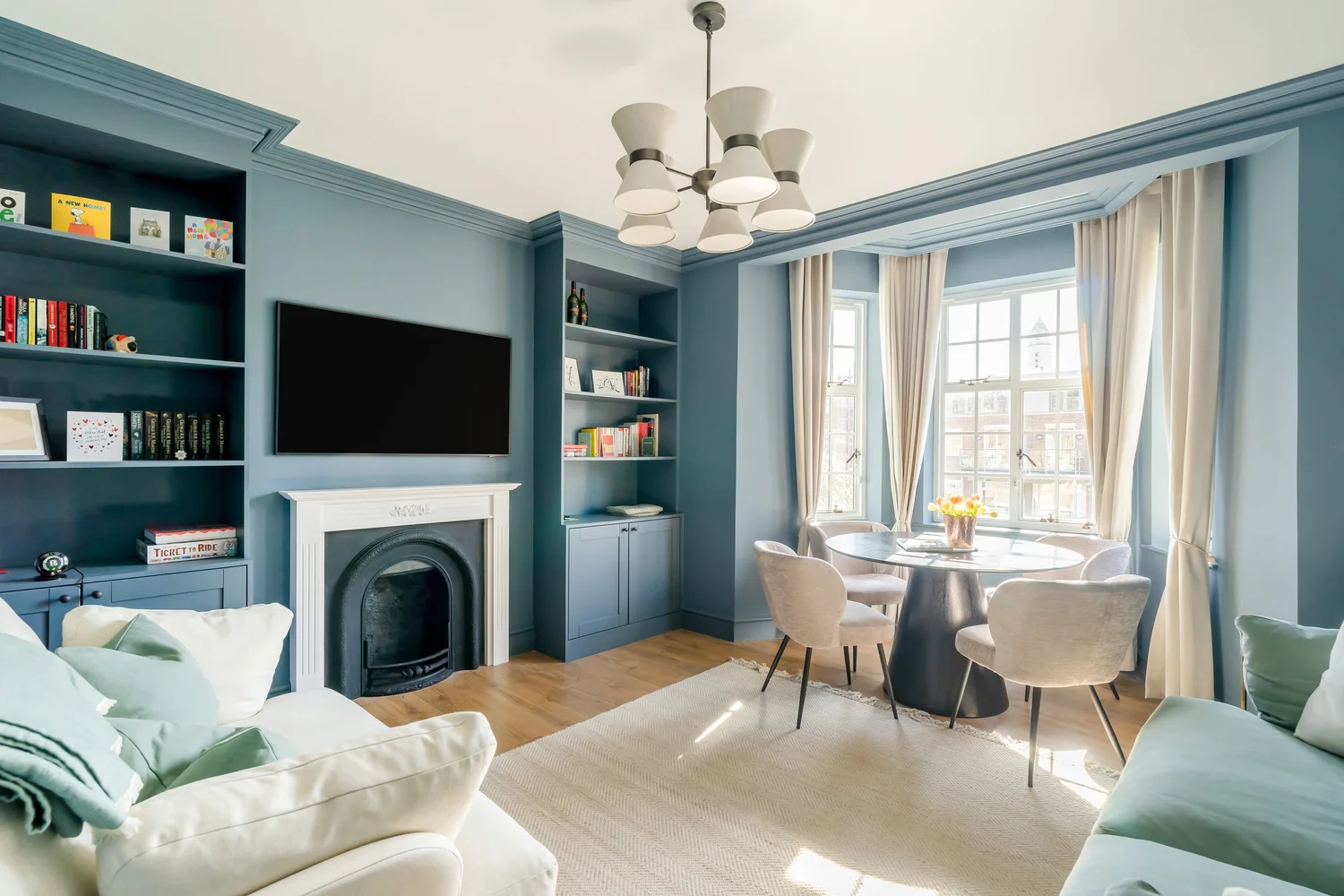
Use one of these links in each room: the same skirting and door colour throughout, a shared accent colour at about 10 percent of the room, one recurring material such as an oak shelf or a linen curtain, or the same style of light fitting in different sizes. A single repeated element in every room is enough. Three or four, and the effect becomes heavy.
Doors matter more than people expect. If every door and architrave is the same colour, a house with five wall colours still feels like one home.
What would this look like in a real house?
Take a 1930s three-bedroom semi of about 1,150 square feet, with a living room, a kitchen diner, a hall, three bedrooms and one bathroom, and an owner who has bought each room's furniture separately over ten years.
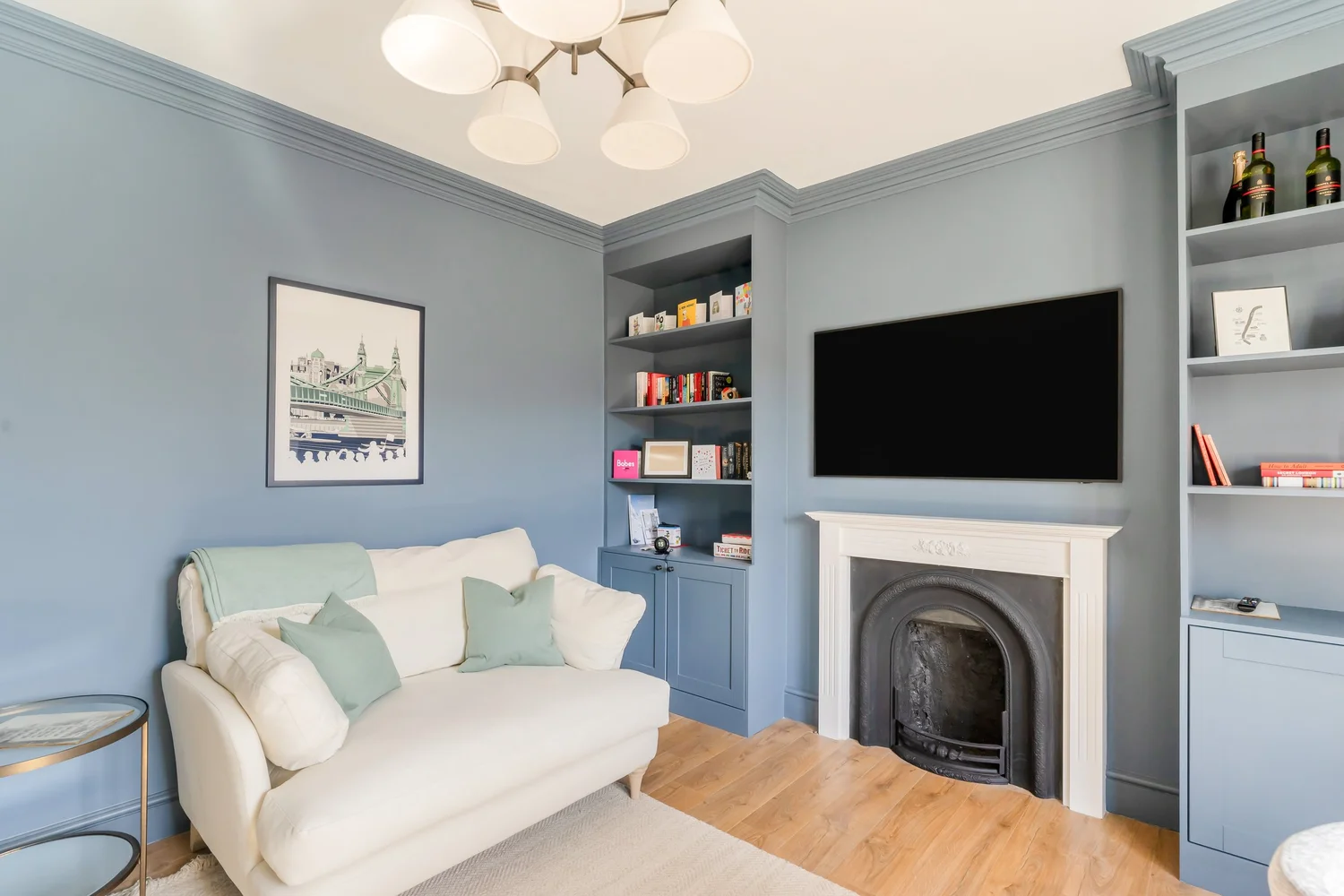
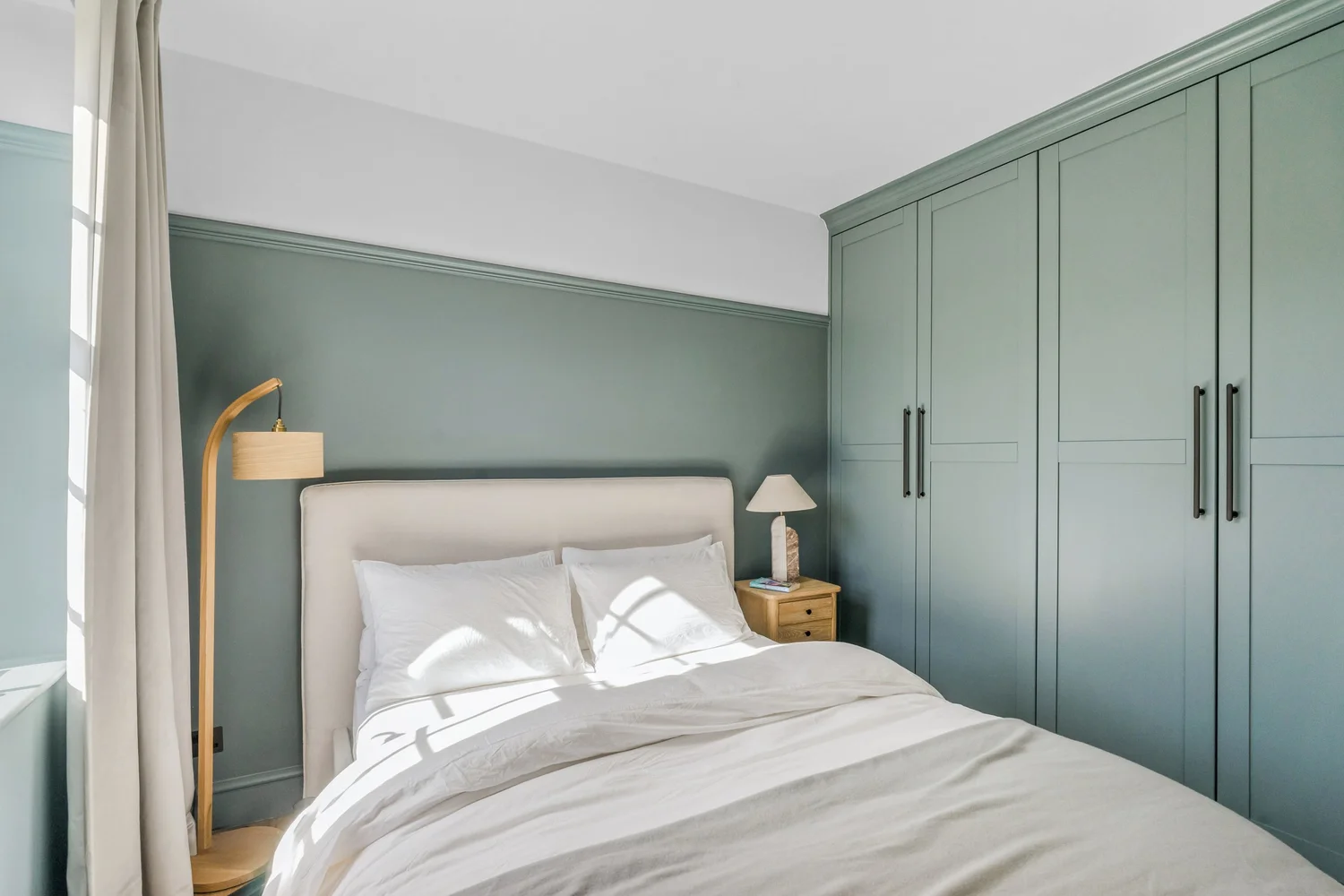
The hall is painted a warm stone, and the same stone is used on the woodwork of every room, which is the first and cheapest link. The living room takes a muted green on one wall as its accent. The kitchen diner repeats that green on the lower cabinets. The main bedroom uses the same green on a headboard wall, and the bathroom uses it in a tile. Four rooms, one green, in four different amounts.
Oak runs through the house: the stair rail, a living room shelf, the dining table and a bedside table. Every light fitting is brushed brass, and every bulb is 2700K. None of this requires replacing a sofa. The existing furniture stays, and the woodwork, one accent and the lighting do the connecting.
Where does the popular advice about cohesion fail?
"Use the same paint colour everywhere." One colour across a whole house flattens it, and it ignores the fact that north and south facing rooms turn the same paint into different colours. Use one colour family and test each shade in its own room.
"Pick one style and stick to it." A strict style often produces a house that feels like a catalogue. Cohesion needs shared ingredients, not a shared label. A period house with a few contemporary pieces can feel more connected than one decorated entirely in a single style.
"Match your furniture sets." Matching sofas, tables and chairs from one collection feel dated. Pieces that share a tone or a leg shape but are not identical tend to look more considered.
Do you have to redecorate everything at once?
No. Redecorate in this order, and stop when it feels connected: lighting and bulbs first, because it is cheap and immediate; then woodwork and door colour; then textiles; then one accent colour carried through; and furniture last, replacing only what clashes with the thread.
A phased approach also lets you test the palette before committing. Live with the hall and one other room for a month, then continue.
Frequently asked questions
Can a cohesive home still have colour?
Yes. Cohesion is about repetition, not neutrality. A strong colour used in small amounts in every room links them better than neutral walls with no thread.
How many colours should a whole house use?
Three to five in one family is a workable range: a base white, a stone or neutral, one main accent and one dark. Each room uses a different share.
How do I link an open plan kitchen and living room?
Repeat one material and one colour across both zones, and use the same floor and the same light fittings. Different furniture is then fine.
Do all my rooms need the same flooring?
No, but the transitions should look intentional. A common wood tone in the main rooms with tile in wet rooms is normal.
What is the fastest change that helps?
Change every bulb to the same warm white, then paint all door frames and skirting in one colour. Both are inexpensive and visible straight away.
Ready to plan your whole home?
If you want the thread chosen for you, an hourly design consultation is the quickest way to agree your palette, materials and the order of work, with a designer who looks at your actual rooms. See the details on our hourly interior design consultation page. We have over 100 five-star reviews on Houzz and twelve consecutive Houzz awards.