Why Does My Home Feel Cold, And What Can I Do About It?
The home is furnished. The renovation is done. The sofa is exactly what was pinned on the mood board, and yet something feels off. The space looks considered, even polished, but it doesn't feel lived in. It doesn't feel warm.
This is not a small frustration. It's one of the most common questions homeowners are asking designers right now, and for good reason. The past decade of interior trends cool greys, crisp whites, flat surfaces, minimal ornamentation, produced spaces that photographed beautifully and felt, in person, curiously empty.
In 2026, the conversation has shifted. Clients aren't asking for more; they're asking for different. Deeper. More human. More real.
What "coldness" actually means in a room
Before changing anything, it helps to understand what your eye and body are responding to. Coldness in a space is rarely about a single element, it's almost always a combination of factors working against each other.
The most common culprits are a colour palette that skews blue-grey or stark white; surfaces that are uniformly hard and shiny (polished stone, gloss cabinetry, powder-coated metal); lighting that is either too bright or poorly layered; and furniture arrangements that feel symmetrical and static rather than gathered and intimate.
Each of these individually is manageable. Together, they create what designers sometimes call "showroom syndrome" a space that reads as a product display rather than a home.
"Warmth is not a style. It's a feeling, and it's achieved through contrast, layering, and the quiet evidence that people actually live here."
Start with colour temperature, not colour itself
The instinct when a space feels cold is to reach for warmer colours: terracotta, rust, ochre. And while these certainly help, they aren't always the right starting point particularly if you're not ready to repaint.
A more immediate intervention is to address the undertones of what you already have. Cool greys can be warmed considerably with the right textiles and lighting. A sofa in warm sand or natural linen can shift the temperature of an entire room without touching the walls. Swap out cooler metals — chrome, brushed nickel, for softer finishes like aged brass or satin bronze on fixtures, hardware, and accessories.
If you are ready to repaint, the direction is clear: move away from blue-based whites and grey-based neutrals. The palettes defining 2026 are grounded in earth — soft taupe, warm stone, dusty sage, deep terracotta used sparingly as an accent. These are colours that perform differently at different times of day, which is part of what makes a space feel alive.
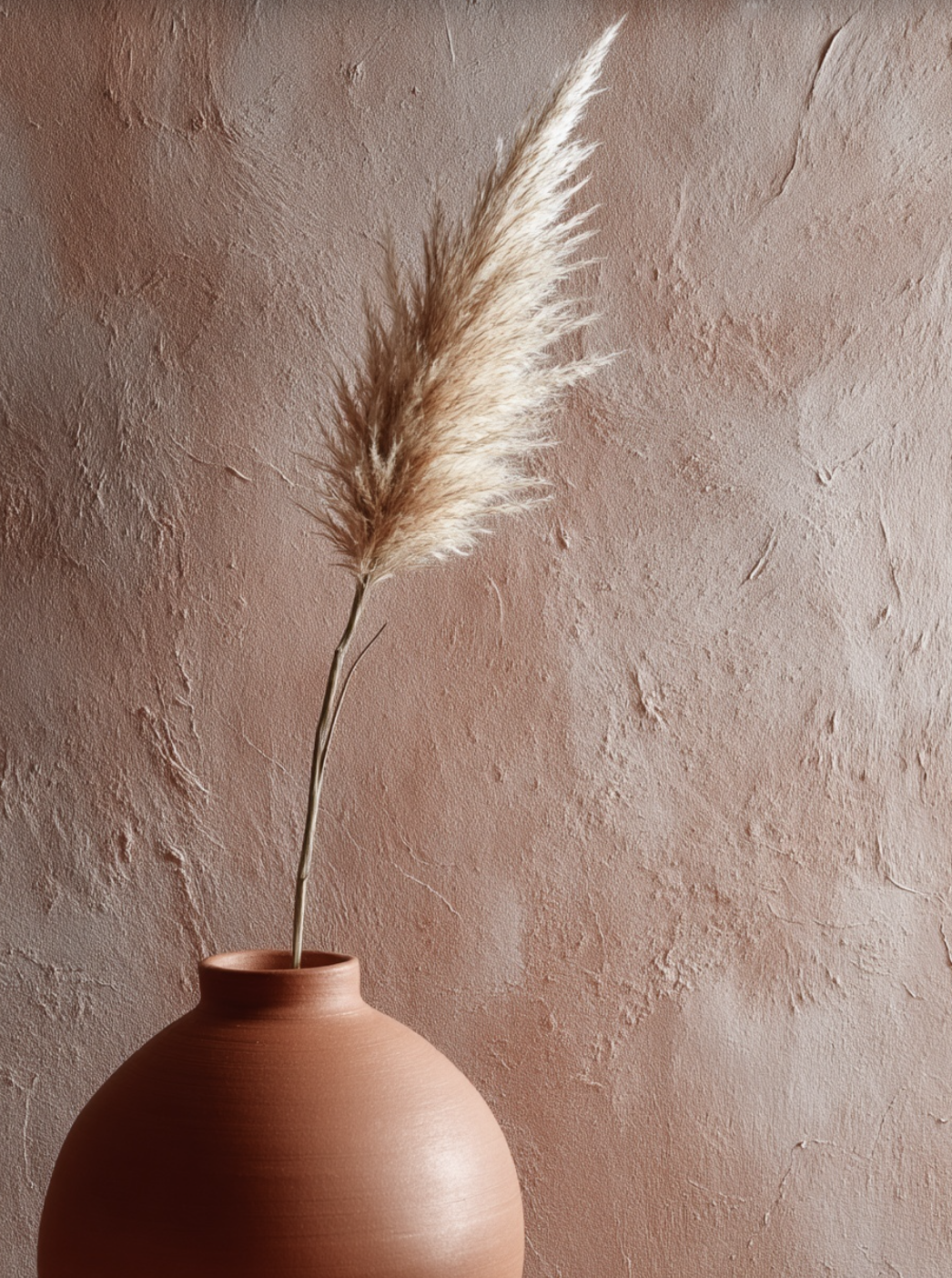
Studio note: When testing paint colours, view them in the evening under your actual lighting, not in the daylight showroom. A warm white can turn clinical under cool LEDs. Bulb temperature matters as much as the paint chip.
Texture is doing the heavy lifting right now
If there is one design principle that separates cold spaces from warm ones, it is the absence or presence of varied texture. A room where every surface is smooth, polished floors, flat walls, leather sofa, glass coffee table, has nowhere for the eye to settle. It feels taut.
Layering texture means introducing materials that catch light differently: a high-pile wool rug alongside smooth hardwood. A linen throw over a structured sofa cushion. A rough-cast ceramic vase beside a lacquered shelf. Woven rattan against painted plaster. The contrast between surfaces is what gives a room its depth, and it's available at almost any budget.
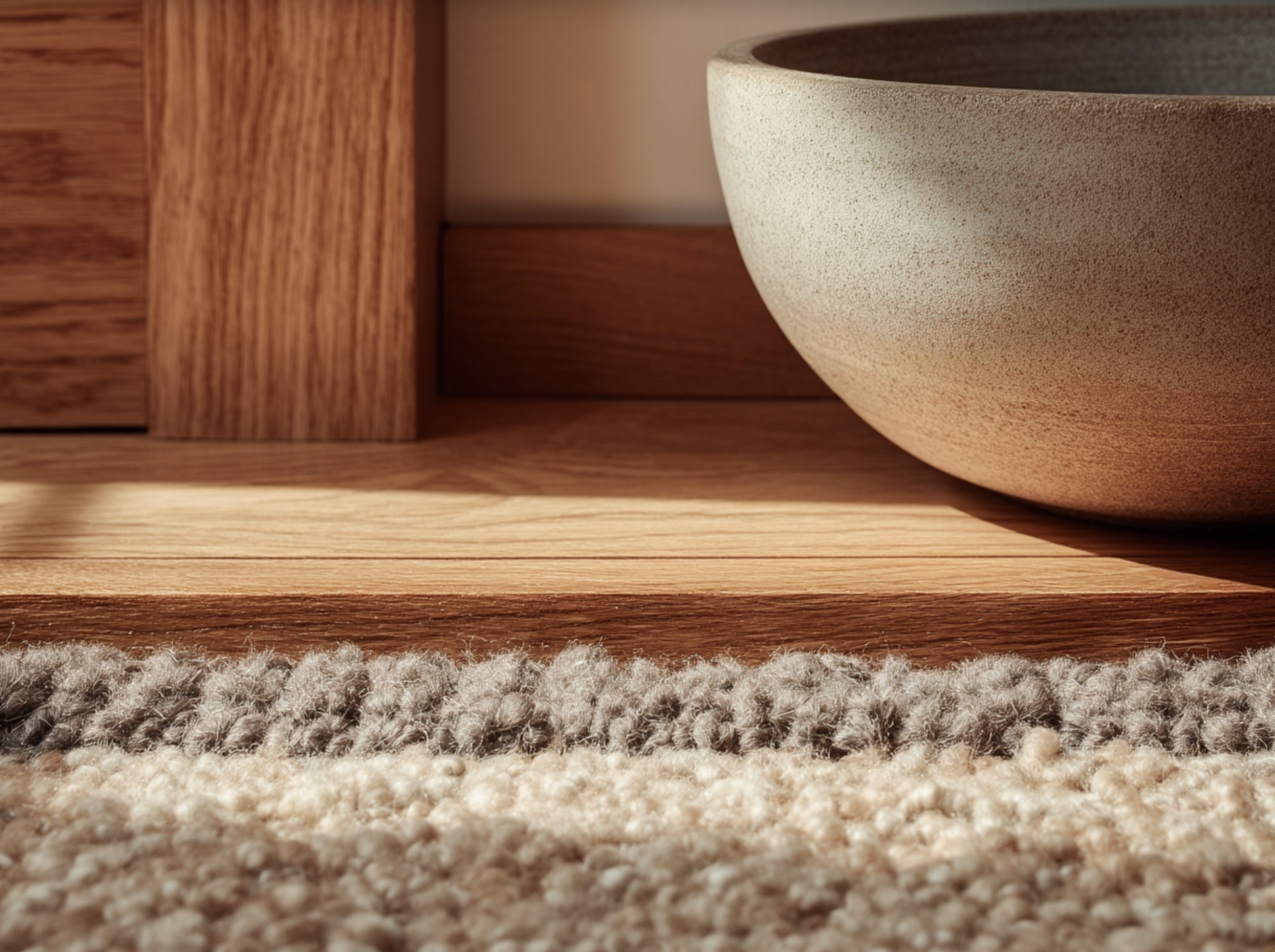
What matters most is that the textures coexist without competing. A room where everything is trying to be interesting is as exhausting as one where nothing is. The goal is variety, not chaos.
Furniture arrangement: intimacy over symmetry
Cold rooms are often too symmetrical. Two matching sofas facing each other across a large coffee table is a classic example, it looks balanced in a floor plan but feels formal and slightly confrontational in person.
Warm arrangements tend to cluster furniture slightly closer than feels instinctively correct, angling pieces toward each other rather than facing outward. A single armchair drawn in toward a sofa creates a sense of conversation. A lamp placed at a lower level than expected (on a side table, on the floor) adds intimacy. Accessories grouped in odd numbers and at varying heights read as human rather than dressed.
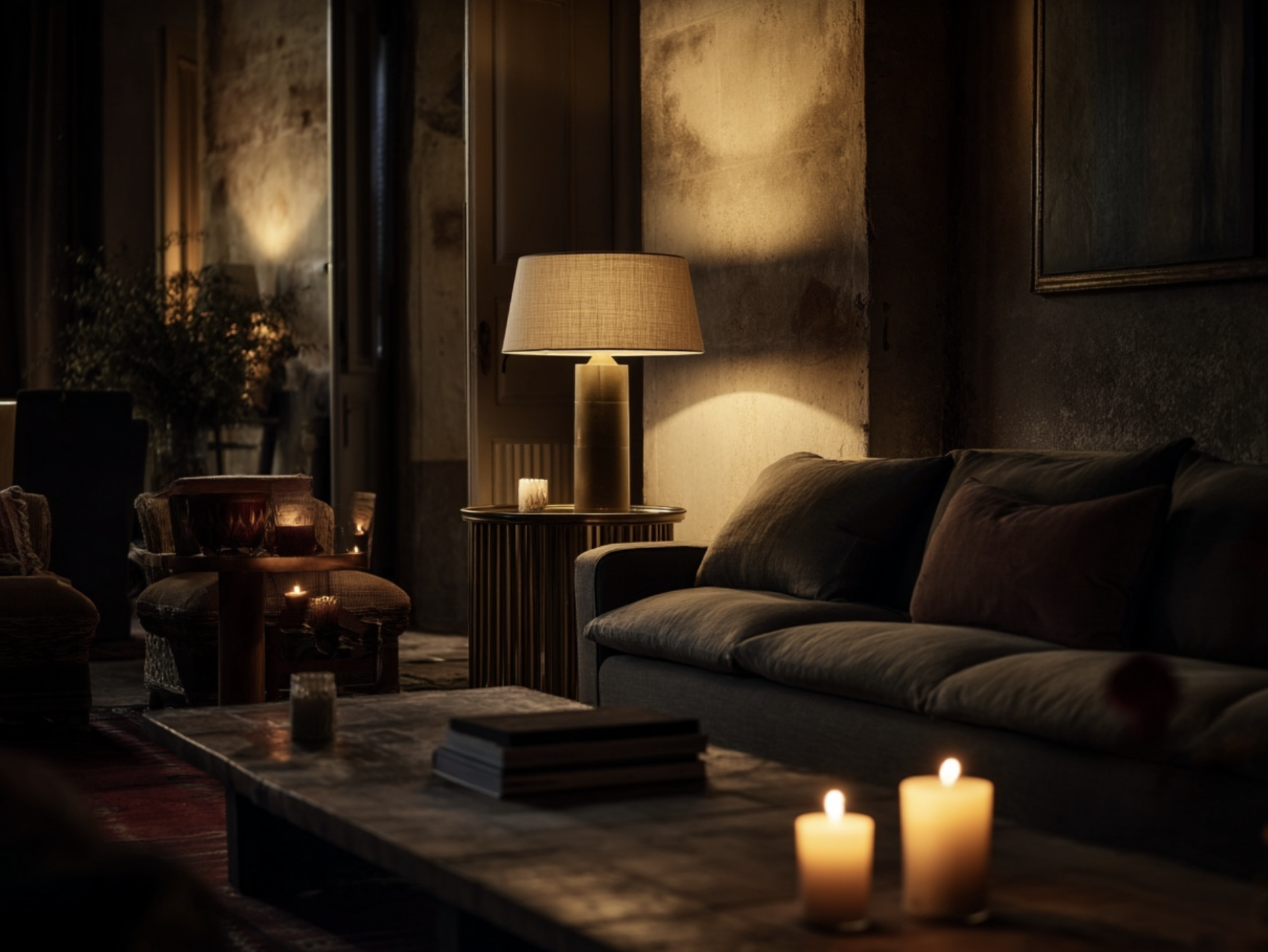
Consider also what you take away, not just what you add. Empty walls, oversized rooms with too little furniture, or a single large rug on a vast floor, these all amplify coldness. Anchor the room first, then edit from there.
Light is the last layer, and often the most impactful
Almost every cold room we see is relying entirely on overhead lighting. A single central pendant or a recessed downlight scheme produces uniform, undifferentiated illumination, it removes shadow entirely, and shadow is what gives a room dimension.
Introducing multiple light sources at different heights transforms the mood of a space almost instantly. Floor lamps. Table lamps. Candlelight where appropriate. Concealed lighting behind architectural elements. The goal is to create pools of light and areas of relative shadow, a room that has variety in its brightness, rather than one flat wash.
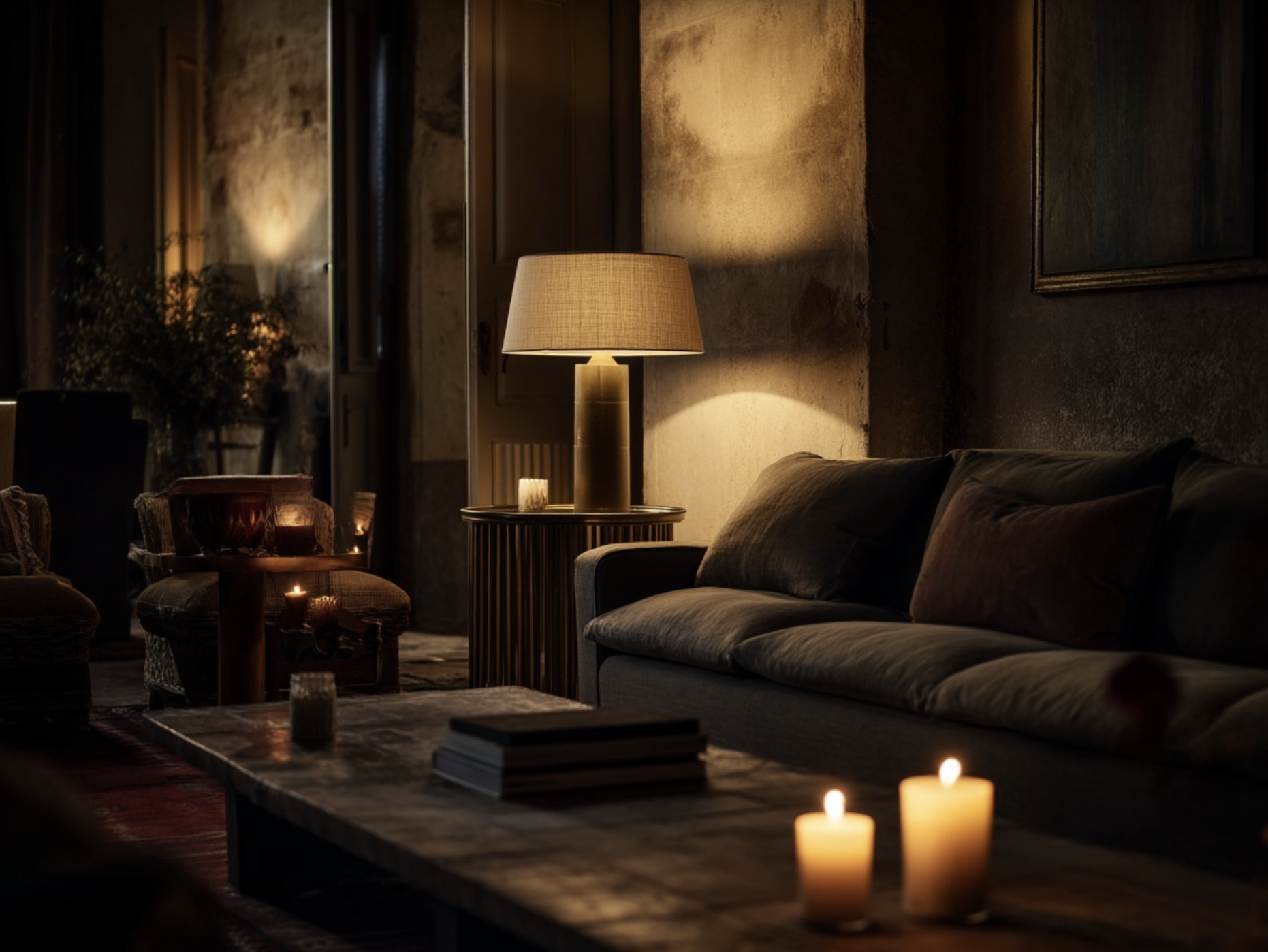
Bulb temperature is equally important. Aim for 2700K–3000K for living spaces, warm white, not cool white. Many homeowners are unknowingly using 4000K bulbs, which render everything slightly clinical regardless of how carefully the rest of the room is designed.
Studio note: Before investing in new fixtures, replace your bulbs. It costs almost nothing and the difference, particularly in the evening, is frequently remarkable.
The case for imperfection
There is a final, less tangible quality that separates cold interiors from warm ones: the tolerance for imperfection. Spaces that feel genuinely lived in, and genuinely welcoming tend to include things that are slightly mismatched, slightly worn, or chosen for sentimental rather than aesthetic reasons. An inherited lamp that doesn't quite coordinate. A stack of books left on the floor. A favourite blanket draped without arrangement.
Design that is too resolved, too considered in every detail, can feel airless. The clients we work with who are happiest in their homes are those who learned to trust their instincts alongside the process, who know when to add one more thing and when to stop entirely.
Warmth, in the end, is not a finish line. It's a quality of attention, to how a space is used, how it feels at different times of day, and whether it reflects the people who actually live in it.
Studio Akiva works with residential clients across the UK on interiors that are both considered and genuinely habitable. If you'd like to discuss a project, we'd be glad to hear from you.