How Do You Transition Your Home From Summer to Autumn?
Start with light, not colour. Swap your bulbs to 2700K warm white, add two lamps at seated eye height in each main room, and save the heavier changes (rug, throws, curtains) for the weekend the clocks go back on 25 October. Colour comes last and costs least: change cushion covers and one large textile, not the walls.
Why should light come before colour in autumn?
Because the problem in autumn is not that your room looks like summer. It is that it gets dark earlier. By the end of October, sunset in London is before five o'clock, and a room that relied on a bright window now relies on whatever lamps you own.
Most UK living rooms are lit by a single ceiling pendant. Turn it on at 5pm and the room goes flat: every surface is lit evenly, nothing recedes, and the corners feel cold. Warm-looking colours on cushions will not fix that, because the colour reads differently under a cool bulb.
Check the colour temperature printed on the box. Summer-bright bulbs are often 4000K or higher. For evenings, 2700K is the figure to look for, and 2200K to 2400K if you want a candle-like glow in a reading corner. Replace the bulbs before you buy anything else. It is the cheapest change on this list and the one people notice first.
How many lamps does a living room need once the clocks go back?
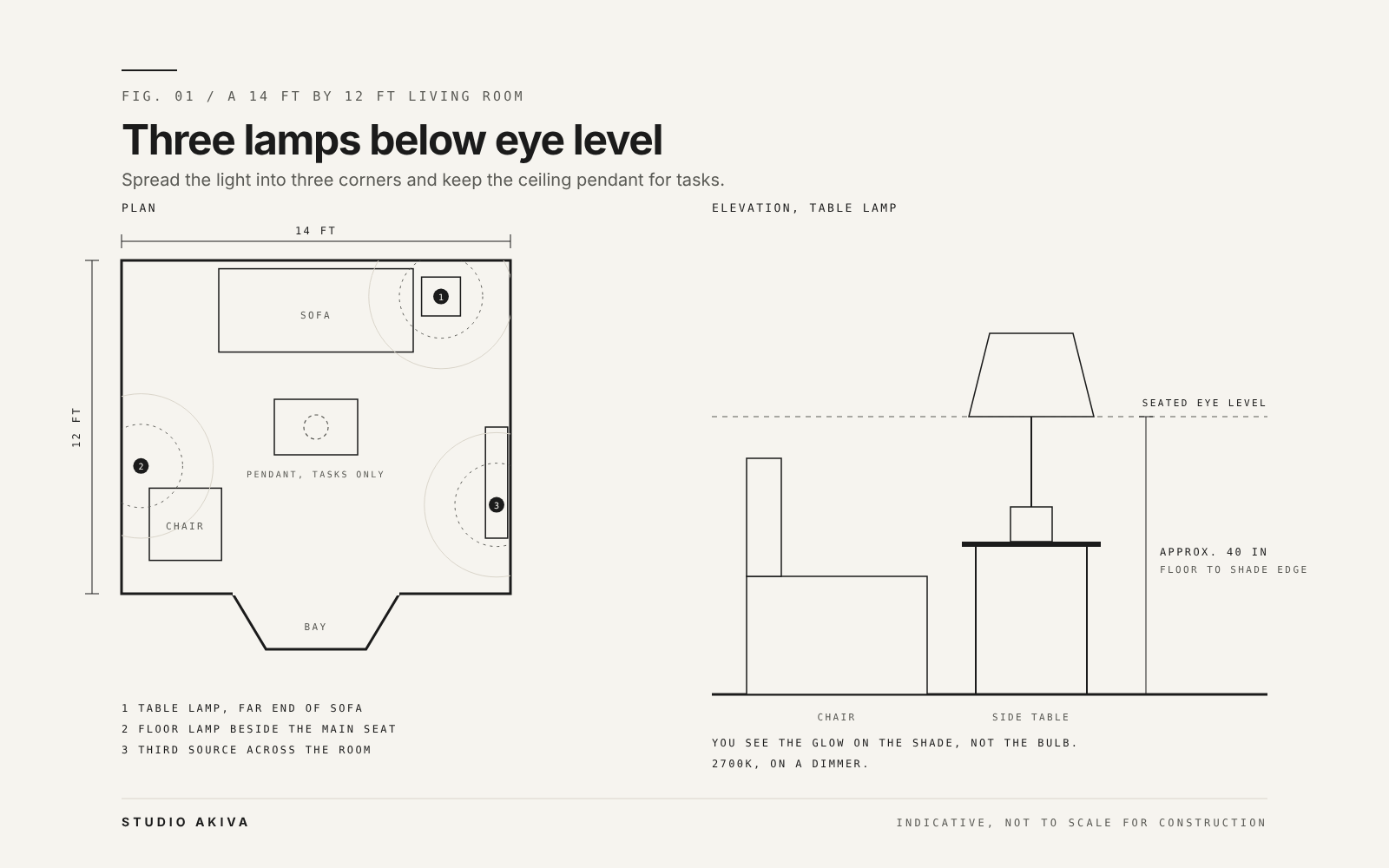
As a working rule, three light sources below eye level, plus the ceiling light only for tasks. In a living room of roughly 14ft by 12ft that usually means a floor lamp beside the main seat, a table lamp on a side table or console, and a third source across the room from the other two, so the light is spread rather than clustered.
Heights matter more than people expect. The bottom edge of a lamp shade should sit at about eye level when you are seated, which is roughly 40 inches from the floor, so you see the glow on the shade and not the bare bulb. A floor lamp that arcs over a sofa should arc at least 6ft above the floor so it clears your head. Put at least one lamp on a dimmer or a plug-in dimmer, because the same room needs a different level at 5pm and at 9pm.
We would add a note on what depends on the room. A north-facing room loses its light first and needs the lamps in place early in September. A south-facing room can wait until the clocks change.
Which textiles are worth changing, and which are not?
Change the ones you touch and the one you walk on. Leave the ones that are expensive and flexible.
Worth changing: throws, cushion covers and bed linen. Swap linen for brushed cotton or flannel, and use a heavier throw over the arm of the sofa rather than folded in a basket. These cost little and can go back into storage in March.
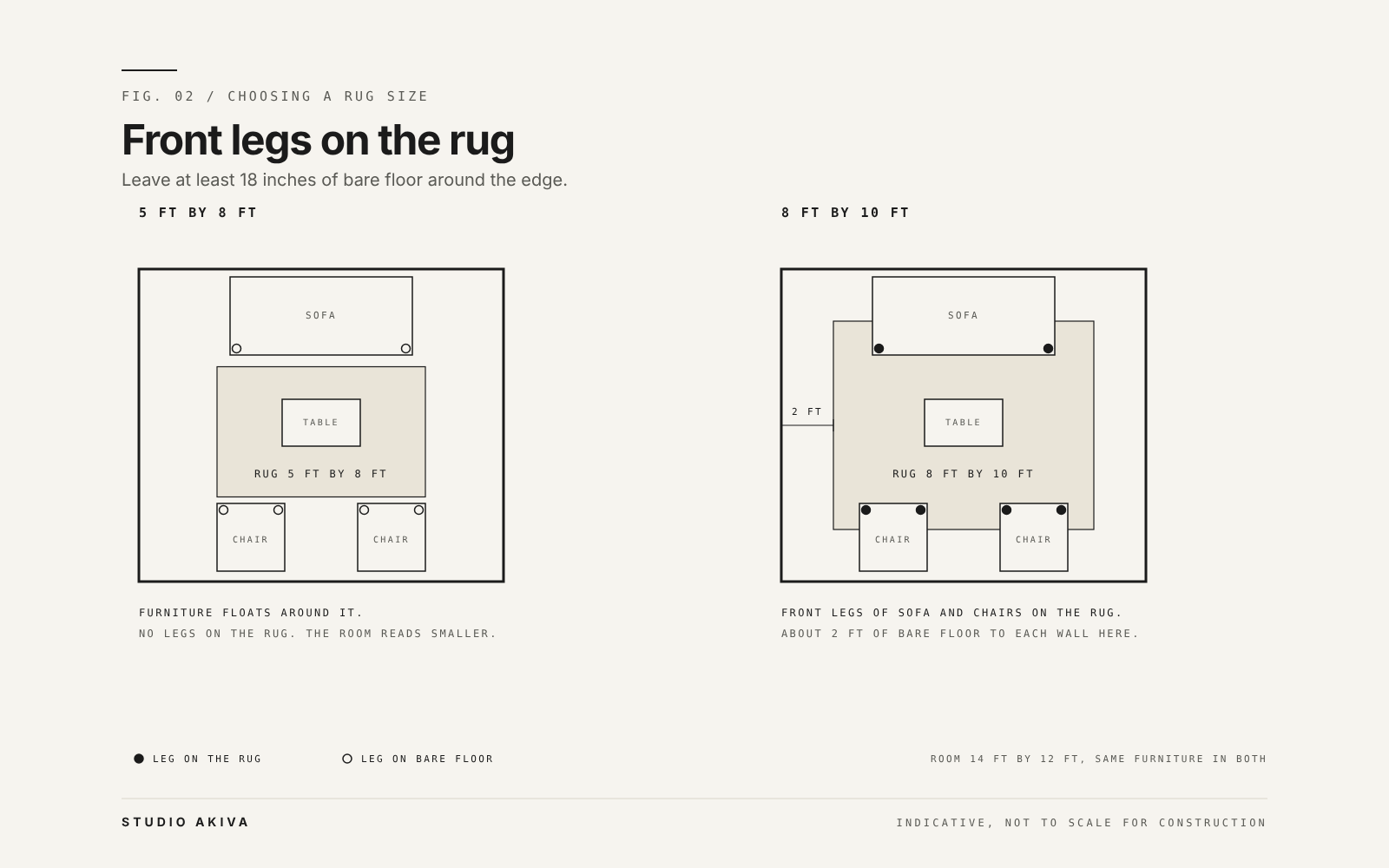
Worth considering: one rug. A larger, thicker rug does more for warmth than any other single item, and it changes how a room sounds as well as how it feels. In a living room the front legs of the sofa and armchairs should sit on the rug, which usually means 8ft by 10ft rather than the 5ft by 8ft most people buy first. Leave about 18 inches of bare floor around the edge.
Not worth changing: curtains, unless you already own a heavier lined pair. Curtains bought for one season are a poor use of money. If you are replacing them, buy once, in a lined fabric that works from October to April.
What colours actually work for autumn in a UK home?
The autumn 2026 trend reports published this month point the same way: rust, burgundy, caramel, deep green, and a heritage red close to plum. They work, but only if the base of the room can carry them. Against cool grey walls, rust cushions look like an accident. Against warm white or a stone neutral, they look planned.
A reliable method is the 60, 30, 10 split. Roughly 60% is the existing room (walls, sofa, floor), 30% is a secondary tone (curtains, rug, a large piece of art), and 10% is the seasonal accent: cushions, a throw, a vase. For autumn, put the new colour in the 10% only. If you want to understand why a colour behaves differently in a north-facing room and a south-facing one, our Harnessing Colour guide sets out the method in 36 pages.
What does this look like in a 1930s semi?
Take a typical 1930s semi in outer London with a 14ft by 12ft living room, a bay window to the south and a ceiling pendant as the only light.
In September, replace the pendant bulb with a 2700K dimmable one. Add a floor lamp in the bay corner and a table lamp on the side table at the far end of the sofa. That gives three sources and keeps the bay, which goes dark first, from looking like a black mirror at 5pm.
Keep furniture at least 6 inches from the radiator under the window so heat can circulate, and do not hang long curtains over it. On the weekend of 25 October, bring in the 8ft by 10ft rug, swap two cushion covers for rust and one for deep green, and fold a wool throw over the sofa arm. The walls, sofa and floor stay exactly as they are.
Total changes: three bulbs, two lamps, one rug, three cushion covers, one throw. The room reads as autumn and still works in January.
Where does the popular advice fail?
Three places come up again and again.
First, the advice to repaint. A new wall colour is a seasonal decision made for six weeks of leaf-fall, and you live with it until next spring. Paint is for when you want the colour in March as well.
Second, the advice to bring in everything at once. Autumn displays of dried stems, pumpkins, candles and plaid throws in the same room look like a shop window. Pick two textures and one scent, and stop.
Third, the advice to buy a statement piece for the season. A rust velvet armchair bought in September will not suit the room in May. If it is a piece you would keep, buy it. If it is a piece you are buying because the season told you to, spend the money on the lamps instead.
The cost of getting this wrong is not the money on the cushions. It is a room that looks decorated rather than designed and has to be undone in spring.
FAQ
When should I switch my home from summer to autumn?
Change the lighting in early September, once the evenings draw in, and the textiles around the weekend the clocks go back on 25 October. The order matters more than the exact date.
Do I need to buy new furniture for autumn?
No. Autumn is a change of light, texture and accent colour, not furniture. If a piece is not working, that is a year-round question and is better solved with a layout review.
What colour is best for an autumn living room?
Warm earth tones such as rust, caramel and deep green work best over a warm neutral base. Keep them to about 10% of the room.
Is it worth paying a stylist for a seasonal change?
Only if you want it done once and to the same standard at each change of season. A single session can set out where every lamp, textile and accessory goes, and you can repeat it yourself each year.
Ready to do this properly?
If you would rather have a designer set out the lamps, rug and textiles for your room, our interior styling service is booked by the hour, either on site or as a written room-by-room guide, and we have over 100 five-star reviews on Houzz, have been Houzz members since 2017 and have won twelve consecutive Houzz awards.