When Should You Get in Touch With an Interior Designer? A Guide for UK Homeowners
Why timing matters
Many people assume that an interior designer is someone you hire after the dust has settled to pick paint colours or cushions. In reality, designers are most effective when they are involved from the very beginning of a project. The British Institute of Interior Design (BIID) notes that designers should collaborate with architects and the wider design team early on to assist with spatial planning and detailed furniture layouts. They emphasise that interior designers bring essential knowledge about fixtures, finishes and equipment, elements that can account for 30–60 % of the build cost, so their input during the early stages helps align the budget and prevent costly changes later.
The home‑improvement website My Home Extension echoes this advice. It explains that “ideally, an interior designer will be hired in the early planning stages of a project” (myhomeextension.co.uk). Small adjustments to room size or the position of a door, made before construction begins, can prevent problems when you start furnishing. The article also points out that designers bring a fresh perspective and can spot opportunities that aren’t readily obvious.
The online platform Houzz UK reinforces the same message. In its guide to hiring an interior designer, contributor Nelly Reffet advises homeowners undergoing renovations or major building projects to “get an interior designer to work with you early on in the process” (houzz.co.uk). Collaborating from the outset allows you and your designer to review ideas and plans together so that the foundations align with what you want. Even if you don’t need full design services, having professional support from the start provides peace of mind and a sounding board for decisions.
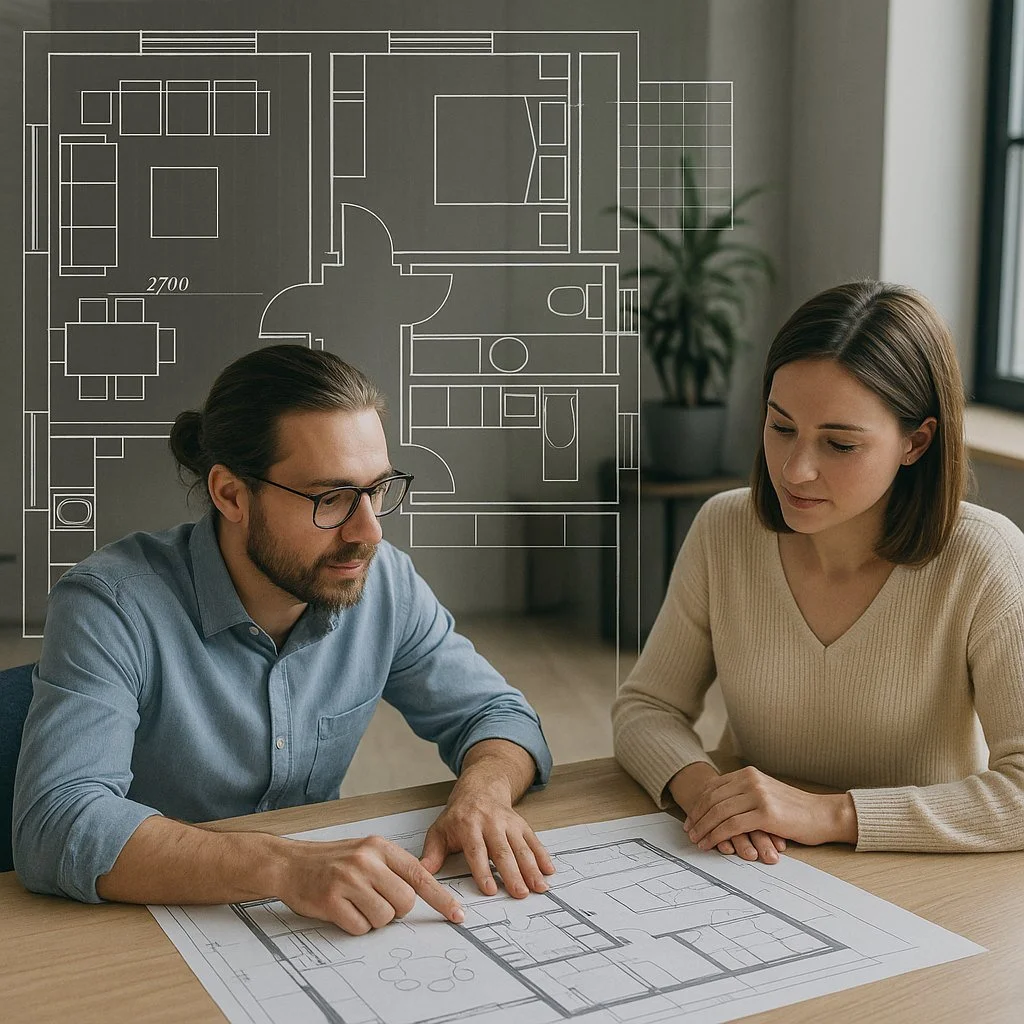
An interior designer and a homeowner review floor‑plans during the early planning stage.
Key moments to call a designer
While every project is unique, certain milestones make it clear that professional help is needed. Below are common scenarios when UK homeowners should consider contacting an interior designer.
Starting a new build or major extension
If you’re building from scratch or extending your home, an interior designer’s expertise is invaluable before structural decisions are finalised. According to My Builder, interior design and architecture “go hand in hand, especially during the early stages of planning” (mybuilder.com). Architects focus on the structure and exterior, while designers ensure the interior layout is both practical and visually appealing. For example, a designer might suggest moving a wall to improve flow or maximise natural light. Involving a designer before construction also ensures that lighting, sockets and built‑in elements are positioned correctly, reducing the need for expensive revisions.
Planning a renovation or remodel
When renovating an existing property, the temptation is to wait until the build work is done before thinking about interiors. However, Houzz UK urges homeowners to bring designers on board early to review ideas and plans. This collaboration helps you refine layouts, choose materials and plan around structural changes at a time when adjustments are still feasible. My Home Extension emphasises that even minor tweaks to room dimensions or door positions, made during the planning phase, can make furnishing easier later. Designers also help manage decision fatigue by narrowing down options and ensuring that the renovation aligns with your lifestyle and tastes.
Reconfiguring a single room or updating decor
Interior designers are not just for large projects. My Home Extension notes that designers can create furniture plans that maximise space and ensure circulation flows easily through a room. They will think carefully about how you intend to use the space, whether it’s an open‑plan kitchen/diner or a home office, and can suggest clever zoning solutions such as sliding doors or bookshelves to divide areas. Even for a single‑room refresh, a designer can help you choose colours, fabrics and furniture that reflect your personality while fitting the room’s proportions.
Feeling overwhelmed or short on time
If you’re juggling work, family and social commitments, you may not have time to research products, compare quotes and oversee tradespeople. Houzz UK highlights that having a designer by your side from the start provides peace of mind and lets you delegate decisions when life gets busy. Designers streamline the process by sourcing options that suit your budget and style and by coordinating with suppliers and contractors on your behalf.
Benefits of early engagement
Bringing a designer into your project at the right time offers tangible advantages beyond aesthetics. Here are some key benefits supported by UK sources:
Cohesive space planning and functionality: The BIID explains that designers contribute to spatial planning and detailed furniture layouts from an early stage, ensuring rooms flow well and built‑in elements are positioned correctly.
Budget alignment and cost control: Because fixtures and finishes can account for a large share of project costs, early involvement allows designers to plan around your budget and suggest cost‑effective alternatives.
Preventing costly mistakes: My Home Extension notes that small adjustments to room size or door positions during the planning stage can prevent problems later, while designers’ fresh perspective helps avoid expensive mistakes and decision fatigue.
Enhanced natural light and flow: My Builder observes that designers may suggest moving walls or openings to improve room flow and maximise natural light.
Peace of mind and time savings: Houzz UK emphasises that hiring a designer early provides peace of mind and allows you to delegate decisions when time‑poor.
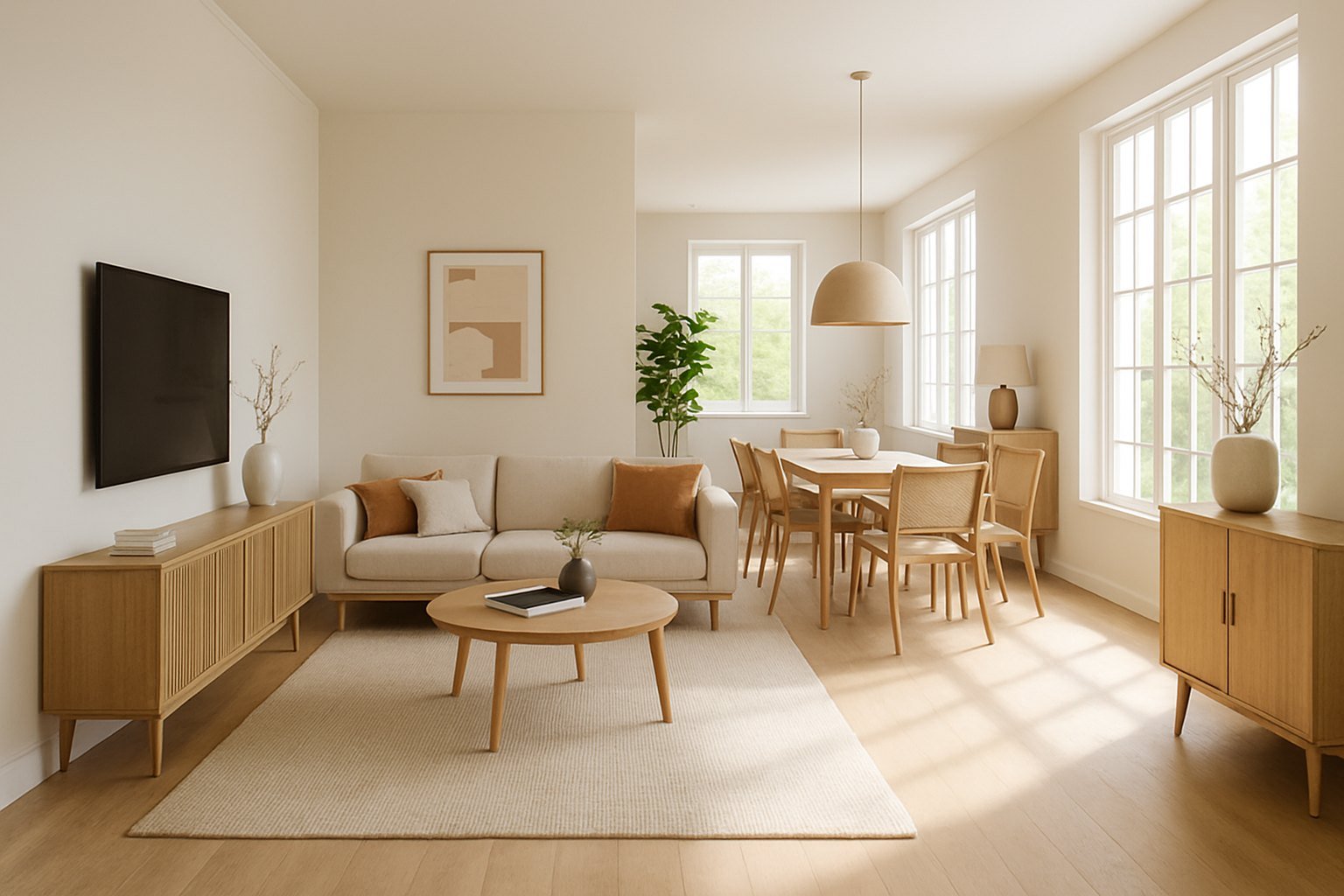
Thoughtful space planning and early decisions about lighting and furniture create harmonious open‑plan living.
Practical tips for working with a designer
Contact designers early: Reach out as soon as you start exploring the feasibility of your project. This ensures they can influence structural decisions and help you assemble a cohesive team.
Clarify your priorities: Before your first meeting, make a list of must‑have features, preferred styles and functional requirements. Designers will use this brief to shape initial concepts.
Discuss budget and scope: Designers may charge hourly, per room or as a percentage of the project cost. Agree on the fee structure and services, such as concept design, procurement and project management, before work begins.
Gather inspiration: Create mood boards with images, colours and materials you like. This helps your designer understand your vision and refine it to suit your home’s architecture.
Trust the process: Professional designers balance creativity with practicality. Be open to their suggestions; they may push you slightly out of your comfort zone to achieve a cohesive and lasting design.
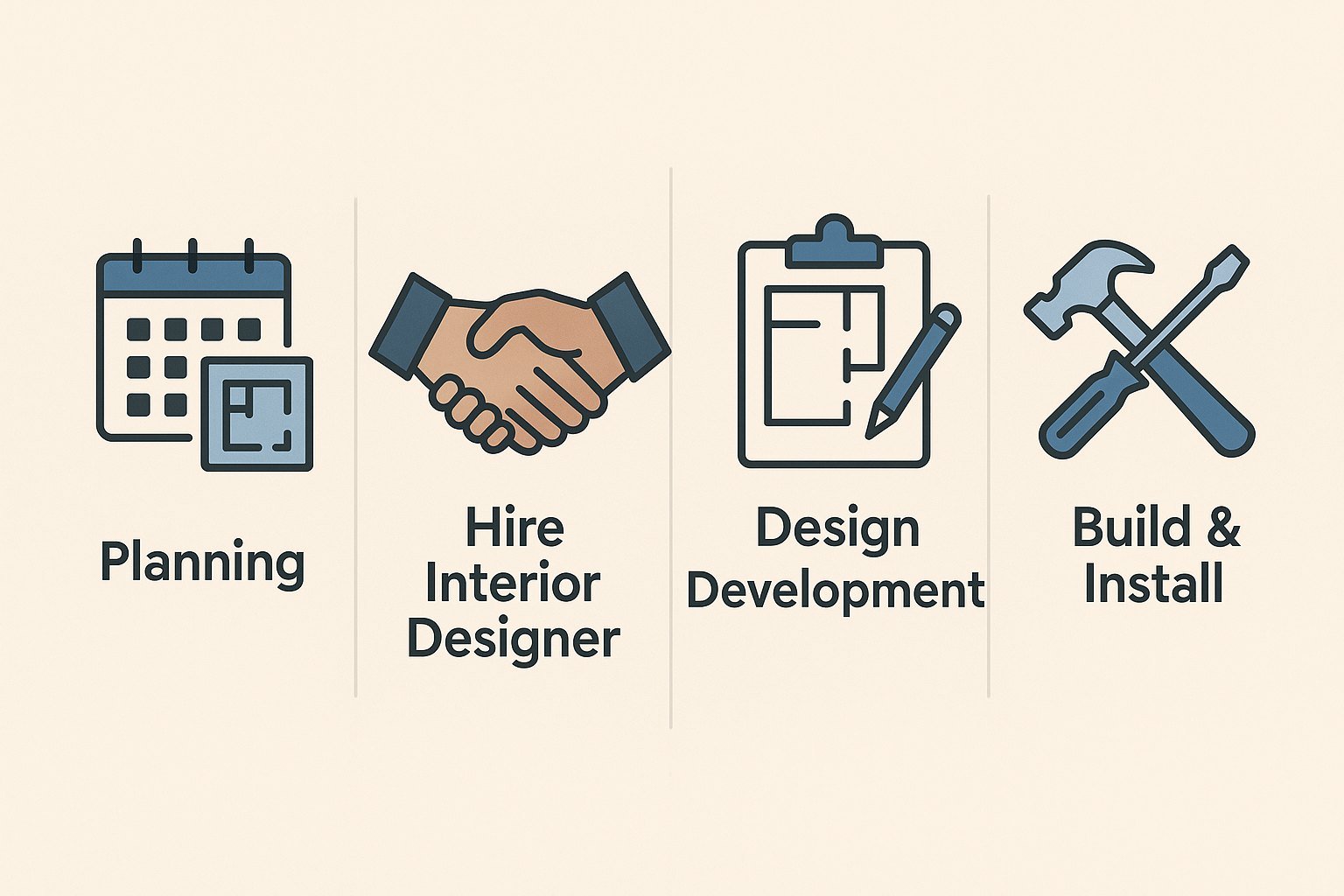
Hiring your interior designer early integrates design with planning, development and build stages.
Final thoughts
The sooner you involve an interior designer, the more control you’ll have over your budget, timeline and the overall result. UK sources consistently recommend engaging a designer at the planning stage rather than waiting until building or decorating is underway. Whether you’re building a new home, extending an existing one, or simply updating a single room, early collaboration helps you avoid costly mistakes, maximise functionality and enjoy a smoother journey. Instead of feeling overwhelmed by choices, you’ll have a trusted professional guiding you towards a space that reflects your style and suits your way of life.
About Studio Akiva
Studio Akiva is a multi‑award‑winning interior design and project‑coordination practice based in London. We offer a full‑service, A‑to‑Z approach, from initial site visits and space planning through procurement and post‑design support. Our long‑term relationships with suppliers mean we can secure competitive discounts on furniture and materials. We act as your partner throughout the process to ensure a seamless, personalised experience. In addition to full‑service design, we provide architectural technical drawings, lighting distribution, custom furniture design, 3D visualisations and hourly consultancy sessions.
Final tip
For the smoothest experience and the best results, contact Studio Akiva at the very beginning of your project. Our team will help you navigate planning, budget and design decisions so you can relax and enjoy the transformation.