How to Find Your Interior Design Style
1) Start with what you actually live with
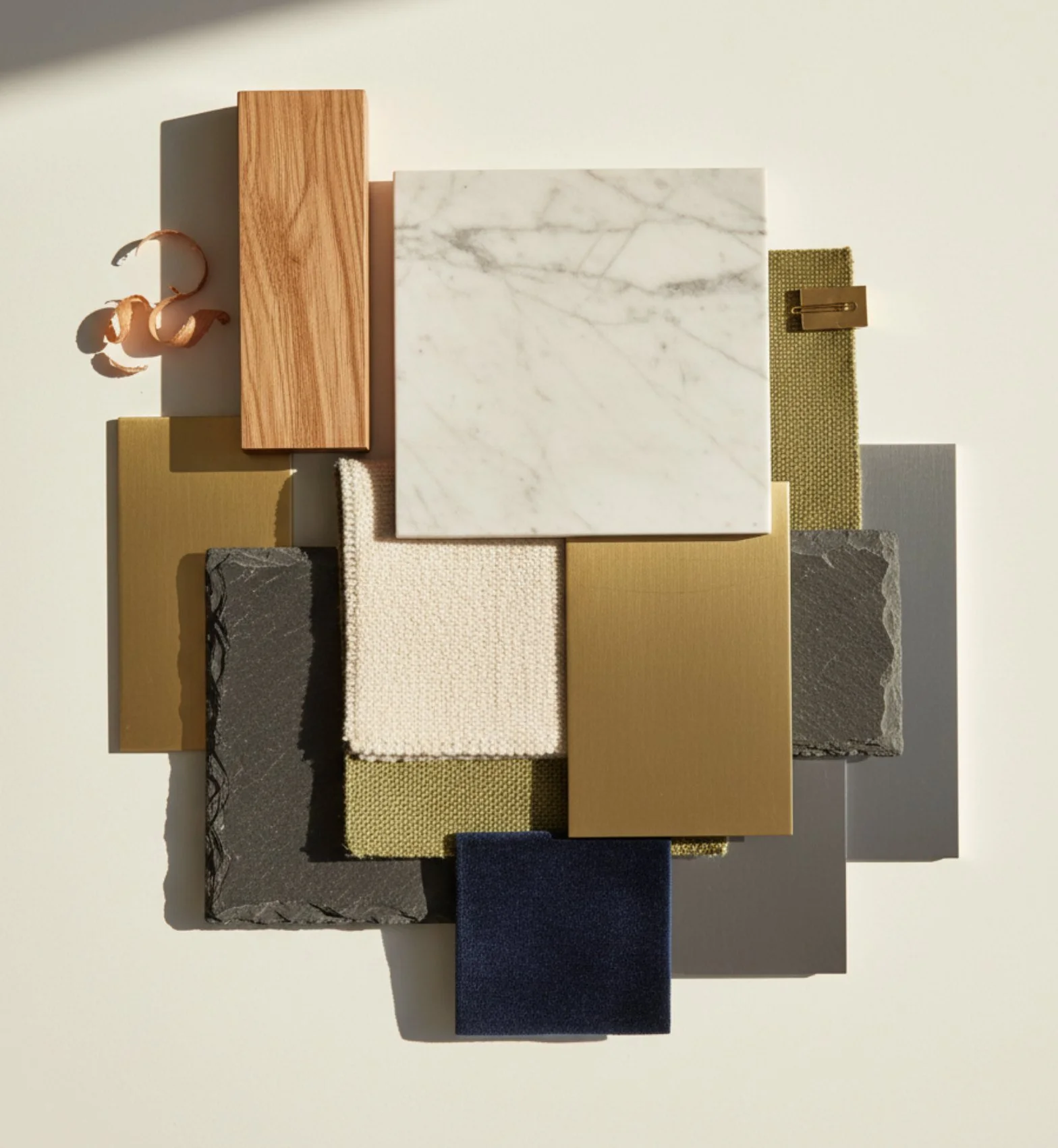
Lay out three things you already love—perhaps a wool coat, a ceramic mug, and a vintage print. Study them together:
Palette: earthy (tobacco, olive, clay) or crisp (ink, chalk, steel)?
Lines: soft curves or clean architectural profiles?
Texture: matte linen and raw timber, or lacquer, glass and polished stone?
We begin many Akiva projects by “reading” our clients’ belongings—it’s disarmingly accurate.
2) Map your rituals, not just your rooms
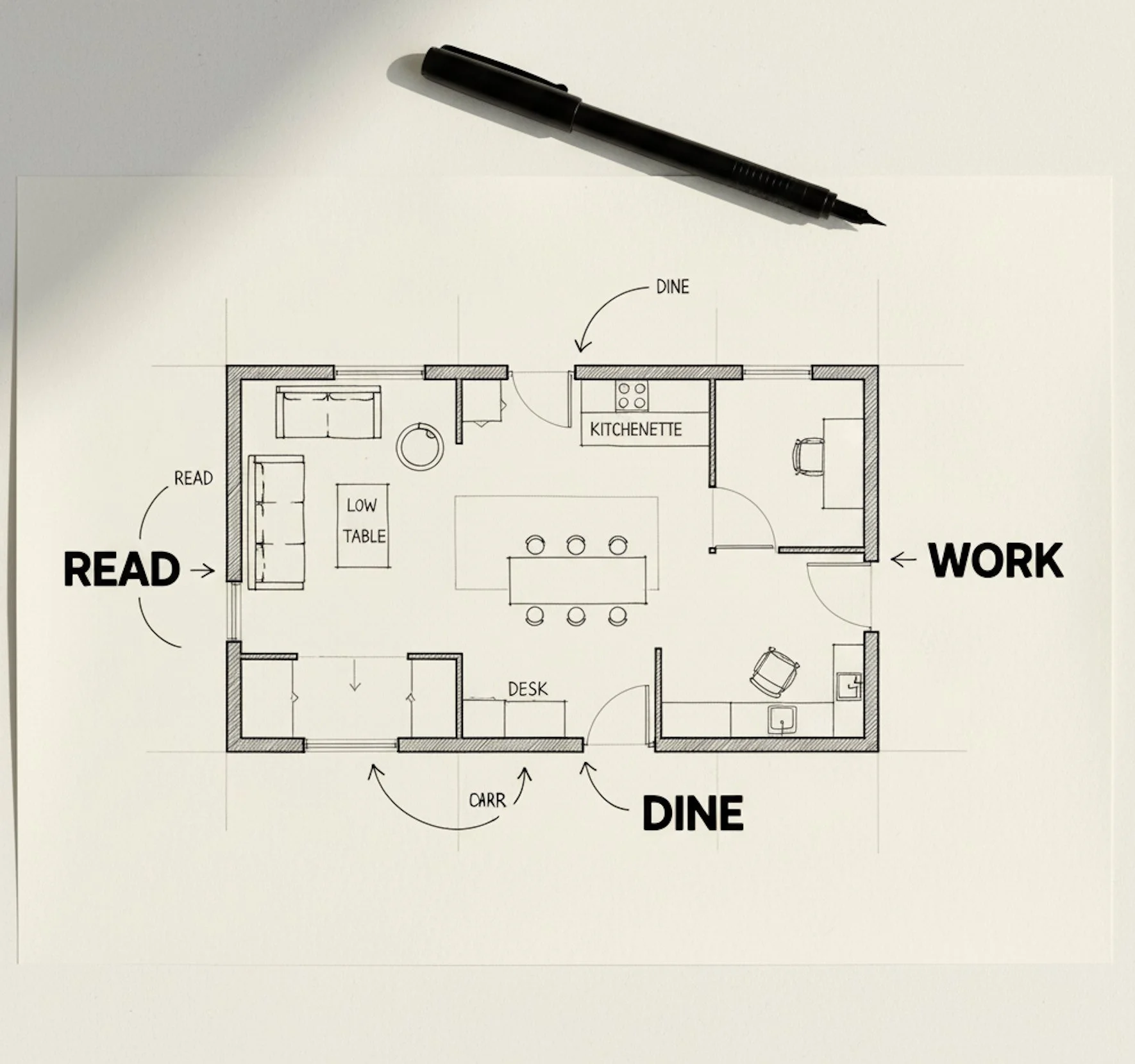
Design is lifestyle choreography. Forget labels like “Mid-century” or “Minimal” and chart your day:
Where do you drop your bag and shoes?
Do you read upright at a table or sink into a deep seat?
Do you host two friends at the island or eight around a dining table?
Your habits define layout, storage and lighting; style follows function. In our fixed-price room design service, we start with a short ritual audit, then translate it into a plan you can actually live with.
3) Choose a material language
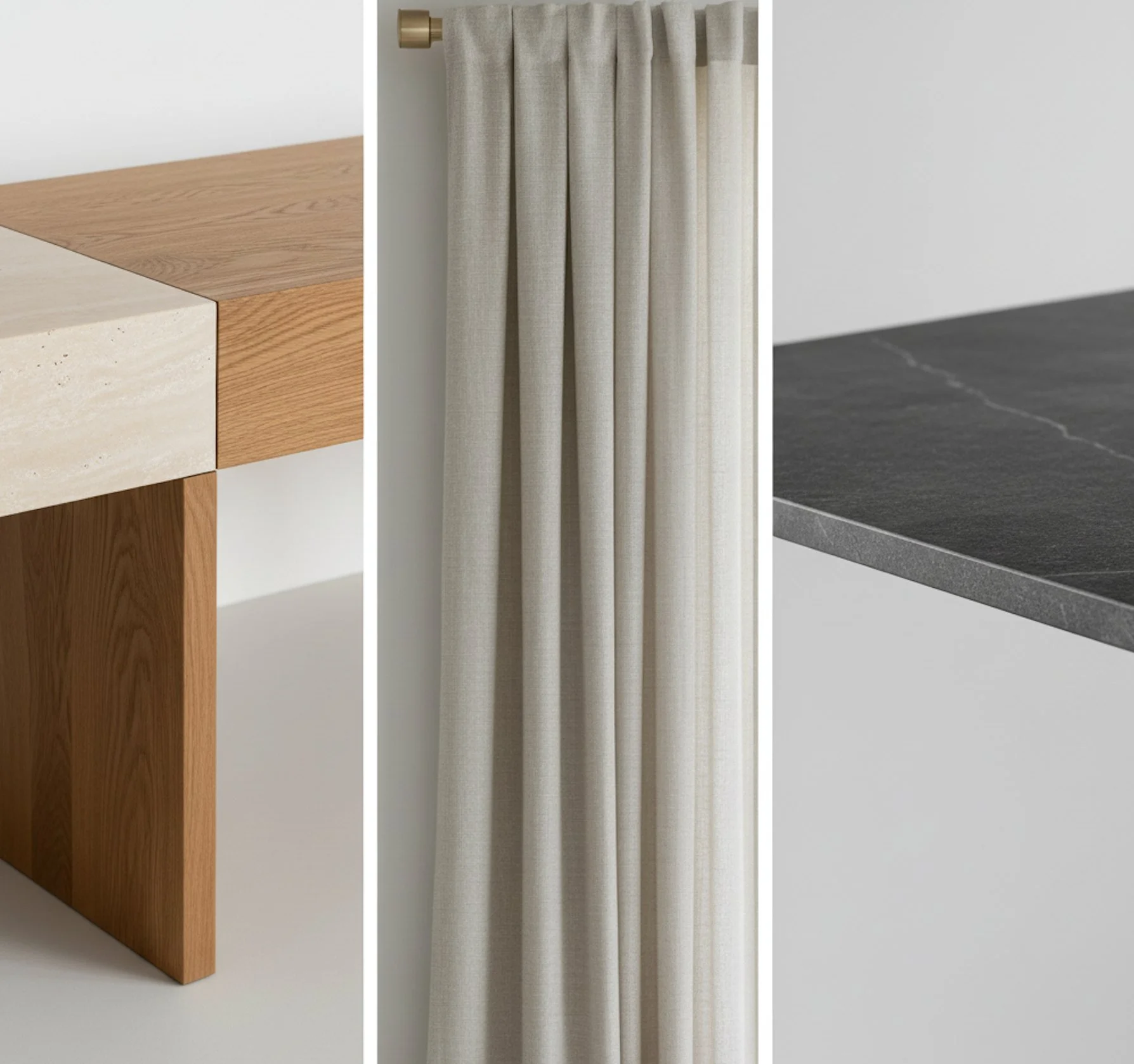
Commit to a tight set of materials and repeat them for coherence and quiet luxury.
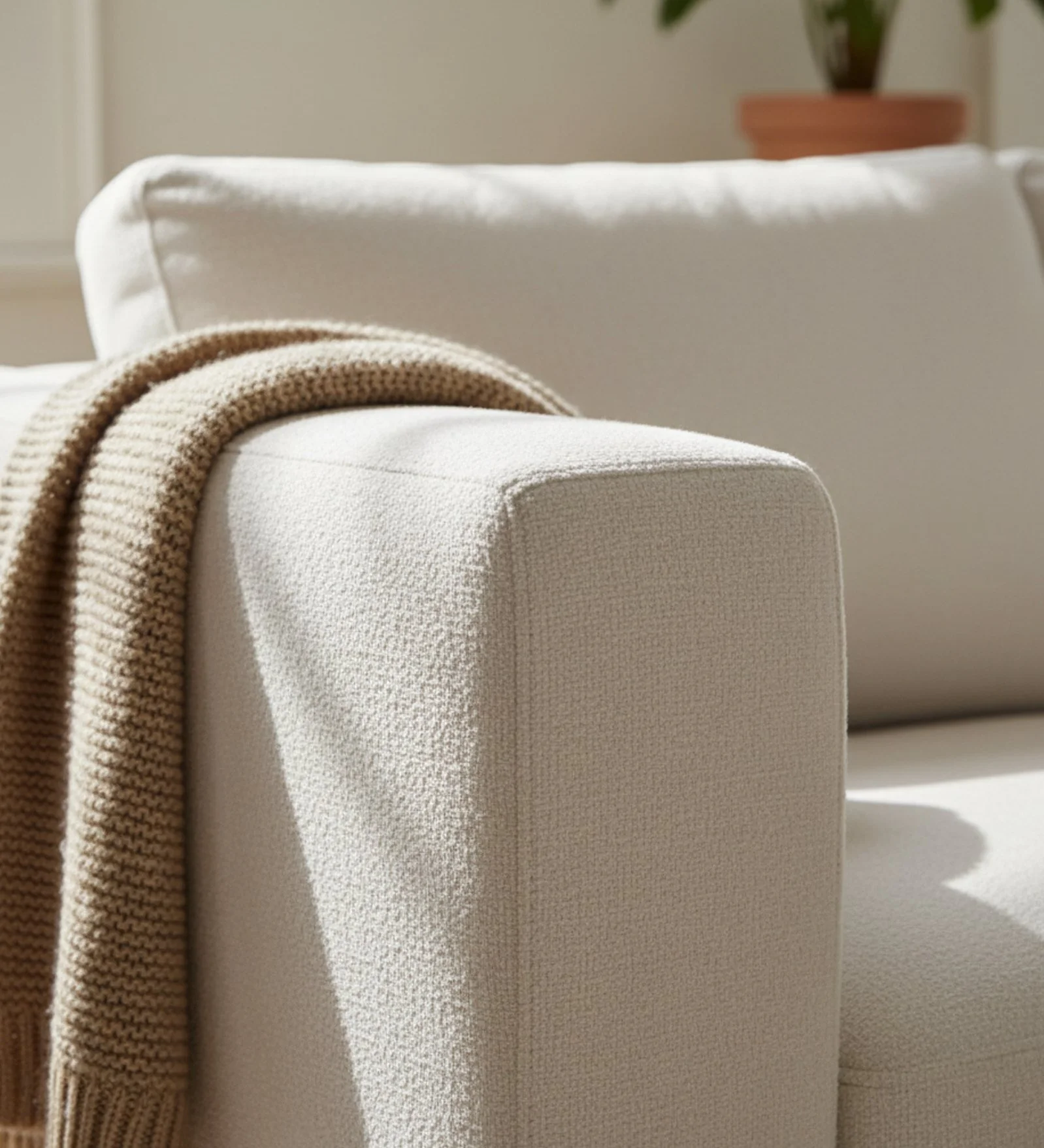
Natural & Tactile: oak, tumbled limestone, bouclé, oxidised bronze
Crisp & Modern: walnut, honed marble, linen, blackened steel
Light & Airy: ash, terrazzo, cotton, brushed nickel
Run one timber species across rooms; echo a stone on hearth and coffee table; keep metals consistent across handles and lamps. This restraint reads as purposeful.
4) Build a palette you can live with
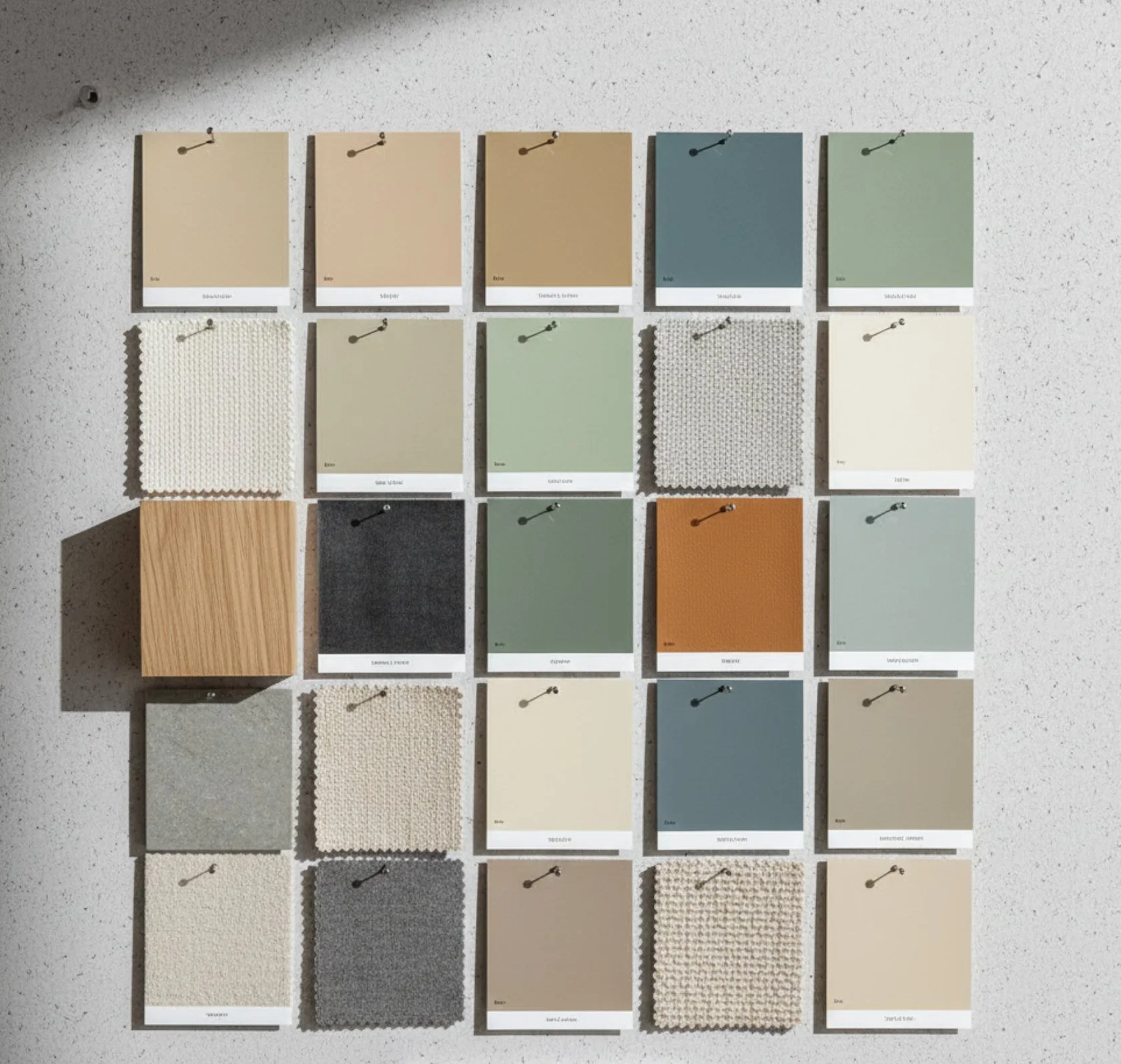
Most successful schemes use a ground colour (60%), a supporting neutral (30%), and an accent (10%). Balance temperature (cool walls?—introduce warm timber or brass) and preserve contrast somewhere to avoid the dreaded beige fog.
Akiva note: On projects, we often specify two near-neutrals—one per aspect—so the house breathes with the light.
5) Edit silhouettes: one lead, one chorus
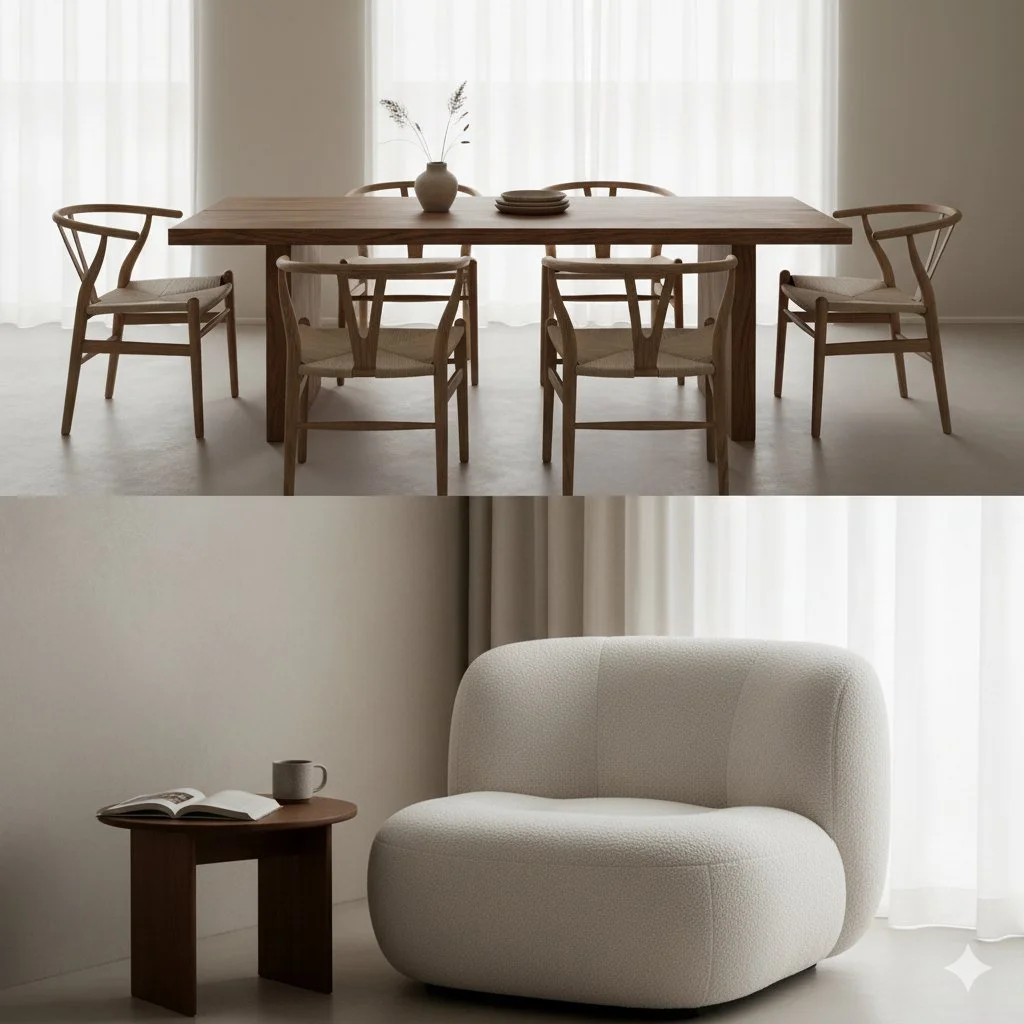
Pick a signature profile for larger pieces—say, soft-rounded for sofa and armchairs—and let side tables and dining chairs provide a squarer counterpoint (or vice versa). That gives the room rhythm without chaos.
Iconic clarity that plays well across styles:
Carl Hansen & Søn CH24 “Wishbone” Chair – a sculptural, timeless dining staple.
GUBI “Pacha” Lounge Chair – cloud-soft forms that instantly relax hard-lined rooms.
6) Get proportion right (it’s 90% of the magic)
Rooms fail more from scale than from colour. Quick heuristics we use at Akiva:
Sofa: seat depth ~55–62 cm for conversation; go deeper only if you truly lounge.
Rug: large enough that front legs of key seating sit on it.
Dining: allow ~90 cm circulation behind chairs.
Pendants: lower than you think over dining (eye level when seated); higher in circulation areas.
A few centimetres either way can move a room from “fine” to “effortless”. If you’re wavering, ask us to sense-check sizes before you buy.
7) Light in layers—always three
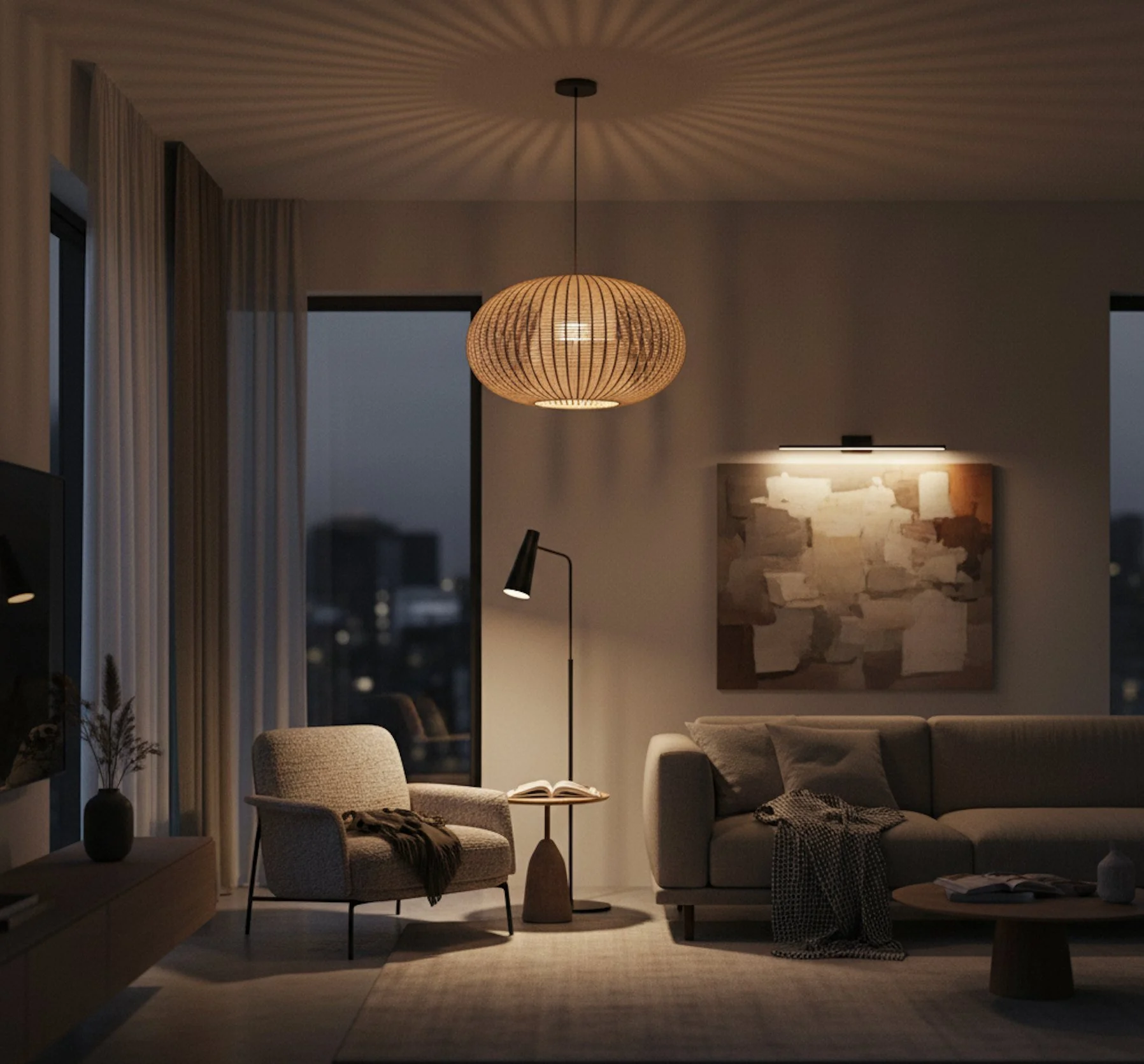
Every room deserves ambient (general wash), task (focused beams) and accent (glow) on separate dimmers.
Ambient: ceiling fixtures or discreet downlights
Task: reading lamps, under-cabinet strips, mirror lighting
Accent: picture lights, wall washers, small pools of light on joinery
Our Lighting Distribution Plan coordinates circuits, beam angles and heights with your electrician and preferred fittings—no guesswork.
8) Curate art and objects with restraint
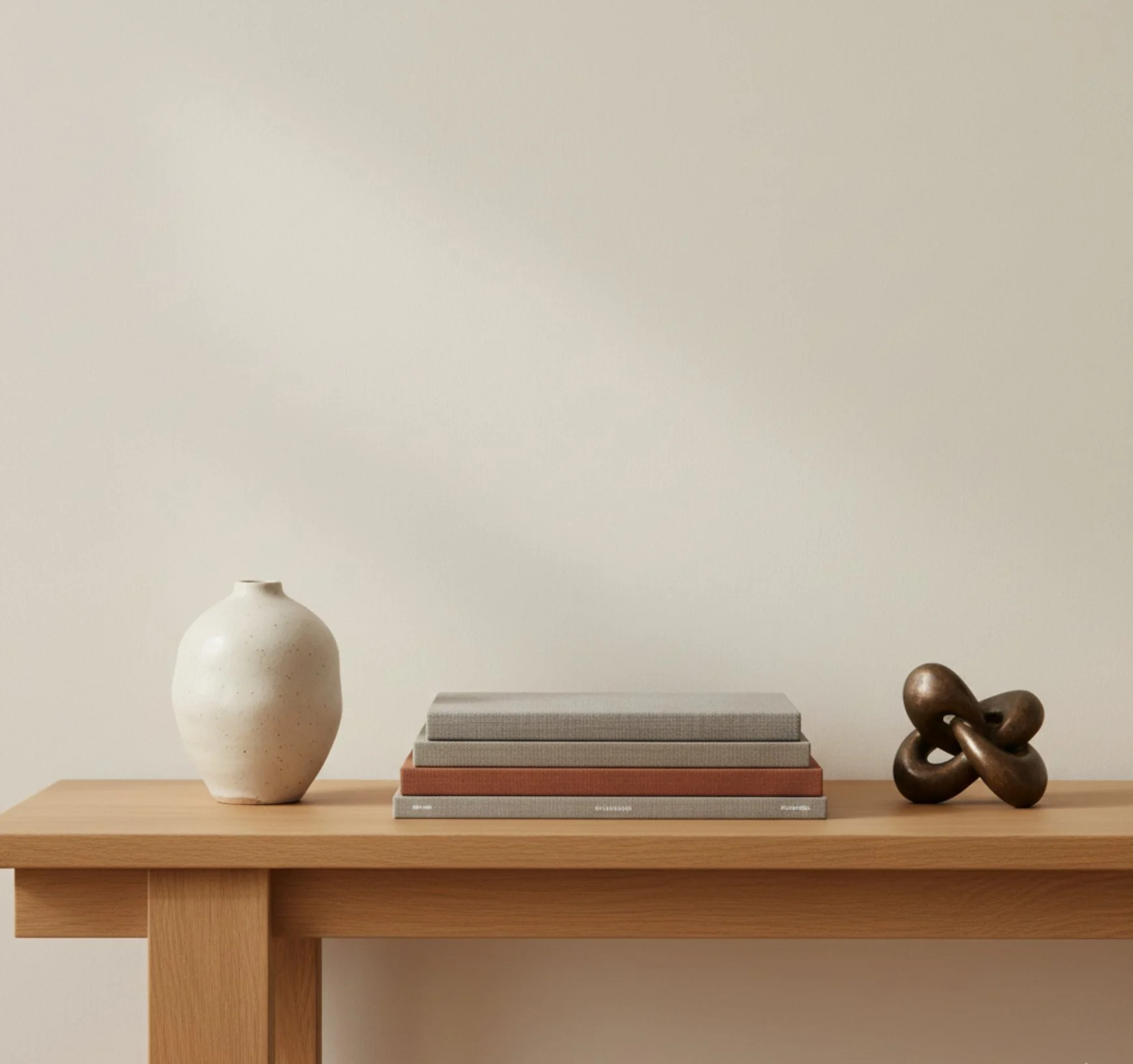
Edit rather than accumulate. Group pieces by theme—material, tone, or geometry—and give them breathing space. One striking ceramic on a pared-back console reads better than six trinkets jostling for attention. When we style, we source fewer, better accents that speak the same language as the architecture.
9) Create a “room recipe” (then repeat with variation)
Once you’ve nailed the DNA, write it down so future decisions stay consistent.
Warm Modern Recipe (Example)
Ground: soft putty walls, oiled oak floor
Materials: oak + travertine + bouclé + burnished brass
Forms: rounded upholstery + rectilinear tables
Key pieces: tailored 3-seat sofa, CH24 dining chairs, linen curtain waves
Lighting: one sculptural pendant; two warm pools by the sofa; a picture light for art
Use this recipe throughout, changing scale and accents so rooms feel related, not cloned.
10) Invest where your hand and eye linger
Spend strategically and you’ll protect your style from “almost right” compromises:
Seats and surfaces: sofa, dining chairs, coffee/dining tables—used daily and set the tone.
Window treatments: transform light and acoustics; poorly made curtains flatten even the best furniture.
Rugs: unify layouts and add underfoot luxury.
Save on decorative side pieces and occasional storage; these can evolve later without derailing the whole.
11) Embrace the 80/20 rule
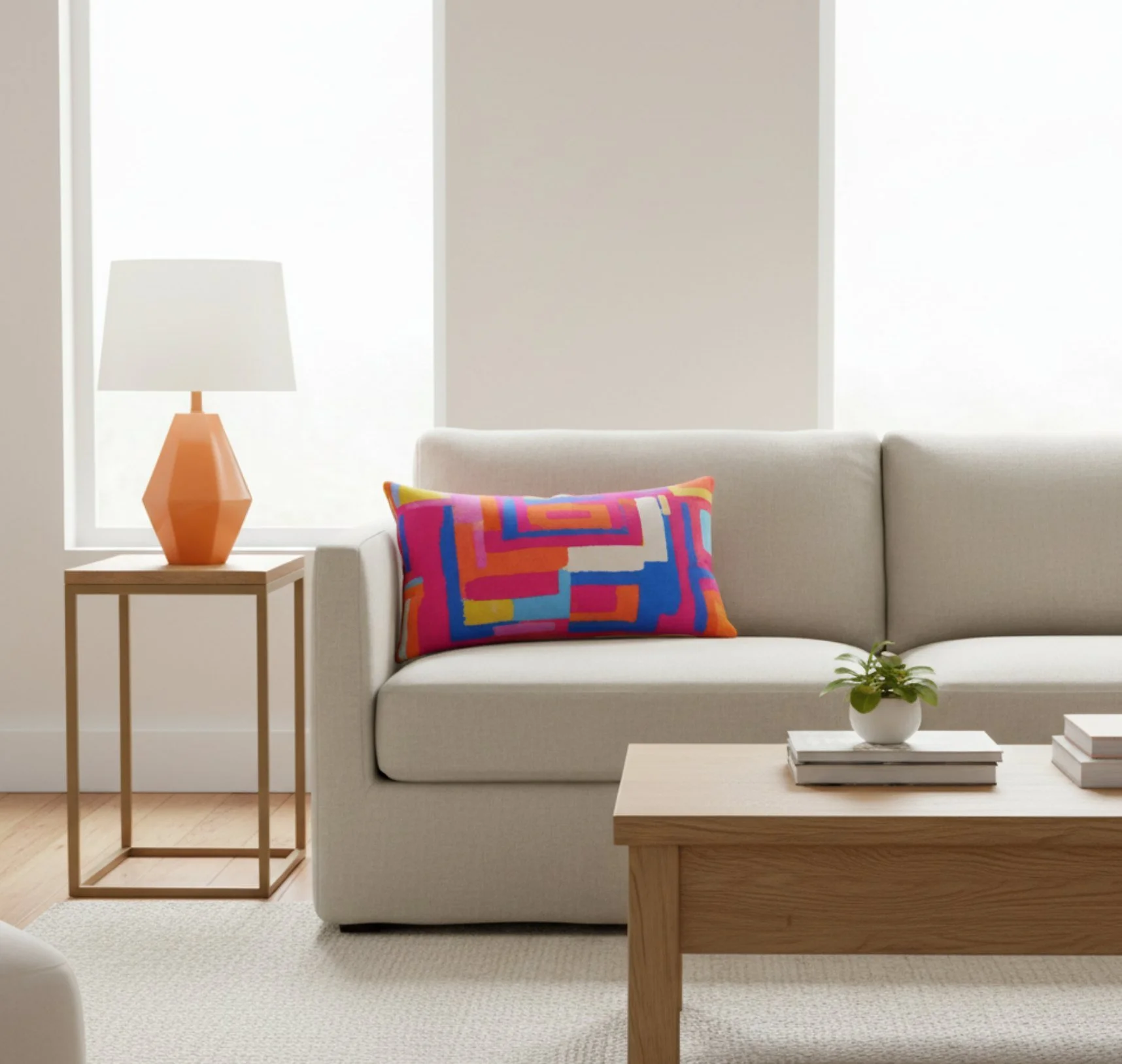
Let 80% be calm and cohesive; use 20% for personality—an unexpected artwork, a bold cushion, a playful lamp like &Tradition’s Flowerpot (the VP9 portable is a delight for soft evening glow). The contrast keeps spaces alive without tipping into clutter.
Where Akiva fits in
If you’re hesitating between sofa sizes, unsure which dining table finish will survive family life, or you need a lighting plan that flatters rather than fights your architecture—this is where we step in. Our fixed-price packages cover:
One-Room Design – the perfect low-risk start to codify your style.
Space Planning & Furniture Layouts – scaled, clear and ready to implement.
Lighting Distribution Plans – layered, dimmable schemes coordinated with your contractor. (Deluxe Package)
Sourcing & Procurement (optional) – we purchase and manage deliveries; trade savings are passed on as part of our procurement add-on, so you avoid buying twice and waiting thrice.
Styling & Install – that final 10% which makes the room sing.
A final word
Finding your interior style isn’t about adopting a label; it’s about expressing your life with clarity and comfort. Start with what you love, refine the materials and palette, obsess over proportion, and light it with intention. If you’d like Akiva to assemble all of this into a room-ready scheme—furnishings, finishes, lighting and a curated shopping list—send us a message. We’ll shape the vision, steward the details, and, if you wish, handle procurement so your home arrives exactly as imagined.
Considering a first step? Ask about our one-room design—ideal for testing your style in a single space before rolling it house-wide.