Limewash Walls: What They Are, Why Everyone Wants Them, and How to Get Them Right
This is a complete guide to what it actually is, how it differs from its frequent companion Venetian plaster, what rooms it works in, and how to specify it correctly in a London or UK home.
What Lime wash Actually Is
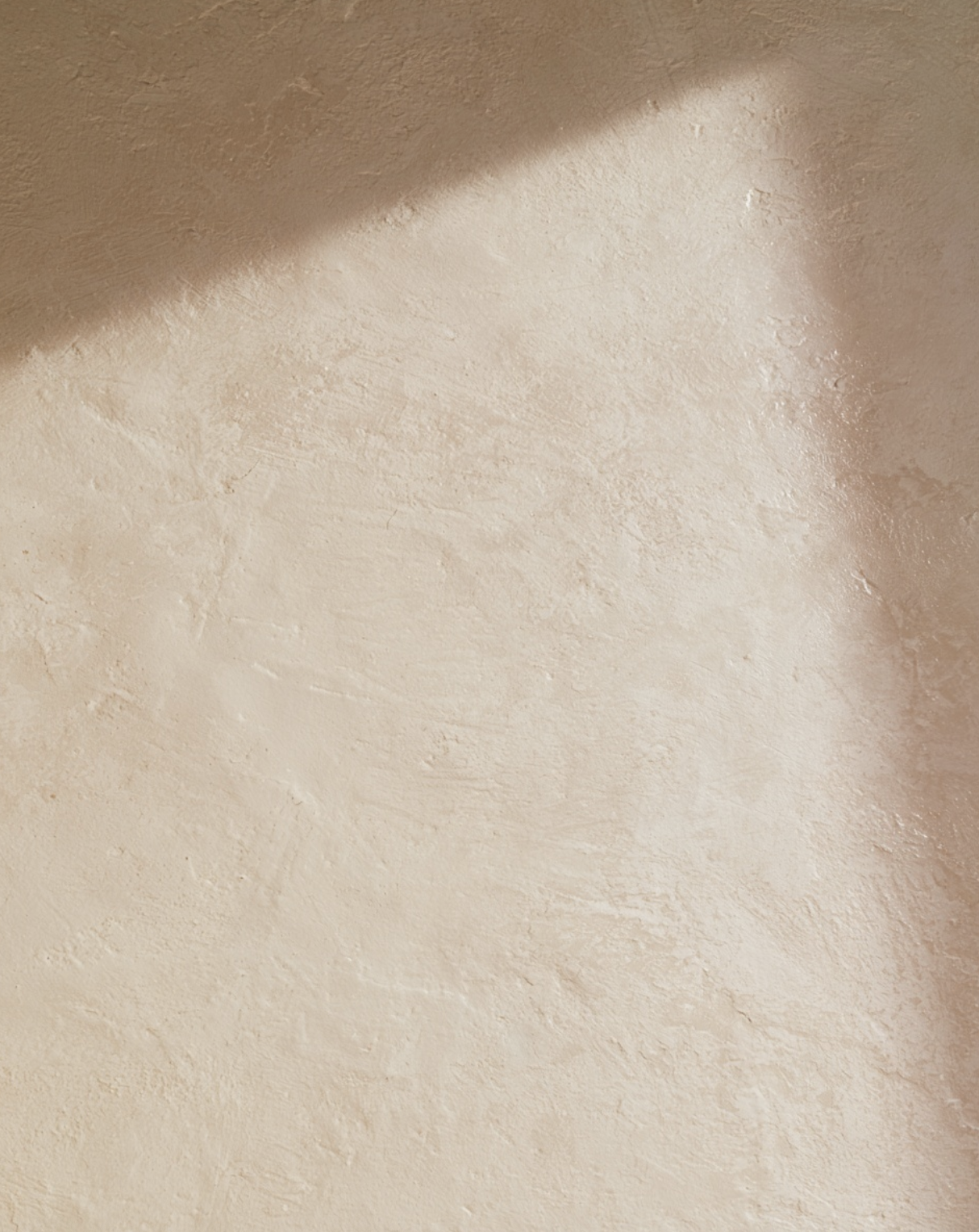
Lime wash is one of the oldest wall finishes in existence. At its most fundamental, it is lime putty, calcium hydroxide, derived from burning limestone, diluted with water to a paintable consistency. Applied to a wall in thin, overlapping layers, it dries to a finish that is semi-translucent, slightly matte, and possessed of a natural variation in tone and depth that no conventional paint can replicate.
The reason it looks the way it does, that beautiful, slightly uneven quality where light catches the surface differently depending on angle and time of day, is a direct consequence of its material honesty. It is not a product engineered to look textured. It is a material that simply is textured, because that is the nature of lime applied by hand to a wall.
Traditional lime wash is applied to bare plaster or masonry and bonds with the substrate as it carbonates, absorbing CO₂ from the air and hardening over time. Modern lime wash products designed for domestic use are often reformulated to work on standard painted or primed walls, making them significantly more accessible for homeowners who want the look without the specialist substrate.
Lime wash vs. Venetian Plaster: The Difference That Matters
These two finishes are frequently confused, and it is worth understanding exactly how they differ, because they produce quite different results and suit different design intentions.
Lime wash is matte to very low sheen, visibly varied in tone, and has a soft, chalky quality that absorbs light rather than reflecting it. It feels ancient. It works particularly well in period homes, in rooms with strong natural light, and in Japandi or modern heritage schemes where warmth and texture are the primary design tools.
Venetian plaster (also called stucco veneziano) is a smoothed, burnished finish applied in thin layers and polished to a high or semi-gloss sheen. It has depth, you can see into it, but its surface is smooth and reflective rather than matte and varied. It is more architectural in character, works beautifully in contemporary schemes, and tends to read as more deliberate and formal than lime wash.
Venetian plaster searches are up 82% year-on-year in the UK. Both finishes are rising simultaneously, which suggests homeowners are drawn to textured, layered walls in general rather than to either finish specifically. If you are unsure which is right for your space, the question to ask is: do you want a finish that absorbs light (lime wash) or one that plays with it (Venetian plaster)?
Why Lime wash Works So Well in UK Homes Right Now
The timing of lime wash's resurgence is not accidental. Several converging shifts in UK interior design taste have made it the finish of the moment.
The rejection of flat, painted walls. After a decade of white and grey emulsion, homeowners are seeking surfaces that have inherent visual interest, texture, depth, variation, without introducing pattern or colour. Lime wash provides all of these in a way that reads as calm and understated rather than busy.
The midimalism movement. As we have explored elsewhere on the Studio Akiva blog, the defining interior aesthetic of 2026 is midimalism: warm, personal, textural, built to last. Lime wash is the wall finish that most completely embodies these qualities. It is warm, varied, improves with age, and provides the richness of texture that the midimalist approach relies upon without any of the visual noise that pattern would introduce.
The compatibility with period architecture. London's Victorian and Edwardian homes were originally finished in lime plaster, a material in the same family as lime wash. Applying a lime wash finish to a period property is not an anachronism. It is a return to the building's original material vocabulary.
Which Rooms Work Best for Lime wash?
Living rooms: The ideal setting. Lime wash in a living room benefits from the variation in natural light throughout the day, the finish looks different in morning sun than it does in afternoon shade, which gives the room a quality of constant, subtle change that flat paint can never achieve. It works particularly well on chimney breast walls and alcoves, where the textural quality is most visible.
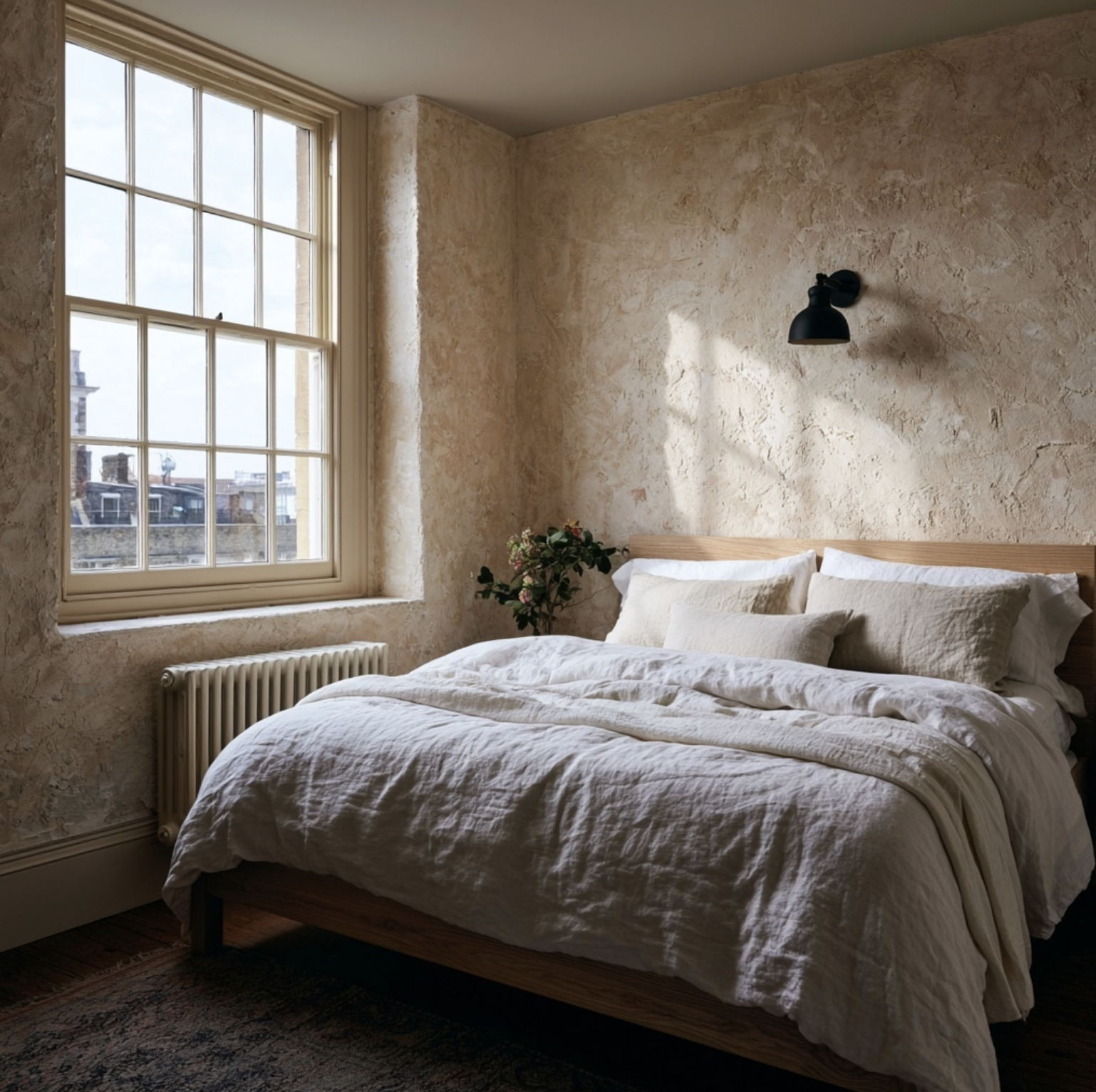
Bedrooms: Excellent. The matte, chalky quality of lime wash creates a calming, cocoon-like atmosphere that is well-suited to a room whose primary purpose is rest. A lime washed bedroom with warm timber and linen textiles is one of the most resolved expressions of the midimalist aesthetic currently achievable.
Hallways: Often overlooked, but potentially transformative. A lime washed hallway in a period London home, even a narrow one, immediately elevates the first impression of the whole house. The textural quality of the finish compensates for what hallways typically lack: furniture and objects.
Kitchens: With caveats. Lime wash is not water-resistant in the way that a tiled or painted surface is, and it should not be applied directly behind a hob or sink. On walls away from moisture and heat, however, it works beautifully, particularly in a kitchen-dining room where the finish can run continuously from the dining area into the kitchen zone.
Bathrooms: Generally not recommended without specialist sealing. Traditional lime wash is breathable and porous, which makes it vulnerable to the sustained humidity of a bathroom. Some specialist bathroom lime wash products exist, but standard lime wash is better reserved for dry spaces.
Colour: What Works and What Doesn't
Lime wash is available in a wide range of colours, but its character is most fully expressed in the warm neutrals that the material naturally produces: off-whites, warm creams, pale taupes, aged plasters, soft terracottas. These colours work with the translucency of the finish, each layer adding depth rather than opacity, so the final colour has a luminosity that pigmented emulsion cannot replicate.
Strong, saturated colours can be achieved in lime wash, and some designers use them to striking effect, a deep terracotta or forest green lime wash can be extraordinary. But the technique requires more skill, more layers, and more careful management of the finish, and the results are harder to predict than with neutral tones.
Pantone's 2026 Colour of the Year, Cloud Dancer, a warm, billowy white, is the natural companion to lime wash. Specified in lime wash rather than emulsion, it achieves exactly the soft, calming quality that the colour was intended to convey.
DIY vs. Professional Application
This is where many homeowners encounter their first disappointment with lime wash. The finish looks effortless in photographs. It is considerably less effortless in practice and the difference between a skilled application and an unskilled one is visible and significant.
DIY lime wash products are available from Farrow & Ball, Little Greene, Bauwerk and other specialist suppliers, and for small areas or experimental applications they can produce very satisfying results. The key technique is working in overlapping, irregular strokes, some areas receiving more coverage, some less, and not attempting to achieve evenness. The variation is the point.
For larger areas, principal rooms, or anywhere the finish is clearly visible and central to the design scheme, professional application is strongly recommended. A skilled plasterer or decorative finishes specialist will produce a result that is consistent in its intentional inconsistency, which is considerably harder to achieve than it sounds.
Cost of Lime wash Walls in the UK
Professionally applied lime wash typically costs between £15 and £40 per square metre, depending on the product, the number of coats, and the contractor's experience with the finish. For a standard London living room of approximately 25 square metres of wall area, expect to pay £400–£1,000 for professional application, plus the cost of materials (typically £30–£80 per 5 litres, covering approximately 20–25m²).
This is significantly more than standard emulsion but considerably less than Venetian plaster, which requires specialist training and typically costs £40–£80 per square metre professionally applied.
What to Ask Your Decorator
Not every decorator has experience with lime wash, and it is worth asking directly before commissioning. Key questions: Have you applied lime wash before? Can you show me examples? What product do you recommend for this substrate? How many coats will you apply? How do you handle edges and corners?
A decorator who cannot answer these questions with confidence is not the right person for the job.
Studio Akiva specifies lime wash and textured wall finishes across residential projects in London and the UK, selecting the right product and application method for each space and brief. If you are planning a renovation and want professional guidance on wall finishes as part of a coherent interior scheme, begin the conversation here.