Japandi blends Japanese restraint with Scandinavian warmth: calm, uncluttered rooms built from natural materials, low furniture and a muted palette, with a few well made objects instead of many. In a UK home it works best when you keep the warmth, edit the clutter and choose pieces for craft, not for the label.
What does Japandi actually mean?
Japandi is a hybrid of two traditions that share more than they differ. From Japan it takes wabi-sabi, the appreciation of imperfect, aged and handmade things, and the idea of ma, the value of empty space. From Scandinavia it takes hygge and lagom, the Danish and Swedish ideas of comfort and of having just enough.
The result is a room that feels quiet but not cold. Japanese interiors tend to be sparse and dark-toned. Scandinavian interiors tend to be pale and soft. Japandi sits between them: lighter than a traditional Japanese room, more disciplined than a typical Scandinavian one.
What are the core elements of a Japandi room?
Five things do most of the work.
A warm, muted palette. Think oatmeal, stone, clay, soft white and mushroom, with one deeper tone such as charcoal, ink or dark green to anchor the room. Avoid stark white and strong colour.
Natural materials. Oak, ash, walnut, bamboo, linen, wool, paper, clay and stone. Texture replaces pattern, so a room can be nearly monochrome and still feel rich.
Low, simple furniture. Sofas, beds and tables sit closer to the floor, with clean lines and visible joinery. Curves appear in a chair back or a table edge, not everywhere.
Open space. Clear surfaces and clear floor are part of the design. Leave a third of a shelf or sideboard empty on purpose.
A few handmade objects. One ceramic bowl, one paper lantern, one branch in a vase. Choose pieces with some irregularity.
How do you adapt Japandi to a UK home?
UK homes pose three problems that a photograph of a Tokyo apartment will not solve: weak daylight for much of the year, smaller rooms, and period features you cannot remove.
Start with light. A north-facing room under grey skies turns cool, pale colours flat and grey. Choose warmer neutrals with a yellow or pink undertone, and test large paint samples on two walls, looking at them in the morning and the evening before you commit.
Next, work with the architecture. Cornices, picture rails, fireplaces and sash windows suit Japandi better than people expect, because the style values craft. Paint them in the wall colour or one shade lighter, rather than contrasting white, and the detail becomes texture and not decoration.
Finally, plan storage first. Japandi depends on clear surfaces, and clear surfaces depend on somewhere for things to go. Built-in or floor to ceiling storage in the wall colour does more for the look than any single piece of furniture.
What would this look like in a real room?
Take a Victorian terrace living room of 12 by 14 feet, north-facing, with a chimney breast, a sash window and a narrow door.
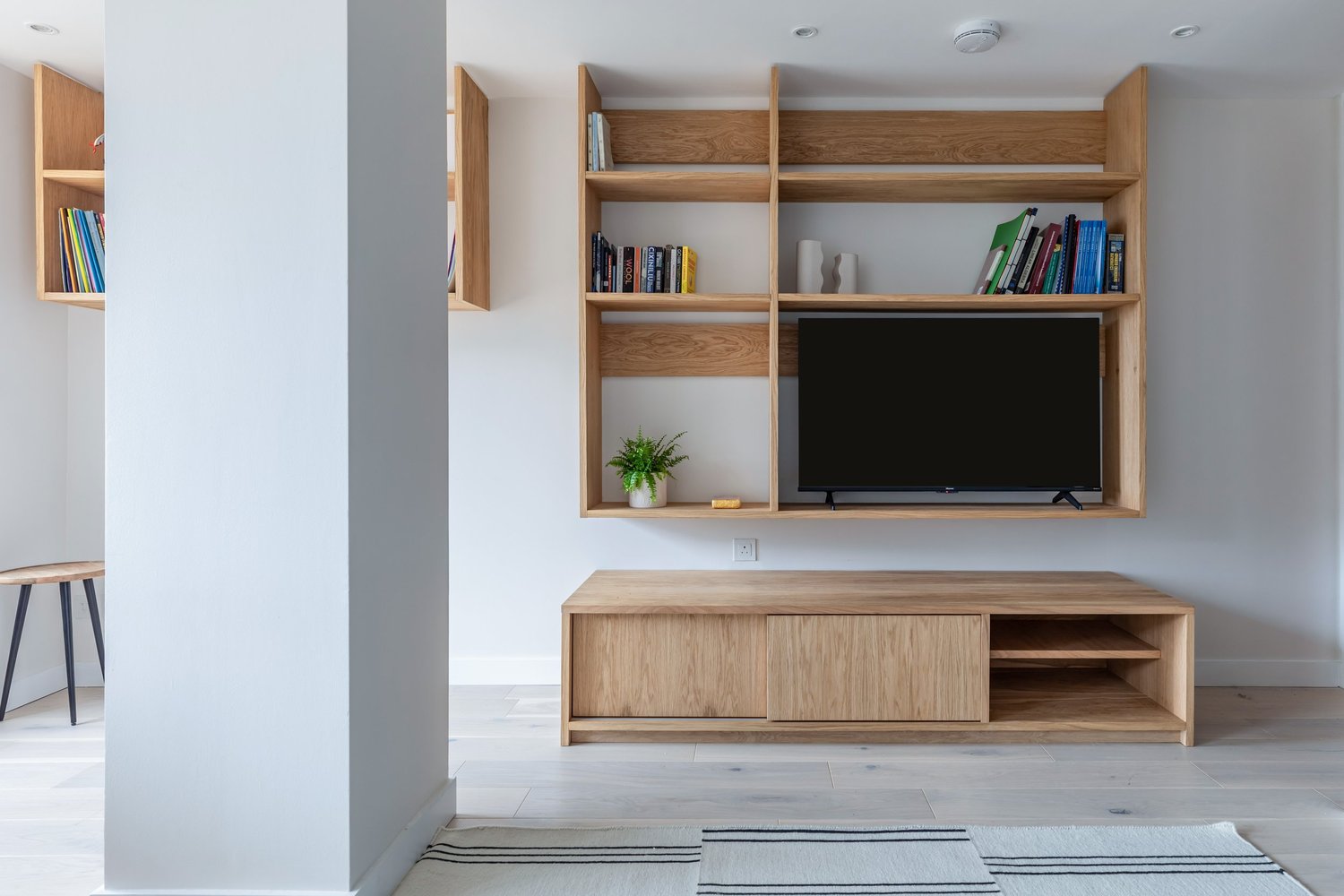
The wall colour is a warm stone, carried over the skirting, the picture rail and the alcove shelves so the room reads as one calm surface. A low oak-framed sofa in a boucle or linen blend sits against the longest wall, which keeps the walkway clear. A round wooden coffee table avoids the corners the narrow room cannot spare. Lighting is layered: a paper pendant, a floor lamp in the reading corner and a table lamp on the shelves, all warm white, none brighter than the rest.
Textiles do the colour. A wool rug in oatmeal, linen curtains hung high and wide so the window looks larger, and a single throw in deep green. On the shelves, two books laid flat, one ceramic piece and a stretch left empty.
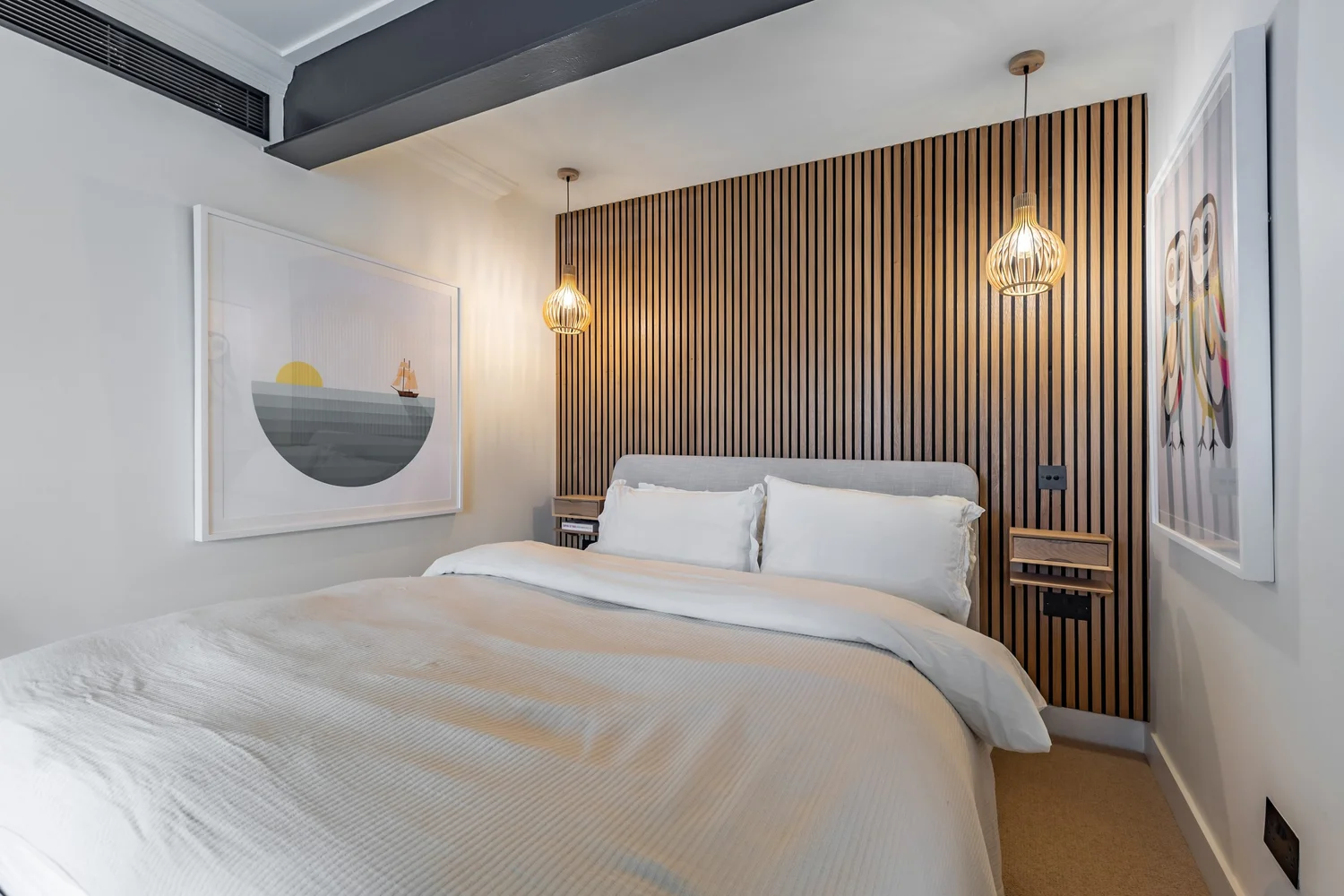
The principle is subtraction. Every object either earns its place by being useful or beautiful, or it goes into storage.
Where does the popular advice about Japandi fail?
Three habits cause the most disappointment.
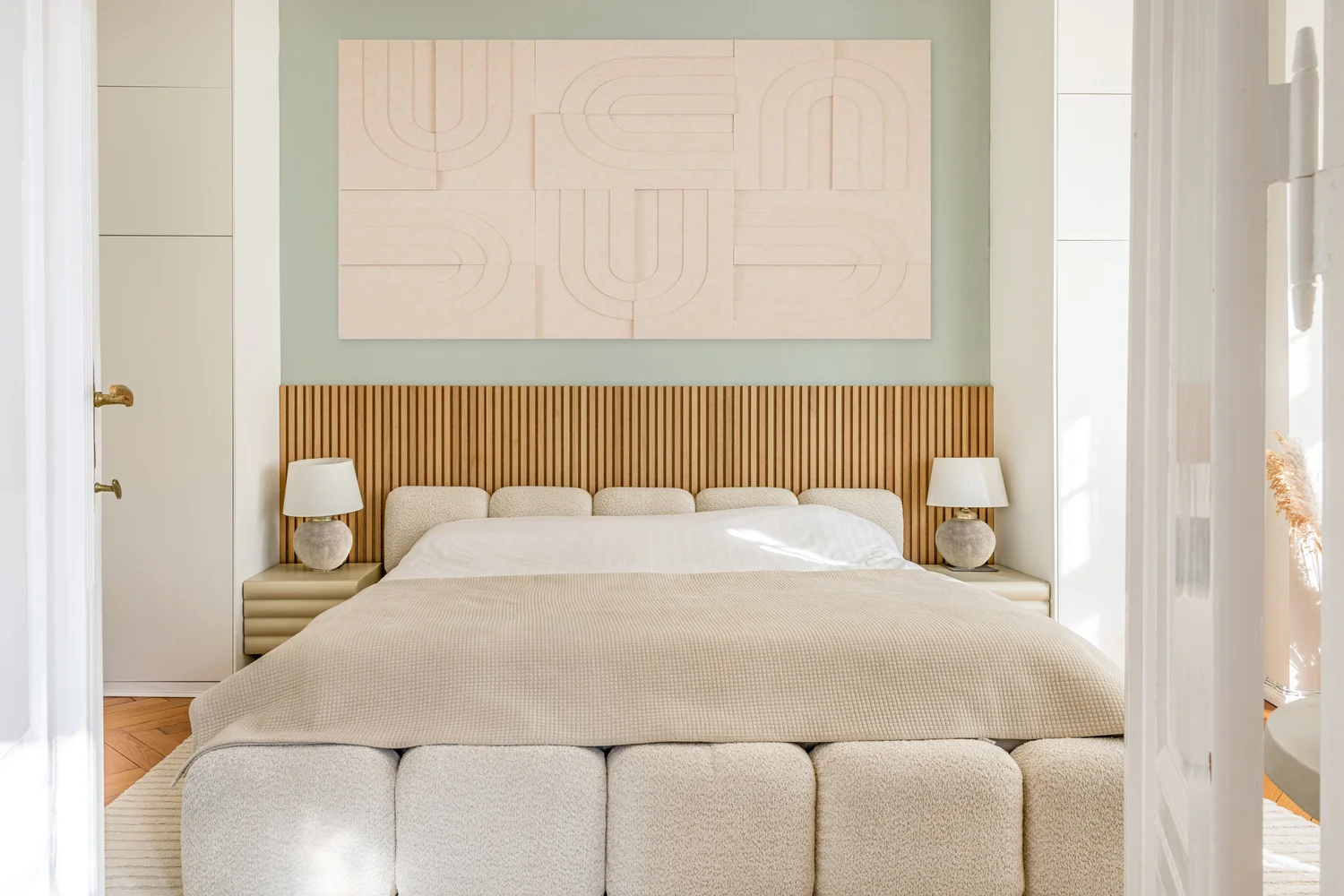
"Paint everything beige." Beige without contrast looks unfinished. Japandi relies on a tonal range, with one dark anchor and a mix of matt and slightly textured surfaces, so the eye has somewhere to rest.
"Minimalism means owning almost nothing." It does not. Japandi is edited, not empty. Books, plants and family objects belong, provided they are stored or displayed with intent. A room stripped of everything personal is a showroom.
"Buy the Japandi collection." Retailers now sell furniture labelled Japandi at every price, and much of it is a thin veneer on a generic frame. Judge a piece the way you would any furniture: look at the joinery, the finish on the underside and what the surface is made from. A plain well made oak table will serve the style better than a labelled one with a weak construction.
Is Japandi a trend, or will it last?
The look has been popular for several years, and the reason is practical. It uses durable, repairable materials, it asks you to buy fewer things, and it ages well because it leans on natural wear. Rooms that follow the principles tend to survive a change in fashion, because the underlying choices (good light, honest materials, calm colour) are not tied to a season.
The risk is not that Japandi dates. It is that people copy the surface, with pale wood and a bonsai, without the editing that makes it work.
Frequently asked questions
Can Japandi work in a small room?
Yes, and often better than other styles. Low furniture, a restrained palette and concealed storage make a small room feel larger. Keep one or two statement pieces and remove the rest.
What colours work best?
Warm neutrals such as stone, oatmeal, clay and mushroom, with one deeper anchor in charcoal, ink or dark green. Test large samples in your own light first.
How is Japandi different from Scandi?
Scandi is lighter, brighter and softer, with more pattern and colour. Japandi is darker, more restrained and more focused on craft and negative space.
Does Japandi mean no colour?
No. It means low-saturation colour used sparingly. A deep green throw or a rust ceramic can be the strongest note in a room.
Do I need to replace all my furniture?
Not usually. Edit first, then paint, then change the lighting and textiles. Replace only the pieces that cannot be made to fit.
Ready to plan your own calm room?
A Studio Akiva room makeover gives you a fixed-fee scheme with a floor plan, a palette tested for your light and a shopping list, delivered online and priced before we start. See the three packages on our room makeover page. We have over 100 five-star reviews on Houzz and twelve consecutive Houzz awards.