Measure the route into your home as well as the room, because most expensive mistakes are access problems: a sofa that will not turn a stair, a table that clears the door by an inch. Then check the frame and the fabric, put every cost on one page, and read the supplier's returns terms before you pay.
How do you check that furniture will actually get into your home?
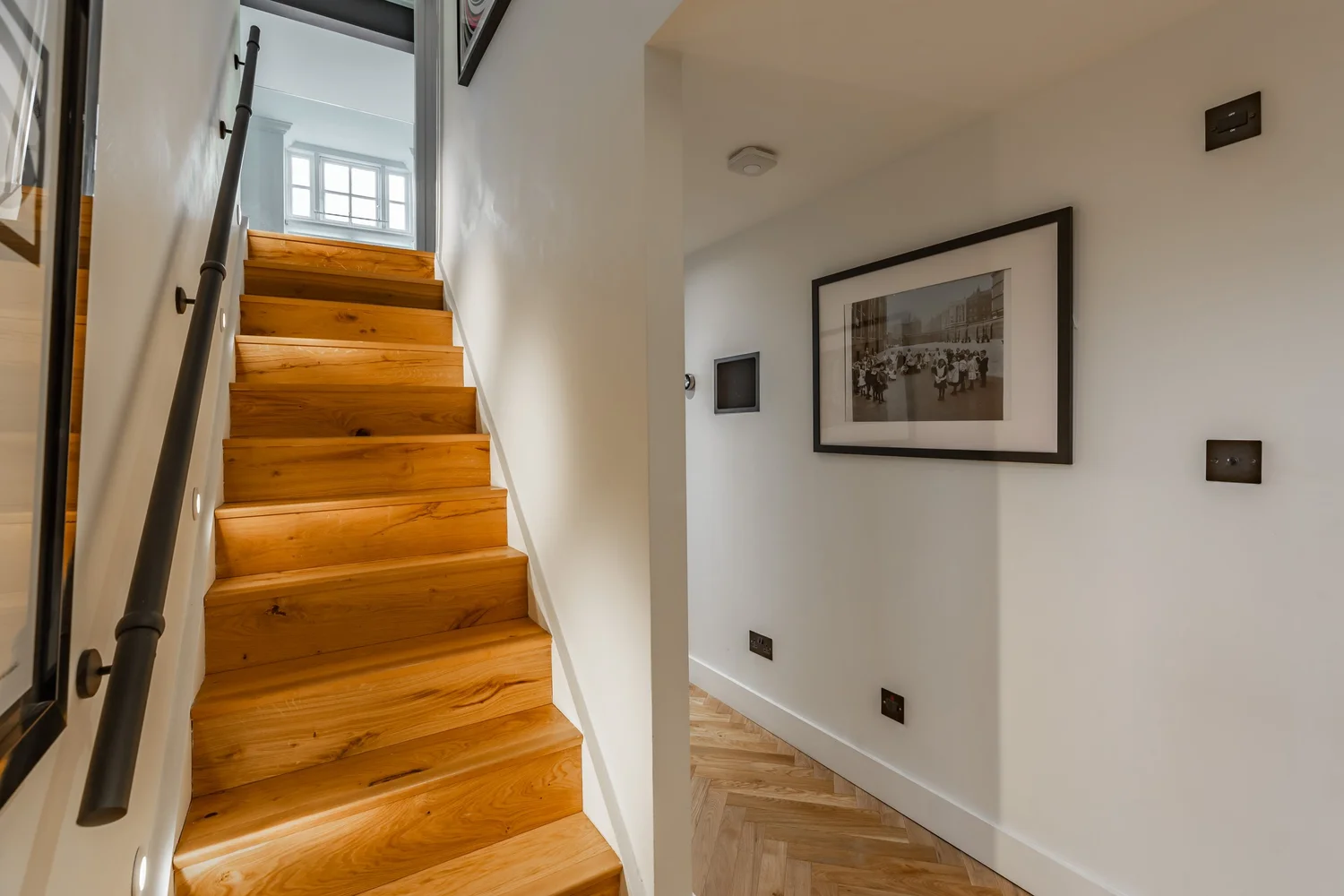
Measure the route, not just the space. Start at the pavement and walk the delivery path in the order the delivery team will: front door, hall, any turn, stairs, the room door. Write down the narrowest point and the tightest turn.
Doors in UK homes range from about 24 to 33 inches wide, and the usable opening is narrower than the door because of the frame and the open door itself. Victorian and Edwardian terraces often have a hall of around 3 feet with a turn at the stairs, which is where large sofas stall.
Compare those figures with the furniture's depth and height, not its length. A 7 foot sofa is rarely stopped by its length. It is stopped by a 36 inch depth meeting a 30 inch gap. Ask the supplier for the packed dimensions and whether the legs, arms or back come off. If a piece does not fit and cannot be dismantled, it is not a bargain at any price.
How do you judge quality when you cannot see inside the piece?
You judge it by asking for specifics, because showroom finishes look the same on a well made frame and a poor one. For upholstered pieces, ask what the frame is made from and how the joints are fixed. Kiln dried hardwood with glued and screwed joints is a better sign than "solid frame" with no detail. Ask what is in the seat: foam density, springs, feather or fibre fill, and how it recovers after use.
For case pieces such as tables and sideboards, look at the joinery, the drawer runners and the finish on the underside, which is where cost cutting shows. For fabric, ask for the rub count and care instructions, and check whether it is a cover that can be replaced or cleaned.
Look for the permanent fire safety label on upholstered furniture. UK regulations require it on furniture sold new, and a missing label is a reason to walk away.
What costs do people forget when they budget?
People forget delivery, assembly, the removal of old furniture, and the difference between a delivery to the doorstep and a delivery to the room you want it in. A low headline price with £150 of extras is not cheaper than a higher price that includes them.
Put every cost for each piece on one line before you compare: price, delivery, assembly, fabric or finish upgrades, and any return or restocking charge. If you are furnishing more than one room, our furnishing cost calculator gives a realistic range by room and level. It is a guide to what to expect, not a quote, and it covers furniture and finishes, not building work or design fees.
What does the law say if the furniture is wrong or damaged?
Under the Consumer Rights Act 2015, goods must be of satisfactory quality, fit for purpose and as described. Buying online also usually gives you a 14 day right to cancel from the day the goods arrive, under the Consumer Contracts Regulations 2013.
There is one exception that catches people out. Made to order and personalised pieces, such as a sofa in a fabric chosen for you, are usually excluded from the cancellation right. Check whether a piece is made to order before you pay, and ask for lead times in writing, because stock and production dates change. We are designers, not solicitors, so for a dispute use the supplier's terms and your own legal advice.
What would this look like in a real room?
Take a 1930s semi living room of 14 by 16 feet, with a bay window and a chimney breast. The plan calls for a 7 foot sofa, two armchairs and a coffee table on a rug.
The sofa is 36 inches deep, and the hall turns at the stairs with a 30 inch gap. On paper it fits the room easily. In practice it needs removable legs and arms, or it is a delivery that has to go through the front window. That is a cheap fact to find out before ordering and an expensive one to find out on delivery day.
Leave around 3 feet for the main walkway, and 16 to 18 inches between the sofa and the coffee table so you can reach it without leaning. These two dimensions decide whether a layout feels comfortable more than the furniture does.

Where does the popular advice about buying furniture fail?
Three pieces of advice cause trouble.
"Buy the matching set." A set saves effort and often costs you the room. Pieces bought together tend to be the same height and scale, so the room reads as a showroom instead of a home.
"Buy cheap now and upgrade later." This is sound for items you will replace, such as side tables. It is costly for the sofa and the bed, which you use every day and which are the hardest to replace.
"Trade discounts mean it is always cheaper." A discount comes off the recommended retail price, and the service that obtains it usually has a fee. Look at the total, not the percentage.
How does trade pricing work, and is it worth using?
Many UK furniture brands sell to designers and the trade at a discount to the recommended retail price. For a private buyer, it is useful only if you can see the total cost before you commit.
In our model, we act as your agent, not as a reseller. We place the order on your behalf, the supplier invoices you directly in your name, and the warranty sits with you. We pass on the trade price in full and our handling fee is separate and stated upfront. You do not need to have booked design work with us: you can send a list you have put together yourself, and we price it with the discount shown on each item before you commit.
Whether it is worth it depends on the size of the order and how many suppliers are involved. On a single sofa from one supplier, the saving may not justify a fee. Across a whole room or home, with several suppliers, delivery to coordinate and a returns process to manage, it often does.
Frequently asked questions
How much should I budget to furnish a room?
It depends on the room and the quality level. Use a room by room estimate rather than a single figure, and include delivery, assembly and the pieces you will keep. Our furnishing cost calculator gives a range for each room and level.
Should I buy samples before ordering?
Yes. Fabrics and finishes change in your own light. Look at samples in the morning and the evening, next to your flooring and walls, before you order.
What if a sofa will not fit through the door?
Check removable legs, arms or a back before ordering. If it cannot be dismantled, ask the supplier for the packed size and confirm the delivery team's access in writing.
Are delivery times guaranteed?
Not by us, and rarely by the supplier. Ask for a lead time in writing and treat it as an estimate, especially for made to order pieces.
Do I need a designer to buy furniture?
No. A designer helps most when several rooms, several suppliers or a tight layout are involved.
Ready to buy the furniture without managing every supplier?
Our furniture concierge sources, orders and coordinates your whole furniture order, with the trade price shown on each item and the handling fee stated before anything is ordered. You can send us your own list or start from one of our supplier network brands on our furniture concierge page. We have over 100 five-star reviews on Houzz and twelve consecutive Houzz awards.