Furnishing a two bedroom flat in the UK from scratch costs roughly £6,100 to £14,150 at high street level, £11,100 to £25,700 at a mid level and £23,350 to £53,950 for considered pieces. Those are retail ranges for a living room, two bedrooms and a hallway, taken from our free furniture cost calculator, which works out the same figures for your own rooms.
The spread inside each range is wide on purpose. Two people shopping at the same level can spend very different amounts on the same room, depending on what they choose and how much they keep. The useful part is not the total. It is seeing which categories the money goes to before you have spent any of it.
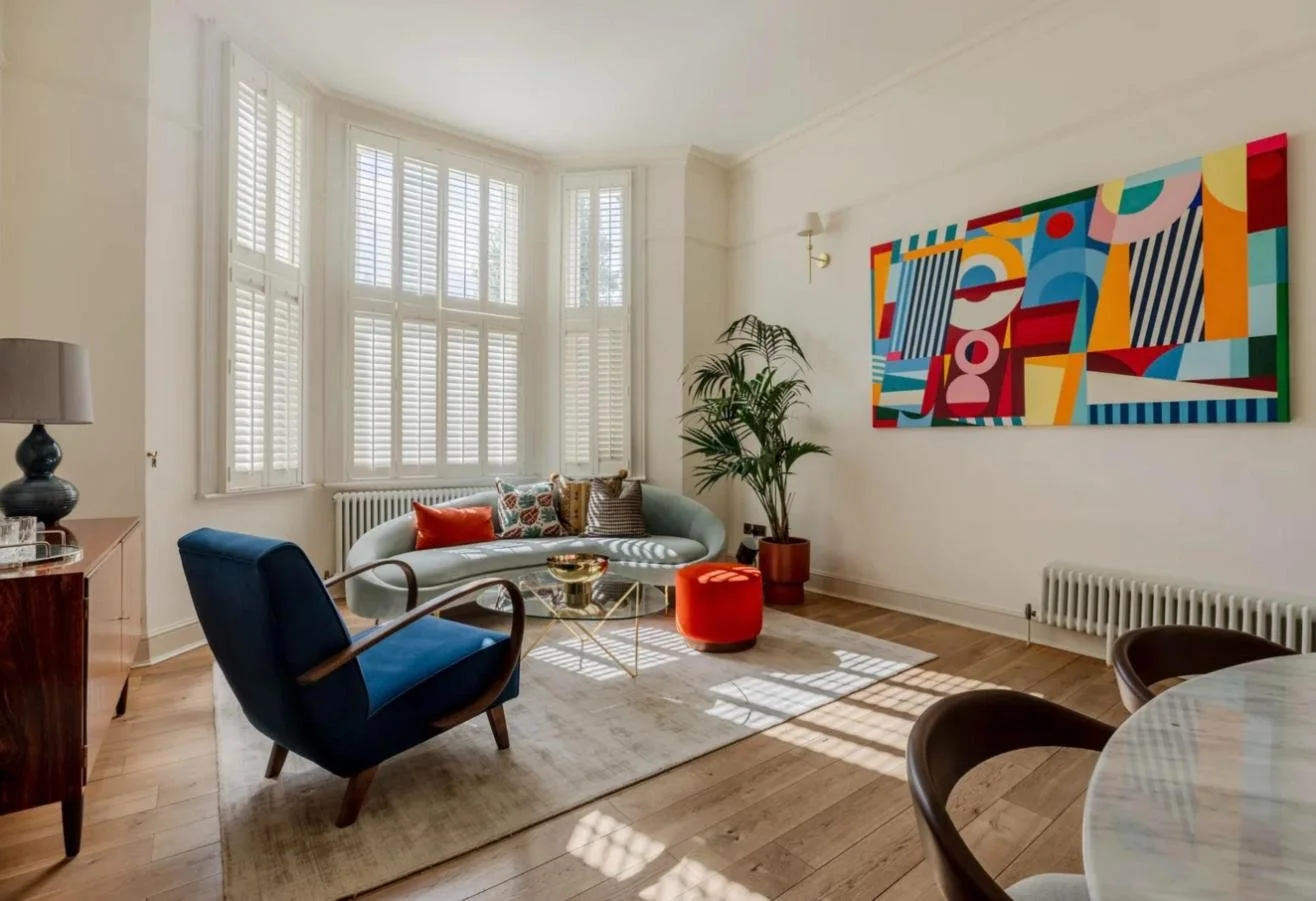
A living room in Belsize Park, a Studio Akiva project.
What does it cost to furnish a two bedroom flat?
We loaded a two bedroom flat into the calculator: a medium living room, a medium main bedroom, a small second bedroom and a small hallway, at the mid level, with nothing already owned. The total came to £11,100 to £25,700, and it broke down like this.
Seating: £1,800 to £3,200
Tables: £450 to £900
Storage and shelving: £600 to £1,400
Rugs: £950 to £2,300
Lighting: £1,050 to £2,750
Window treatments: £1,250 to £3,000
Art and accessories: £800 to £2,300
Bed and mattress: £1,750 to £3,800
Wardrobes and bedroom storage: £1,400 to £3,300
Bedside tables, bedroom seating and second bedroom storage: £850 to £2,100
Hallway console: £250 to £650
The same flat at high street level came to £6,100 to £14,150. At the considered level it came to £23,350 to £53,950. The figures are as the calculator stood in November 2026.
Where does the money actually go?
Not where most people expect. In the flat above, lighting and window treatments together come to £2,300 to £5,750. Seating, which is the sofa and chairs most budgets are built around, comes to £1,800 to £3,200. The two categories people leave until last cost more than the one they plan first.
That is the pattern we see on real projects. A budget planned around the big pieces alone tends to run out near the end, and the room is left with a good sofa, bare windows and a ceiling pendant doing all the work. Rugs are the other surprise: £950 to £2,300 across this flat at the mid level, which is more than all the tables in it.
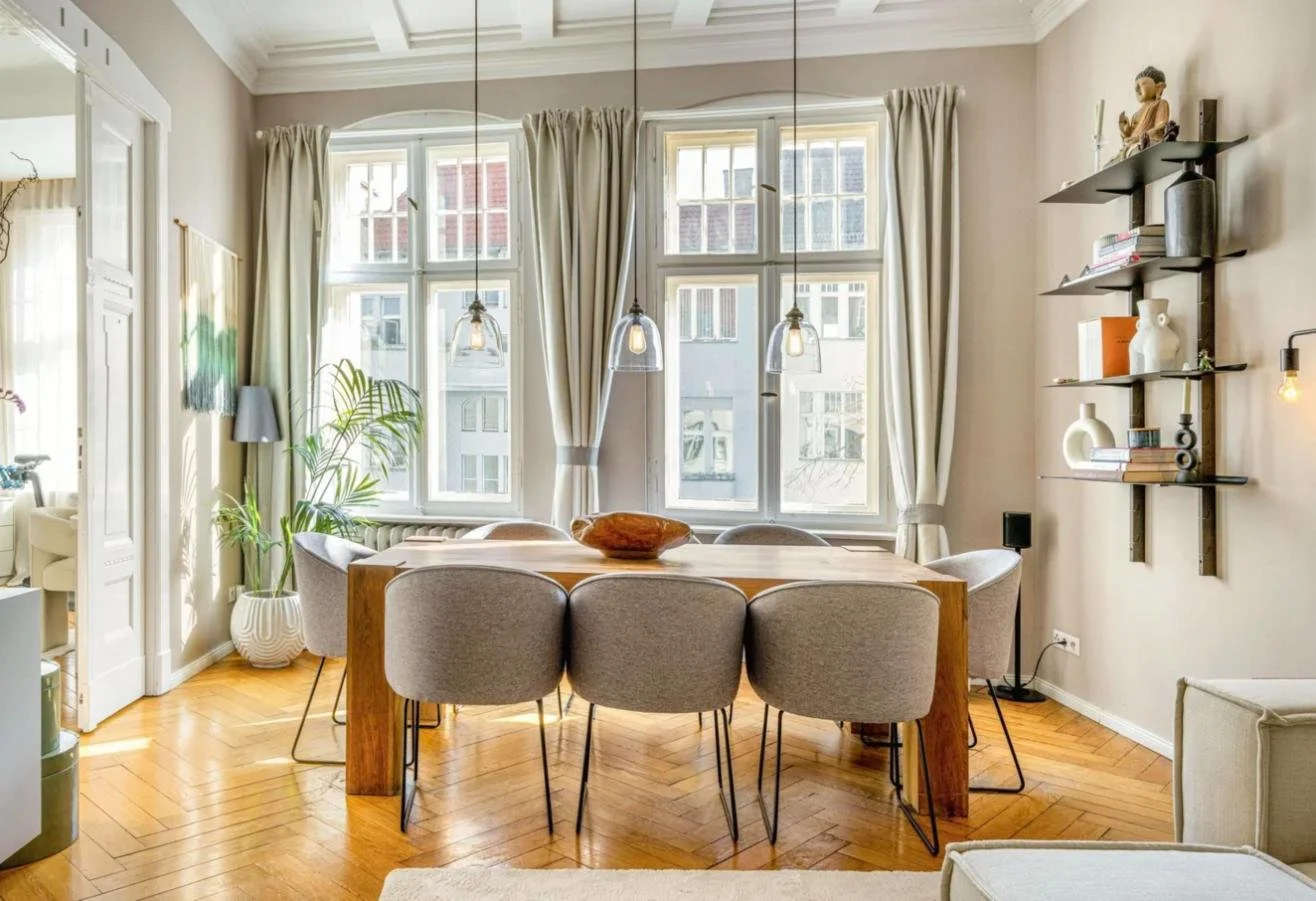
Curtains and pendant lights in a dining room, a Studio Akiva project.
How does the furniture cost calculator work?
You either load a whole property or add rooms one at a time. There are five property types, from a studio flat to a four bedroom house, and nine room types: living room, main bedroom, second bedroom, dining room, kitchen diner, home office, nursery or child's room, hallway and bathroom. Each room is set to small, medium or large.
You then choose the level you are shopping at, and the estimate updates as you go. It shows a total range and a range for every category. It covers the furniture and finishes you buy. It does not cover building work or design fees, the kitchen diner is furniture only, and the bathroom is fittings only.
It asks for nothing in return. There is no email field, nothing is collected and nothing is stored, so you can run it as many times as you like with different rooms and levels.
What do high street, mid and considered mean?
They are the three levels the calculator prices at. High street means mainstream retailers, where everything is replaceable and nothing is precious. Mid is a mix: a few pieces worth keeping and the rest sensible. Considered means fewer, better things, with solid timber, proper upholstery and brands that last.
Most homes are not one level throughout, and they should not be. The sensible approach is to spend at the higher level on the things you touch every day, the sofa, the mattress, the dining chairs, and drop a level on the pieces that matter least. Running the calculator at two levels gives you the top and bottom of what that mix is likely to cost.
What if you already own some of the furniture?
Almost nobody furnishes from nothing, so each room has an already own list. Open it and tap the categories you are keeping, for example the rug and the storage in the living room, and they come off the estimate.
This usually changes the picture more than changing the level does. Keeping a bed and mattress you are happy with takes £1,750 to £3,800 off the flat above at the mid level. It is worth being honest with yourself here: tick only the things you would still choose to keep once the rest of the room is new.
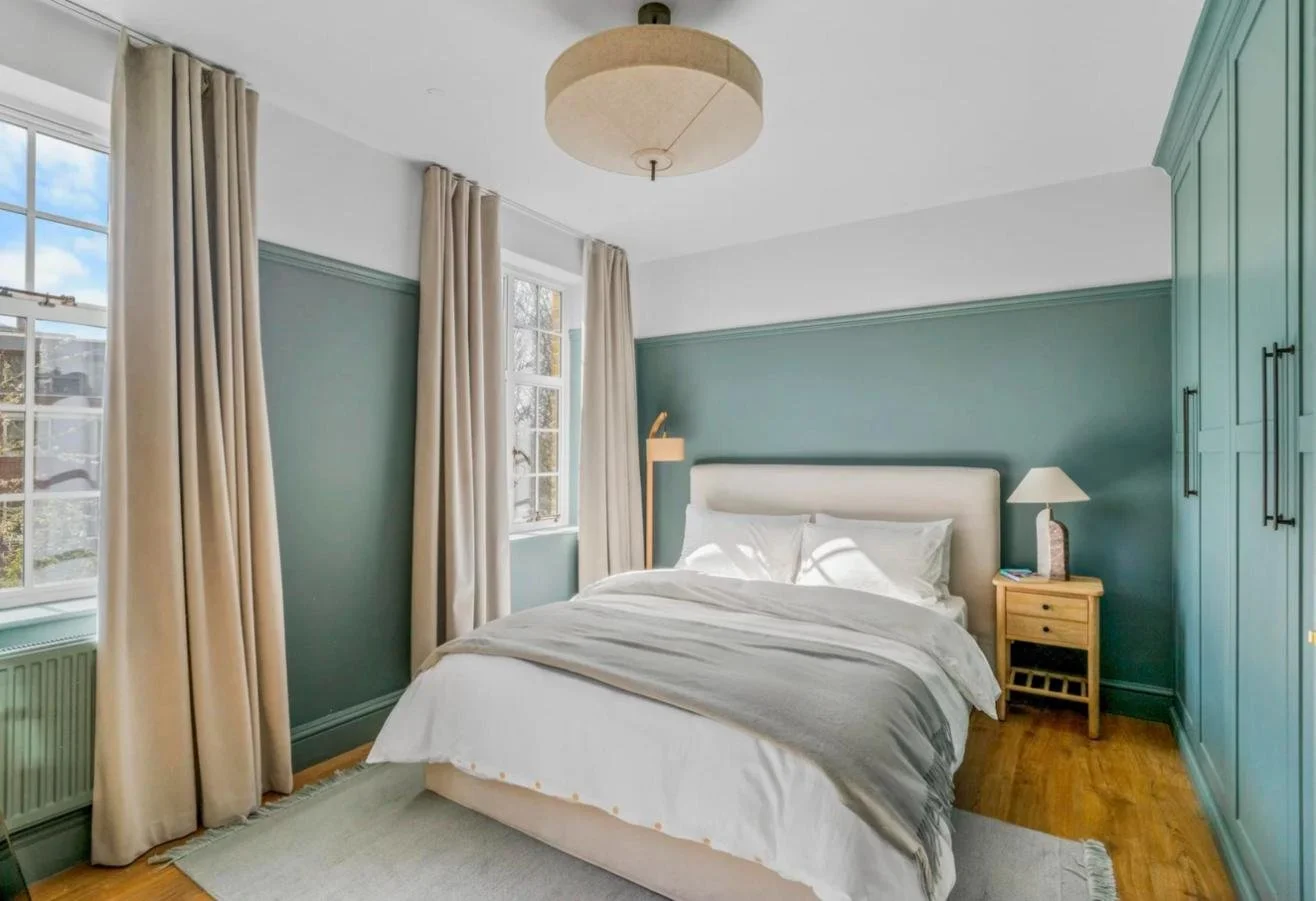
A bedroom at Benyon House, a Studio Akiva project.
How do you know if your budget is enough?
There is an optional budget box. Enter a figure and the calculator tells you how it compares with the range for the rooms you have added. We entered £10,000 against the mid level flat above and it reported that the budget sat just below the range, and that dropping a level on the pieces that matter least, or keeping one or two things, would usually close a gap of that size.
That is the conversation we have with clients at the start of most projects, across residential work in the UK, USA, Dubai and Saudi Arabia and more than 100 five-star reviews on Houzz. A budget that is slightly short is rarely a problem. A budget that is short and not known to be short is, because it is discovered when the last three categories are still to buy.
Where do furnishing budgets go wrong?
A correct number does not guarantee a finished room. Three things go wrong after the budget is set, and the calculator cannot fix any of them.
The first is the order of buying. Some pieces set the dimensions everything else works around, and buying in order of preference instead means part of the budget gets spent twice. The second is timing. Upholstery, storage furniture, lighting and rugs do not arrive on the same schedule, which is how a room ends up half finished for months. The third is access. A standard internal doorway is 76 cm wide, so measure the route in before you order. Access is the most common reason a delivery has to go back.
It is also worth being clear about what the figures are. They are indicative ranges based on what we typically specify, not a quote. If you are doing the buying yourself, our Furniture Budgeting and Sequencing guide covers the order to buy in and what arrives when.
Can you furnish a home for less than the retail figure?
Every figure in the calculator is retail. There is a tick box under the estimate that shows the same rooms with our trade discounts applied. Those discounts run from 5% to 40% depending on the brand, and we publish the discount for each one in our supplier network, so you can check a brand before speaking to anyone.
Two limits are worth knowing. Trade discounts come off the recommended retail price, so they will not beat something that is already in a sale, and where that happens you should buy it direct. And the buying service carries its own fee, charged separately, so the saving that counts is the one left after the fee. On a short list of low value items it may not be worth it, and we will say so.
Quick answers
How much does it cost to furnish a one bedroom flat in the UK?
It depends on the size of the rooms and the level you shop at. Load the one bedroom flat in the calculator, set each room to small, medium or large, and it gives a retail range for the whole flat and for each category.
Is the furniture cost calculator free?
Yes. It is free to use, it does not ask for an email address, and nothing you enter is collected or stored.
Do the figures include design fees or building work?
No. The calculator covers the furniture and finishes you buy. Building work and design fees are separate, and for kitchens and bathrooms it counts furniture and fittings only.
Do you need to hire a designer to get trade discounts?
No. Buying is a stand-alone service. You can send a list you have put together yourself, or one from another designer, and have it priced with the discount shown on every item.
Have a list you want priced?
If the calculator has given you a number and you already know what you want to buy, send the list to our furniture concierge. We come back with availability, trade pricing and the discount on every line, in writing, before you commit to anything.