 Image 1 of 2
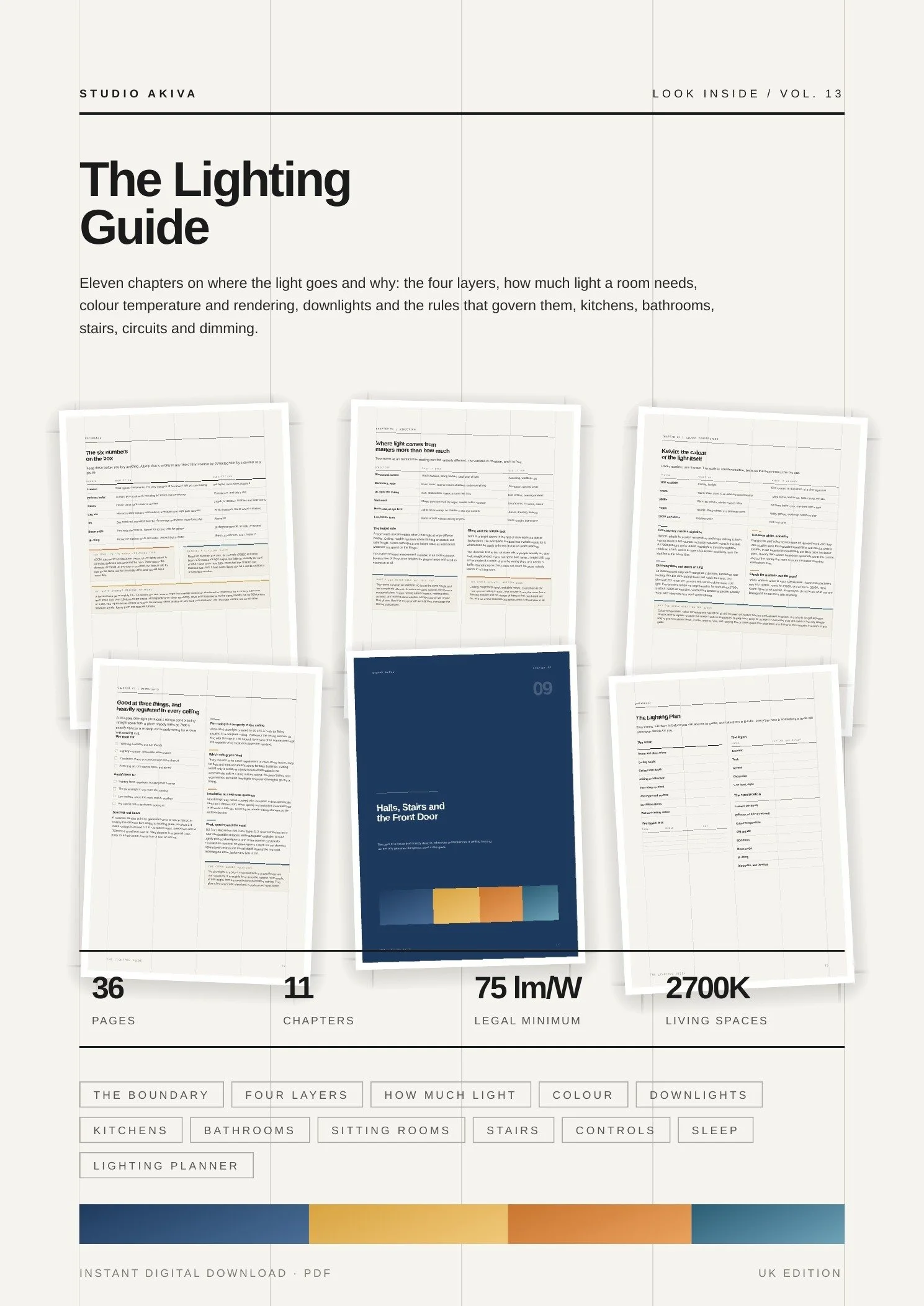 Image 2 of 2
Where the light goes, how much of it, what colour, and how it switches before the plaster goes on. Layers, lux, colour rendering, circuits and controls.
You can repaint a room.
You cannot move a downlight.
Almost everything in a house can be changed afterwards. Lighting positions cannot, because by the time you can see whether they work, the ceiling is closed and the room is decorated. This guide is written to be read before first fix, in the order the decisions actually arrive, with a figure wherever a figure exists, the standard wherever one applies, and a plain statement of where the evidence stops.
Written for before first fix
Positions, switching and colour settled while cable can still move. Afterwards, shifting one downlight 300mm means a chase, a patch, a skim and a decorator.
Honest numbers
The only British Standard lux figures written about homes, the levels we design to room by room, and why the 500 lux kitchen figure comes from a workplace standard.
Buy on the right numbers
Lumens, efficacy, Kelvin, CRI, R9, beam angle and IP rating, and why wattage and a 60 watt equivalent tell you nothing about what a lamp does.
A plan your electrician can quote from
Two worksheet pages covering the room, the layers, the specification and a switching schedule, with a checklist to clear before first fix.
- 01What a Lighting Plan DecidesWho owns which decision between the designer, the electrician and the Building Regulations, the four rules that apply to a house in England, and the first fix deadline that governs all three.
- 02The Four LayersAmbient, task, accent and decorative, the specific way each one fails, why direction matters more than quantity, and the three heights a comfortable room needs.
- 03How Much LightWhy no standard covers your living room, the only British Standard figures written about homes, the levels we design to room by room, and how to work out the lumens.
- 04Colour Temperature and Colour RenderingKelvin and consistency within a sightline, why dimming does not warm an LED, and R9, the saturated red the Ra average leaves out.
- 05Downlights, and When Not To Use ThemThe three things they are good at, spacing and beam, fire rating, insulation and the void, and the six-downlight bedroom.
- 06Lighting a KitchenStand at the worktop and look at your hands. Where the downlights go, under-cabinet light, and an open plan room with three jobs and one sightline.
- 07Lighting a BathroomThe zones and IP ratings the law sets, why the work is notifiable, lighting the face from the sides, and the three in the morning circuit.
- 08Rooms People Sit InLiving rooms and bedrooms: three heights, nothing in the middle of the ceiling, and the chapter you can act on without an electrician.
- 09Halls, Stairs and the Front DoorA source at the top and bottom of every stair, two-way switching without exception, a low-level night route, and outside light that does not reach the neighbours.
- 10Circuits, Switching and DimmingHow many circuits, how to group them, trailing edge dimmers and minimum load, where switches go, and the honest note on scenes.
- 11Evening Light and SleepWhat the research on light and the body clock supports, what it does not, and the two things worth doing that cost nothing.
- +The Lighting PlanTwo sheets to fill in before anyone quotes: the room, the layers, the specification and a switching schedule, with a before first fix checklist and what to ask for at handover.
What format is it?
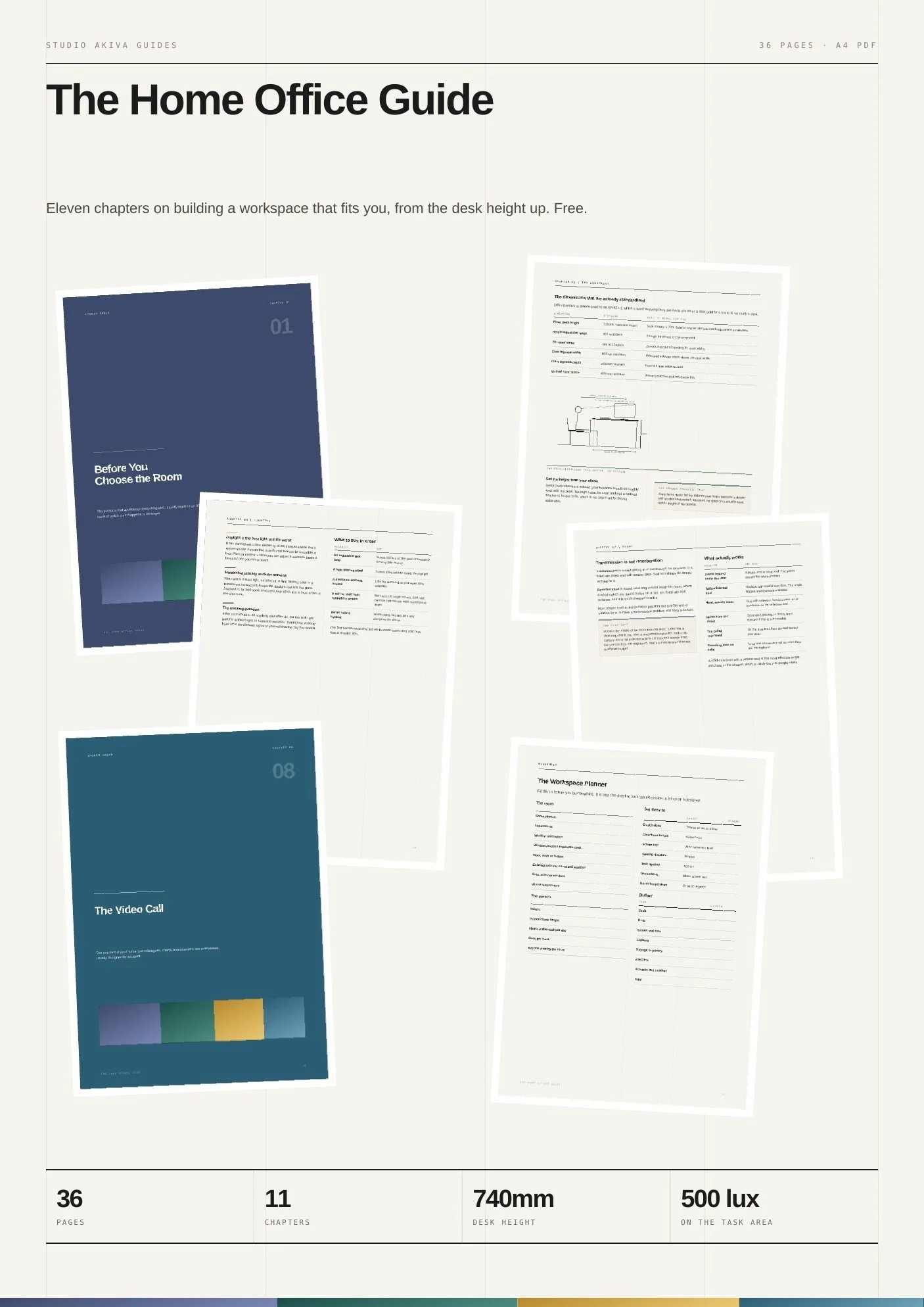
A 36-page A4 PDF. Your download link arrives by email straight after checkout, and you can read it on any device or print the Lighting Plan pages to take to first fix.
Which edition is this?
UK. It is written to BS 7671 as amended in 2026, Part P and Approved Document L, with notes where Wales, Scotland and Northern Ireland differ. The method works anywhere; the regulations quoted are English.
When should I read it?
Before first fix, ideally while the kitchen and bathroom layouts are being drawn, because all three share the same walls and the same ceiling void. Chapters 8 and 11 are useful in a house you are not renovating at all.
Will it tell me how to wire my lights?
No. Studio Akiva are interior designers. The guide covers positions, quantities, colour and switching, and explains the technical rules so that you can brief an electrician and read a quote critically. Electrical work must be carried out and certified by a competent person.
Can I get a refund?
This is digital content supplied immediately. At checkout you agree to the download starting straight away and acknowledge that this ends the usual 14 day cancellation right. Separately from that: if the link fails, the file will not open, or you received the wrong guide, email hello@studioakiva.com and we will put it right or refund you.
Would you rather we did it?
Studio Akiva is an award-winning London interior design studio and a twelve-time Houzz award winner. If you would like a lighting plan drawn, or a scheme talked through before your electrician starts, book a free fifteen-minute discovery call.