 Image 1 of 2
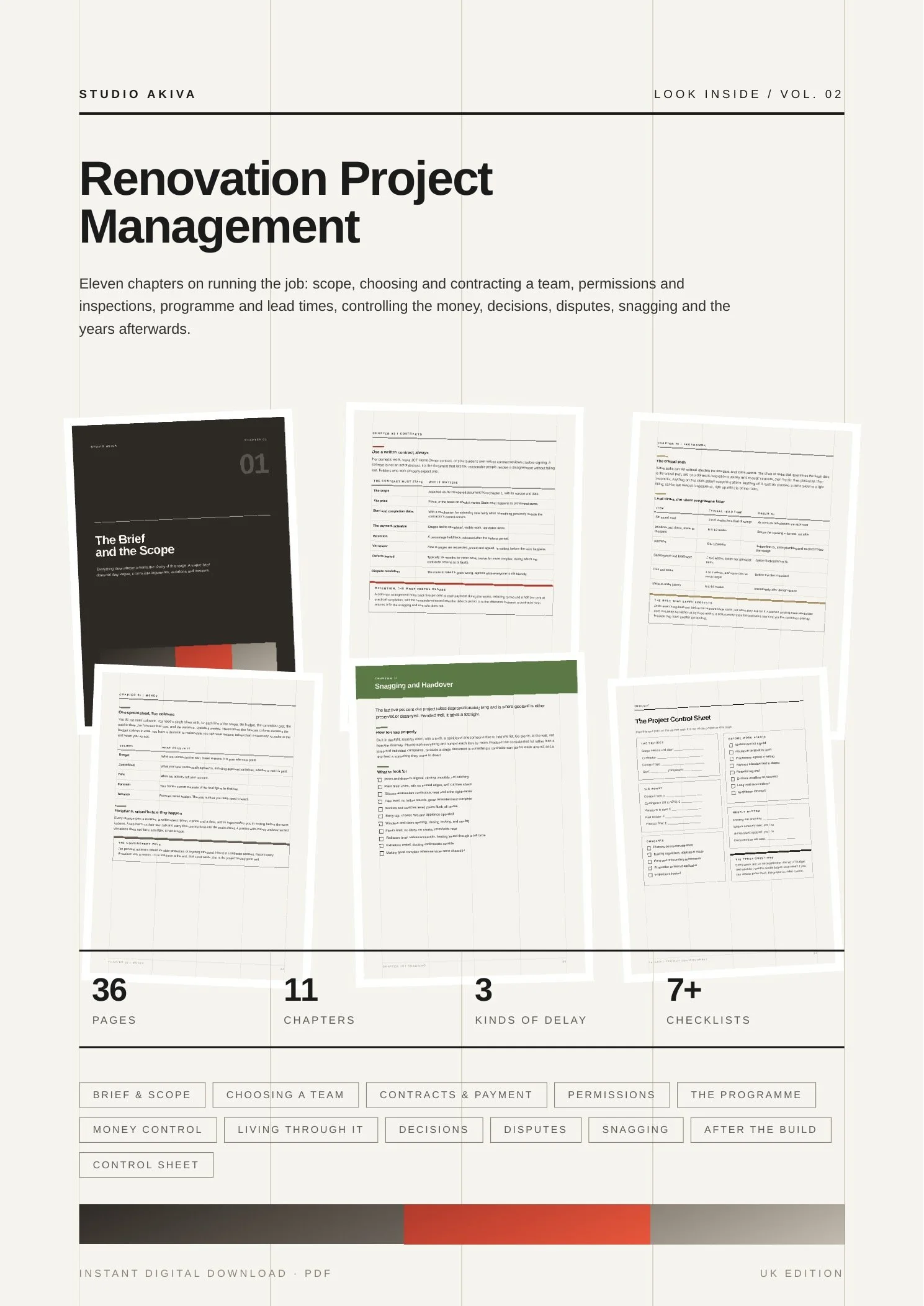 Image 2 of 2
Running the job without losing your mind: programme, trades, contracts, money and decisions.
Most renovations do not fail
on the building work.
They fail on decisions made late, money tracked loosely, and expectations nobody wrote down. The bricklaying is usually fine. The managing is where projects come apart, and that is what this guide is about.
Written for homeowners, not professionals
It assumes you have a job to hold down while this is happening, and that nobody has ever explained how a building project is actually shaped.
The documents that protect you
What a contract must say, how retention works, how to price a variation, and what to verify before anyone starts.
The habits that prevent trouble
A weekly meeting, a written summary, a decision log and a five-column money sheet. Four habits that prevent most renovation misery.
Including the parts nobody warns you about
Living on site, the low point in the middle, neighbour relations, and what to do when it is genuinely going wrong.
- 01The Brief and the ScopeWriting a scope that can actually be priced, the five scope traps, and why creep is mostly yours.
- 02Choosing Your TeamMain contractor or trades direct, how to read a quote, the warning signs and the conversation that tells you most.
- 03Contracts, Insurance and PaymentWhat the contract must state, retention, paying safely, insurance to verify and health and safety duties.
- 04Permissions and InspectionsWhat you may need, the inspection sequence, who is responsible, and why the completion certificate is the point.
- 05The ProgrammeThe critical path, lead times that quietly kill programmes, and a workable domestic build sequence.
- 06Controlling the MoneyOne spreadsheet with five columns, variations priced before they happen, cash flow and the costs people forget.
- 07Living Through ItStay or go, protecting what stays, the human side, and keeping neighbours on your side.
- 08Decisions and CommunicationThe weekly meeting, the decision log, deciding at the right level of detail and the decision deadline list.
- 09Problems, Delays and DisputesThe three kinds of delay and who carries each, handling quality issues, and what to do if it goes seriously wrong.
- 10Snagging and HandoverHow to snag properly, practical completion, the handover pack and the defects period.
- 11After the BuildThe house file, the first year, insurance and value, and a maintenance rhythm.
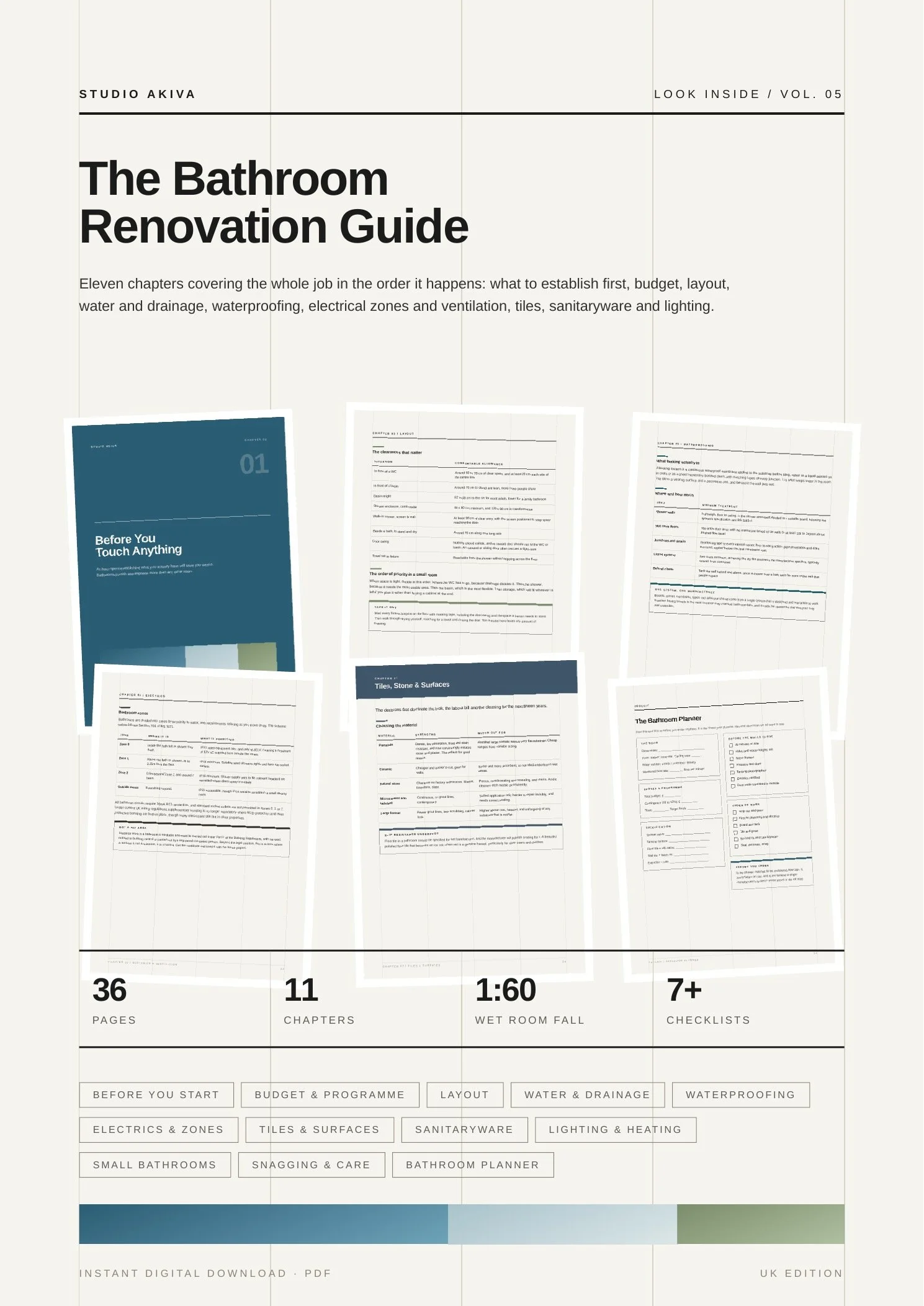
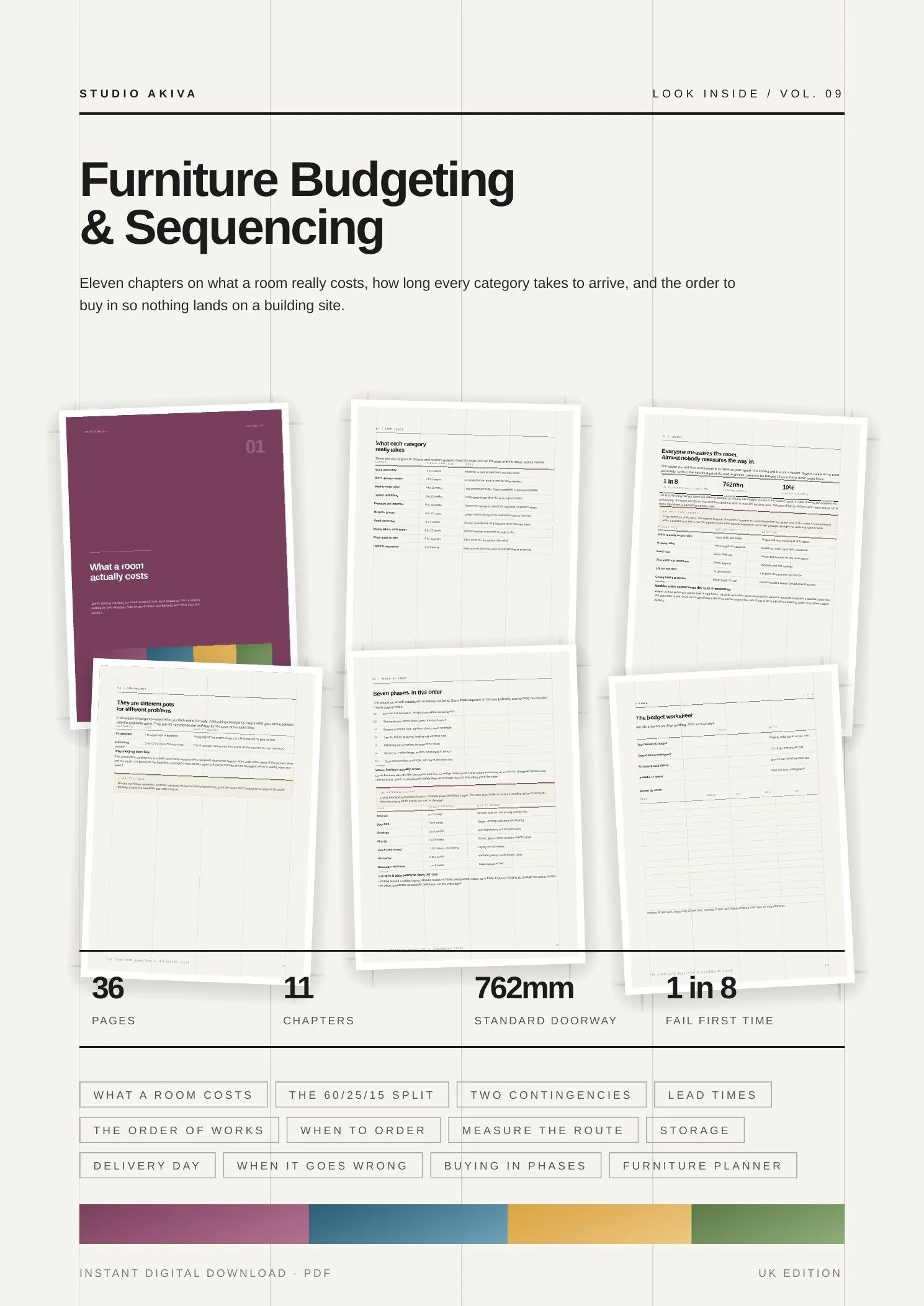
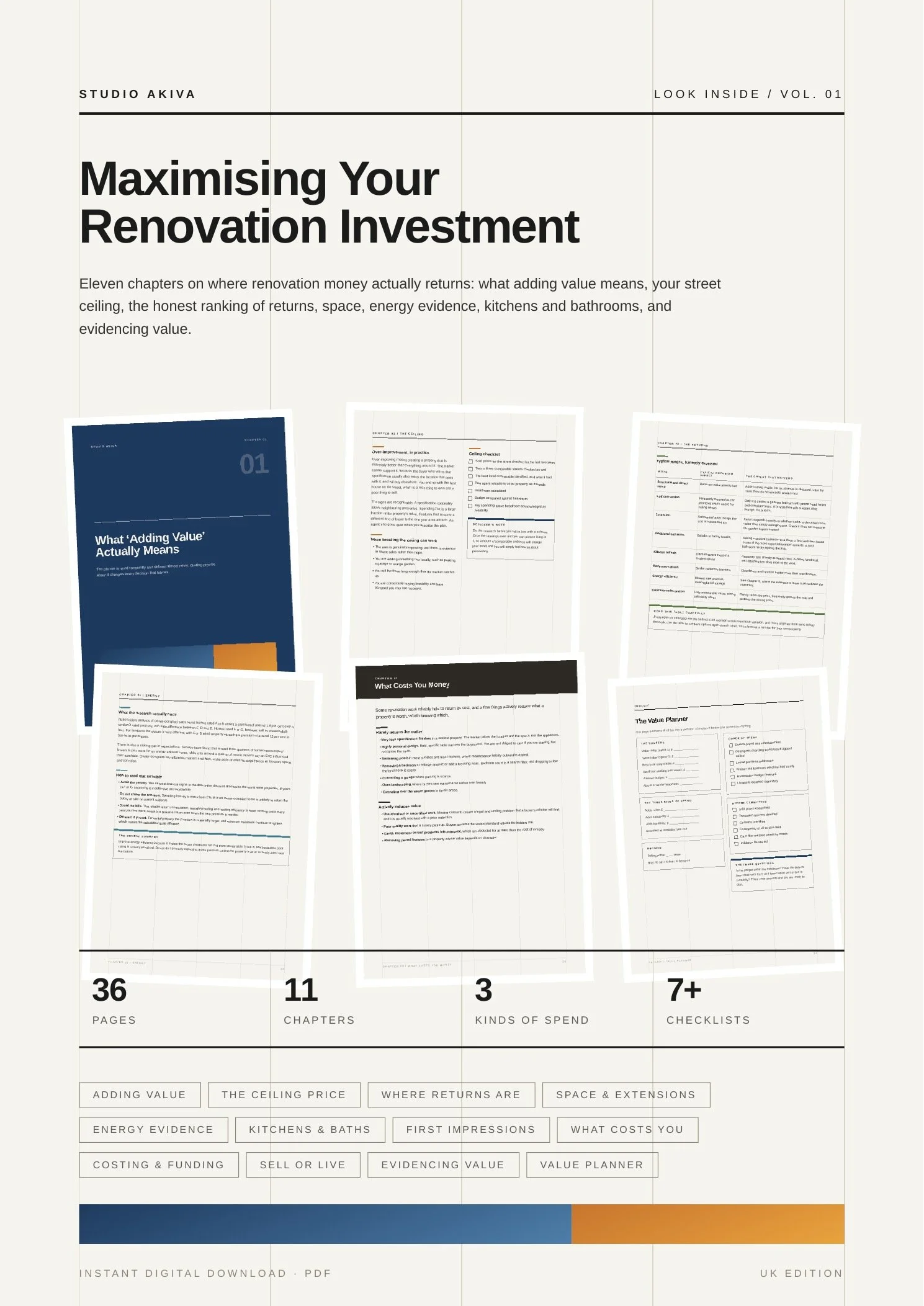
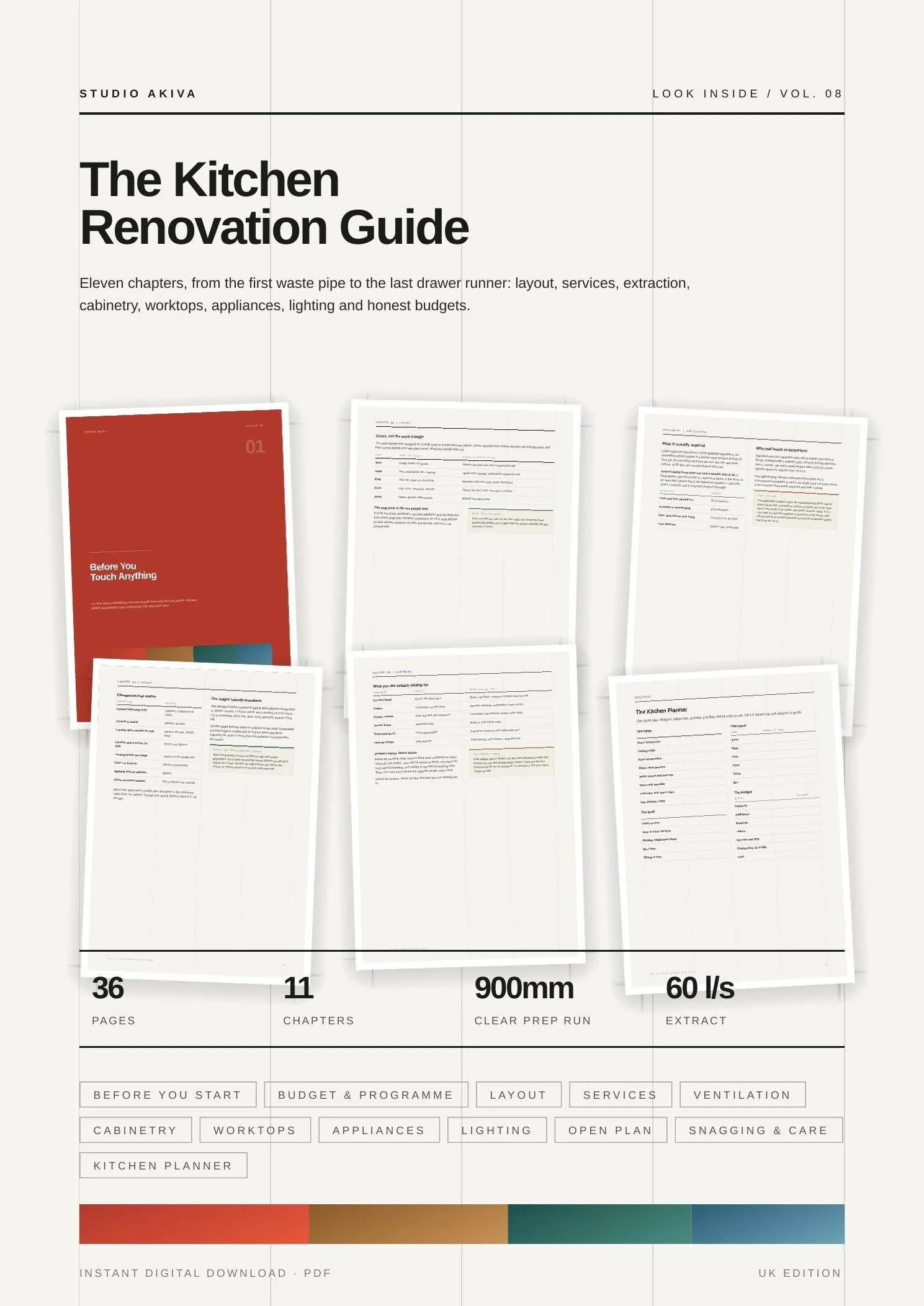
A look at how the guide is laid out. Every chapter pairs plain-English guidance with something you can act on, a table, a checklist or a worksheet.
 In the guide
 In the guide
 In the guide
 In the guide
 In the guide
 In the guide
Two editions, same guide
The UK edition references JCT Home Owner contracts, CDM 2015, the Party Wall Act and building control, and prices in pounds. The EU edition references national contract forms, Directive 92/57/EEC and local inspectorates, and prices in euros. Everything else is identical.
Add to basket using the button at the top of this page. Your download link arrives by email straight after checkout.
What format is it?
A 36-page A4 PDF. You get a download link by email straight after checkout, and you can read it on any device or print it at home.
Is there an EU edition?
Yes. The UK edition references JCT Home Owner contracts, CDM 2015, the Party Wall Act and building control. The EU edition references national contract forms, Directive 92/57/EEC and local inspectorates, and prices in euros.
I have already started. Is it too late?
No. Chapters 5 to 9 are all about running a live project, and the money sheet, decision log and weekly meeting can be introduced at any point. If you are mid-build and it feels chaotic, start at Chapter 6.
Do I need this if I have hired a good builder?
A good builder makes the building work go well. This is about the half of the project that is yours: the scope, the decisions, the money, the consents and the paperwork. Being a well-organised client is what gets a good builder's best work.
Want someone in your corner?
Studio Akiva is an award-winning London interior design studio. If you would rather have professional eyes on your project, book a free fifteen-minute discovery call.